



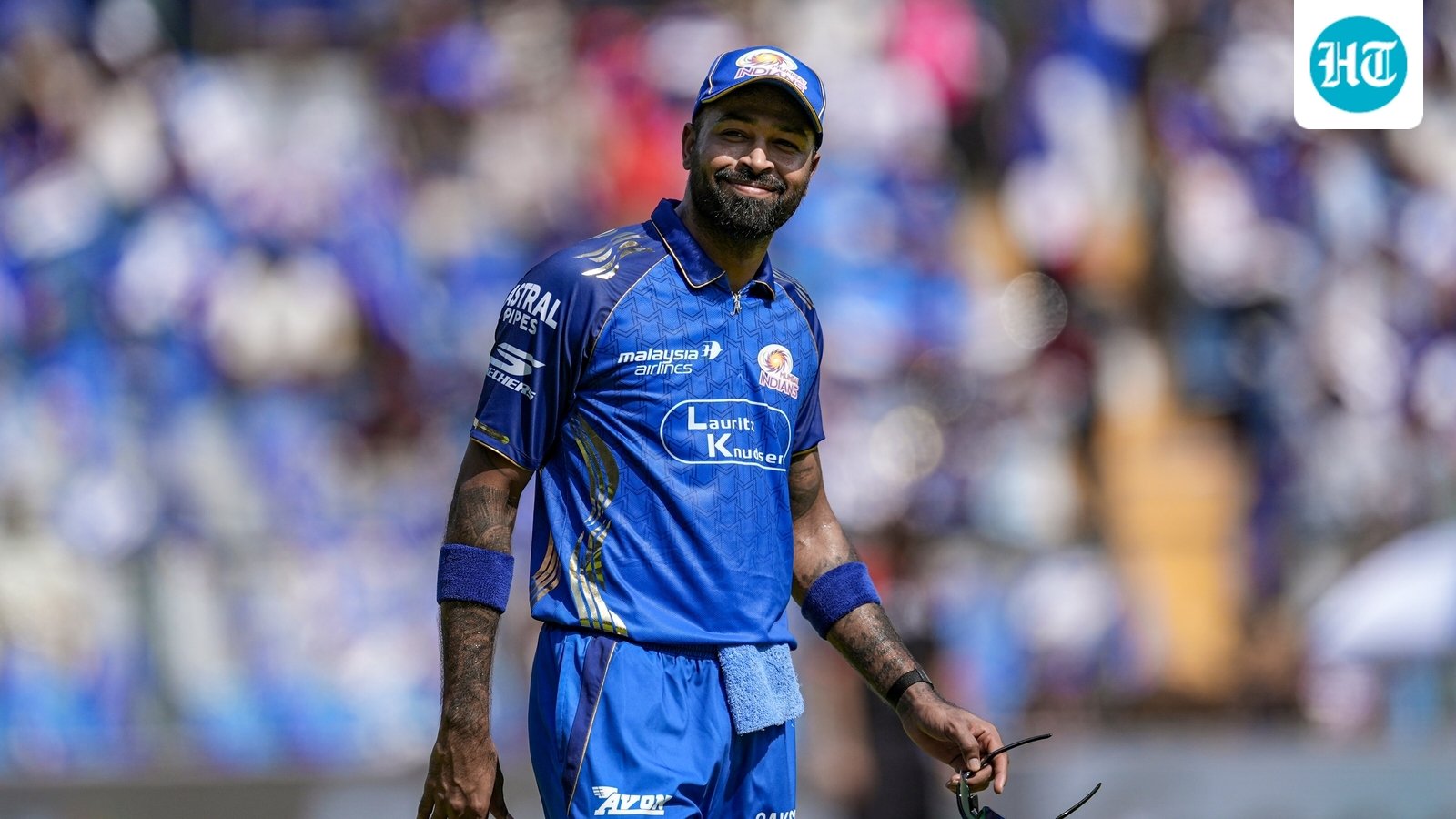
Hardik Pandya is not officially on his way out of the Mumbai Indians. That distinction matters amid a trade story that has gathered momentum faster than the franchises themselves appear willing to move.
As of August 2, Mumbai have maintained that their post-season review remains incomplete and that they are not discussing player trades with Chennai Super Kings or any other franchise. No decision has been taken on Hardik’s future. The possibility of an exit, however, cannot be dismissed as empty social-media noise. Kolkata Knight Riders and Rajasthan Royals have reportedly explored the situation, while Chennai and Delhi Capitals have also been mentioned as possible destinations.
The more important question is not whether Hardik can still attract interest. An Indian fast-bowling all-rounder with championship-winning captaincy experience will always have suitors. The question is which team can accommodate the player Hardik is now, rather than building plans around the most dominant version of him.
His IPL 2026 numbers demand that distinction. Hardik scored 206 runs from 149 deliveries across 10 innings, striking at 138.26 with a highest score of 40. With the ball, he managed only four wickets from 22.4 overs while conceding 11.43 runs per over.
Those are not the numbers of a player ready to operate simultaneously as a frontline bowler, designated finisher and tactical centre of a team. They do not mean Hardik is finished. They mean his next franchise must reduce the number of responsibilities competing for his body and attention.
He needs a defined batting position, an attack capable of surviving without four overs from him and a leadership structure that either empowers him completely or removes captaincy ambiguity.
Where do the franchises stand
Chennai would provide an appealing alternative because of their history of reviving senior players. Hardik could be managed carefully there, and their bowling return of 76 wickets at an economy rate of 9.43 suggests in IPL 2026, he would not have to carry the attack alone.
The complication is batting duplication. Shivam Dube scored 270 runs at a strike rate of 158.82 in the last season. If Dube stays and Hardik arrives, then squeezing both of them in the middle-order could be disastrous. However, the rumours say that Dube could be part of the trade deal between the two five-time champions.
There is also the captaincy issue. Ruturaj Gaikwad remains Chennai’s appointed leader, and introducing Hardik without clearly resolving that hierarchy could create more problems than it fixes. CSK themselves initially said no internal discussion had taken place regarding Hardik, while Mumbai have now denied active trade talks altogether. Chennai could be the best rehabilitation centre for him.
Delhi Capitals are a less convincing match. Delhi finished with seven wins and seven defeats, but their biggest weakness was bowling. They claimed only 64 wickets and conceded 10.04 runs per over – the poorest bowling record among Hardik’s four credible suitors.
The 2026 version of Hardik does not solve that problem. Delhi would be acquiring another high-profile middle-order and leadership option, even though they already have Axar Patel, KL Rahul, and the returning Rishabh Pant. Rahul scored 593 runs at a strike rate of 174.93, while Pant’s trade back to Delhi has restored another former captain to the group.
Their priority should be rebuilding the attack after sending Kuldeep Yadav to Lucknow, not further crowding the leadership table.
Rajasthan are the least logical destination, particularly if Jaiswal is the proposed exchange. The Royals reached the playoffs after winning eight league matches. They scored at 10.42 runs per over, with Jaiswal contributing 427 runs at 152.50 and Riyan Parag making 309 at 158.46. Ravindra Jadeja also provided 266 runs and 10 wickets at an economy rate of 8.39.
Rajasthan already possess younger top-order power, an established Indian all-rounder and a captaincy project in Parag. Trading Jaiswal for Hardik would sacrifice a 24-year-old elite opener to acquire an older player coming off an inferior season. It would address no obvious weakness.
Also Read: Jasprit Bumrah ruled out of Sri Lanka Tests as India refuse to gamble with star pacer’s fitness
Why KKR are the best fit for Hardik Pandya
Kolkata’s interest is the most credible of the current links. Multiple discussions between the senior management of KKR and Mumbai were reported in June, with captaincy believed to be part of Kolkata’s proposal. Rajasthan also reportedly approached Mumbai over a possible deal involving Yashasvi Jaiswal, although it remains unclear whether that conversation developed beyond an initial enquiry.
KKR’s case has since become more compelling. Ajinkya Rahane’s retirement has left them requiring a new captain before IPL 2027. Rinku Singh is a viable internal candidate, but appointing Hardik would provide an immediate, experienced leadership solution rather than asking Rinku to combine captaincy with an already demanding finishing role.
The cricketing numbers reveal why the fit extends beyond captaincy. Kolkata scored 2,313 runs during IPL 2026 at 9.26 runs per over, the lowest aggregate and scoring rate among the four credible destinations. Their bowling was considerably healthier: KKR took 83 wickets while conceding 9.09 runs per over, comfortably better than Chennai, Delhi and Rajasthan.
That is almost the ideal environment for the current Hardik. Kolkata would not need him to repair their attack. They could treat his bowling as a tactical resource – perhaps two carefully selected overs against favourable match-ups – rather than constructing the innings around his availability.
Batting at No. 4 or No. 5, Hardik could operate between Cameron Green and Rinku. Green scored 322 runs at a strike rate of 146.36 in 2026, while Rinku made 299 at 151.01. Hardik would not need to replace either player. His purpose would be to connect the top order with Rinku, absorb difficult middle-overs passages and attack when the match-up allows it.
That configuration would give KKR something they lacked: an experienced Indian batter capable of changing tempo without occupying an overseas position. It would also give Hardik a role broader than pure finishing, where a player can face only a handful of balls and still be judged as the reason an innings stalled.
Hardik’s best destination, therefore, is not necessarily the strongest team or the franchise with the loudest reputation for managing veterans. It is the team whose existing strengths protect his current limitations.
Kolkata need leadership and middle-order authority. They do not desperately need Hardik’s four overs. They possess enough bowling depth to manage his workload and enough batting around him to prevent every innings from becoming a referendum on his form.
CSK could repair Hardik. Delhi could promote him. Rajasthan could add him. KKR are the team that could give him ownership without asking him to do everything. At this stage of his career, that balance may decide whether Hardik Pandya becomes a transformative trade or merely the most famous one.


