







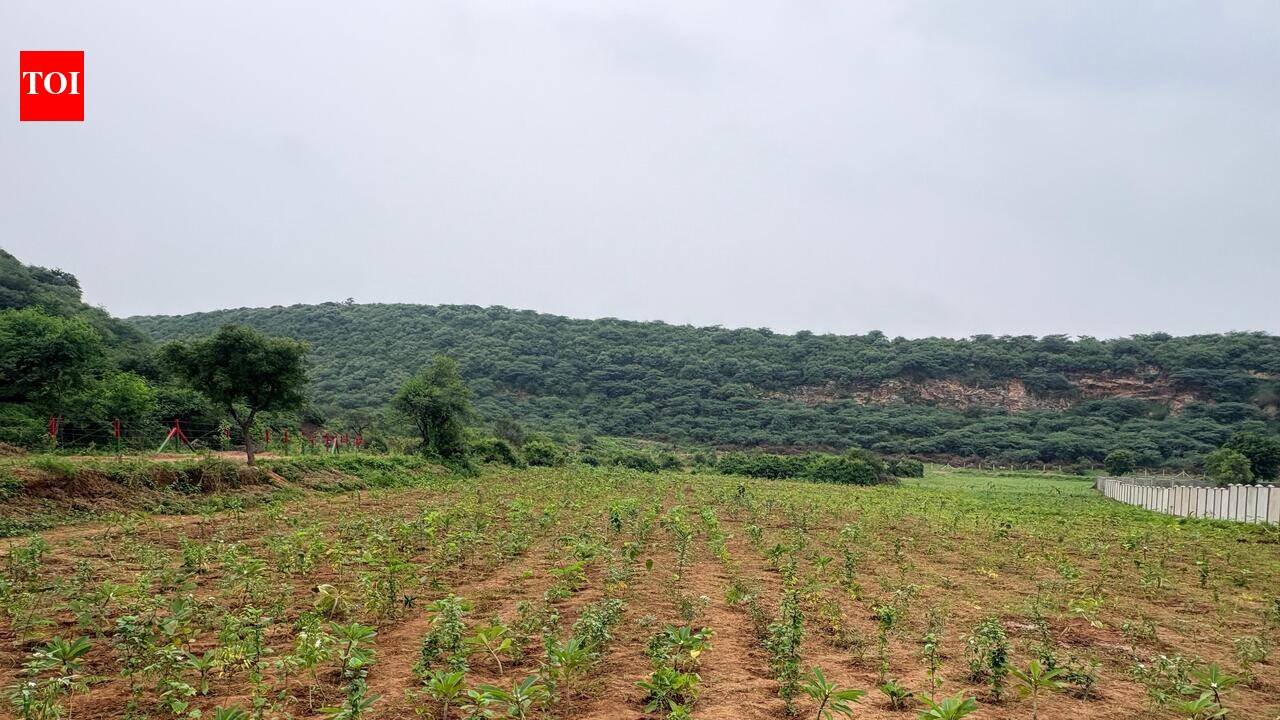
Gurgaon: The forest department has begun creating dedicated plantation zones under the Namo Van initiative, with the first one-hectare site having come up at Gairatpur Bas.Ten thousand saplings have been planted at the site, which was inaugurated on Friday during the 77th district-level Van Mahotsav under the ‘Ek Ped Maa Ke Naam’ campaign.“A second Namo Van — also spread over one hectare — is planned in Manesar,” chief conservator of forests, south Haryana, Raj Kumar told TOI.“The Aravalis were an important natural asset,” forest and environment minister Rao Narbir Singh said, calling for collective efforts to protect them. He also stressed that tackling the NCR’s pollution problem required public participation along with govt action.The initiative comes against the backdrop of growing pressure on the city’s remaining green spaces. The city’s landscape has transformed rapidly from a predominantly rural area into one of the NCR’s biggest urban and commercial hubs. Rapid urbanisation has transformed large parts of the district over the past few decades, with residential and commercial development, roads and other infrastructure expanding into areas that once formed part of its rural and natural landscape.The pressure has been particularly visible in the Aravali belt, which remains one of the city’s most important natural green zones but has also faced degradation, encroachment and development pressure. Forest loss data showed Gurgaon losing 2.47 sq km of forest between 2019 and 2021.The choice of Gairatpur Bas is also significant as the village lies in the Aravali landscape. The plantation will add a new block of vegetation to the area as the saplings mature, although its eventual contribution to green cover will depend on their survival and growth.More recently, infrastructure expansion has continued to involve tree felling. For instance, 344 trees were approved for felling for the widening of a key road in Gurgaon in 2025, prompting concerns over the shrinking green cover in a city already facing air pollution and rising temperatures.Forest Survey of India’s 2023 assessment recorded 279.5 sq km of forest cover in the city, accounting for 8.9% of the district’s geographical area. Of this, 78.7 sq km was moderately dense forest and 200.8 sq km open forest, while no area was classified as very dense forest.The numbers also underline the nature of the city’s green cover. A significant proportion of the district’s forest cover is classified as open forest rather than dense forest, making the protection and restoration of existing vegetation particularly important.Against this backdrop, the Namo Van concept seeks to create identifiable, dedicated plantation areas rather than limiting afforestation to individual plantation drives.For Gurgaon, the challenge is not merely to plant more trees but to ensure that existing natural vegetation survives alongside continued urban expansion.Last year in Aug, TOI reported that the state forest department itself has faced questions over the effectiveness of afforestation, with Haryana having used only about 55% of more than Rs 1,000 crore sanctioned for compensatory afforestation between 2019 and 2024. Despite plantation over thousands of hectares, the state’s forest cover increased only marginally between 2019 and 2023.


