



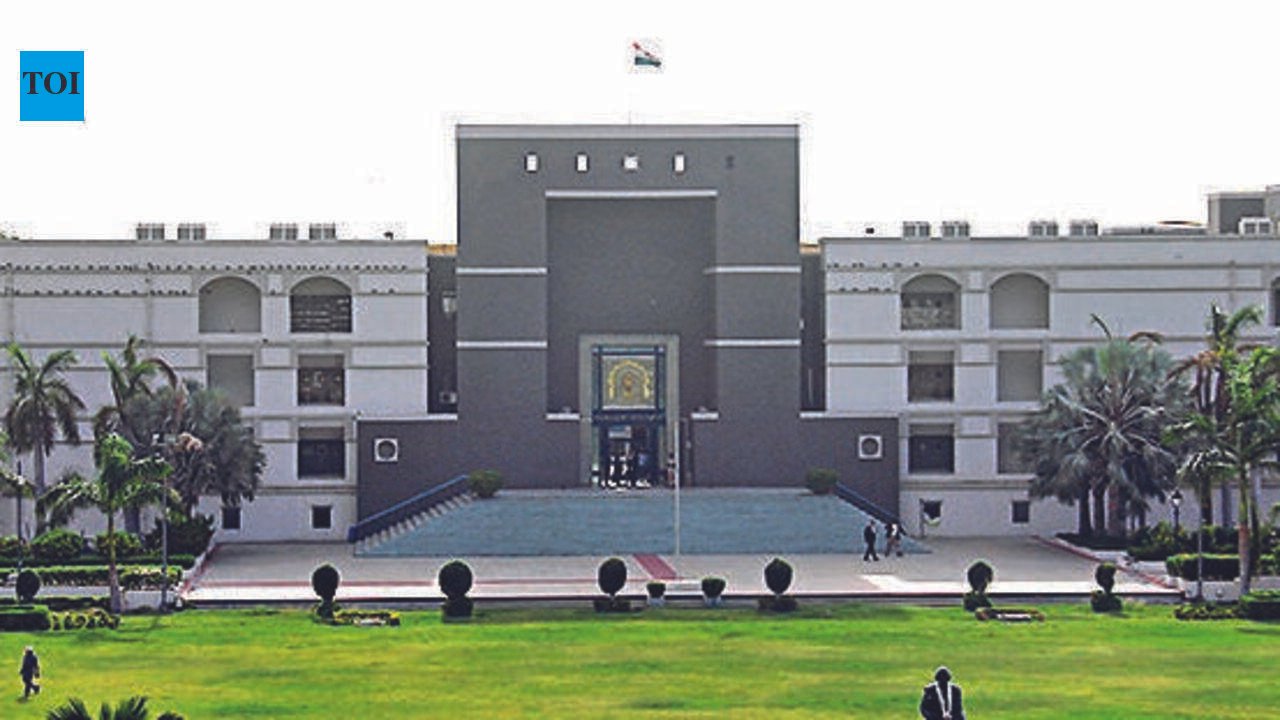
Ahmedabad: Gujarat High Court reversed the dismissal of a court clerk almost three decades after he was sacked over bribery allegations, holding that the disciplinary proceedings against him had serious flaws. Observing that he had suffered the stigma of dismissal for 27 years, HC said the punishment imposed on him was so disproportionate that it shocked the conscience of the court. The court awarded him a mild punishment and directed the authorities to pay him consequential salary arrears and applicable pensionary benefits.The case involved N R Limbachiya, a bench clerk at the metropolitan court in Ahmedabad. HC’s vigilance cell caught a peon in the same court accepting Rs 100 from a litigant in April 1998. Limbachiya, who was the peon’s supervisory authority, was also implicated and suspended three days later.An inquiry took place and the disciplinary authority dismissed Limbachiya in 1999. The dismissal was upheld by the appellate authority in 2010. The peon, who was allegedly caught accepting the bribe, was punished only with stoppage of three annual increments.Limbachiya challenged his dismissal in HC in 2011 on the grounds that there was no evidence related to his involvement in the bribery. He also claimed that the inquiry officer was biased and that his repeated requests for a change of inquiry officer were ignored. He further contended that the punishment imposed on him was disproportionate, particularly when compared with the penalty given to the peon.After the hearing, Justice Nikhil Kariel held that the departmental inquiry was unfair and biased and that the findings against Limbachiya were based on conjectures rather than sustainable evidence. The clerk’s allegations of bias against the inquiry officer and his demand for a change also weighed with the high court.HC found that the allegations against the clerk for giving short dates to litigants for Rs 50 were not properly investigated, and they did not hold much water. It also described the appellate authority’s reasoning as “cryptic”.Instead of remanding the matter for a fresh inquiry after nearly three decades, the court invoked its exceptional jurisdiction to bring the litigation to an end. It imposed a lesser penalty of stoppage of six increments with effect from July 2, 1999. After altering the punishment, HC ordered, “The petitioner shall be entitled to arrears of salary as well as applicable pension, calculated on basis of the above penalty, treating the petitioner to be in service from July 3, 1999, till the date of regular superannuation.”


