



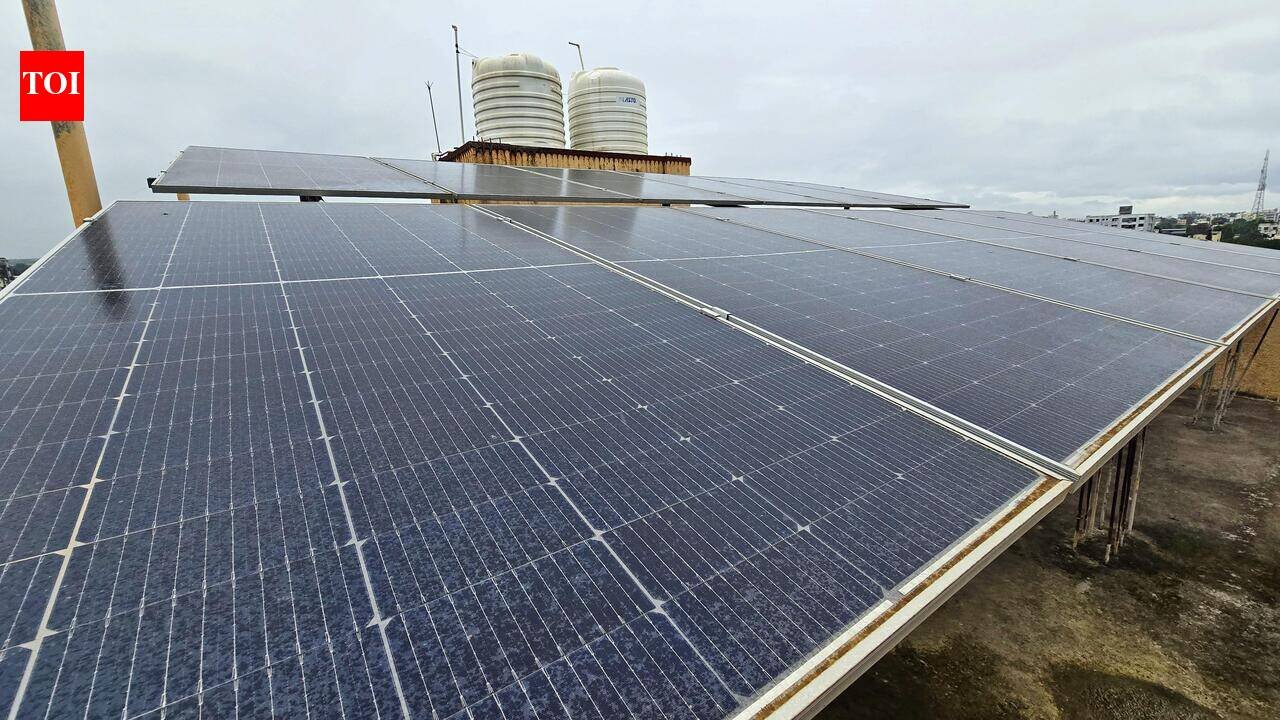
Ahmedabad: The Gujarat Electricity Regulatory Commission (GERC) has reduced the banking charge for green energy open access consumers by one-third, from Rs 1.5 to Re 1 per unit. The new charge will apply from Sep 1 to March 31, 2027, under the sixth amendment to the Gujarat Green Energy Open Access Regulations notified on Aug 19.The reduction means consumers will save 50 paise on every unit of renewable energy they bank. For an industrial consumer banking 1 crore units, this could mean a direct saving of Rs 50 lakh during the period, depending on how much of the banked power is actually used.Banking allows consumers to store surplus renewable power generated at one time and use it later, subject to regulatory limits. The lower charge is expected to make renewable power more economical for industries with fluctuating electricity demand or varying solar and wind power generation.Kunj Shah, chairperson of Assocham’s renewable energy committee, said the move would particularly benefit industries that do not have captive power plants or the space and location needed to set up captive renewable energy projects.“The reduction in costs will go a long way in encouraging more industries to adopt renewable energy,” he said.The lower banking charge comes at a time when the cost of open-access power is influenced by several factors, including transmission charges, banking fees and the ability of industries to match renewable power generation with their consumption.“The immediate benefit is straightforward: every unit banked will cost 50 paise less from Sep. For industries that cannot invest heavily in captive renewable capacity, open access at a lower banking charge will make renewable power more attractive,” said solar energy consultant Jaideep Malaviya.“With power tariffs rising, it will become easier for industries to procure renewable energy at a lower cost. This should give a further boost to the renewable energy sector,” he said.Malaviya added that higher investment in renewable energy could increase power generation and make power evacuation — the transmission of electricity from generating plants to users — an important concern.“The govt will need to ensure that adequate evacuation infrastructure is available and that power can be transmitted in line with the capacity agreed under the power purchase agreement,” he said.The benefit, however, will depend on how much surplus power a consumer can actually use. GERC allows cumulative banking of up to 30% of a consumer’s monthly electricity consumption during a billing cycle.Any surplus beyond this limit lapses. Banked energy remaining unused at the end of the monthly banking period also lapses.There are separate restrictions on when the banked power can be used. Surplus generated during off-peak hours cannot be used during peak hours. However, power banked during peak hours can be used during both peak and off-peak periods.As a result, the lower charge will mainly benefit consumers who can closely match renewable power generation with their electricity demand. It will not automatically reduce the overall cost of open-access power for every consumer.


