



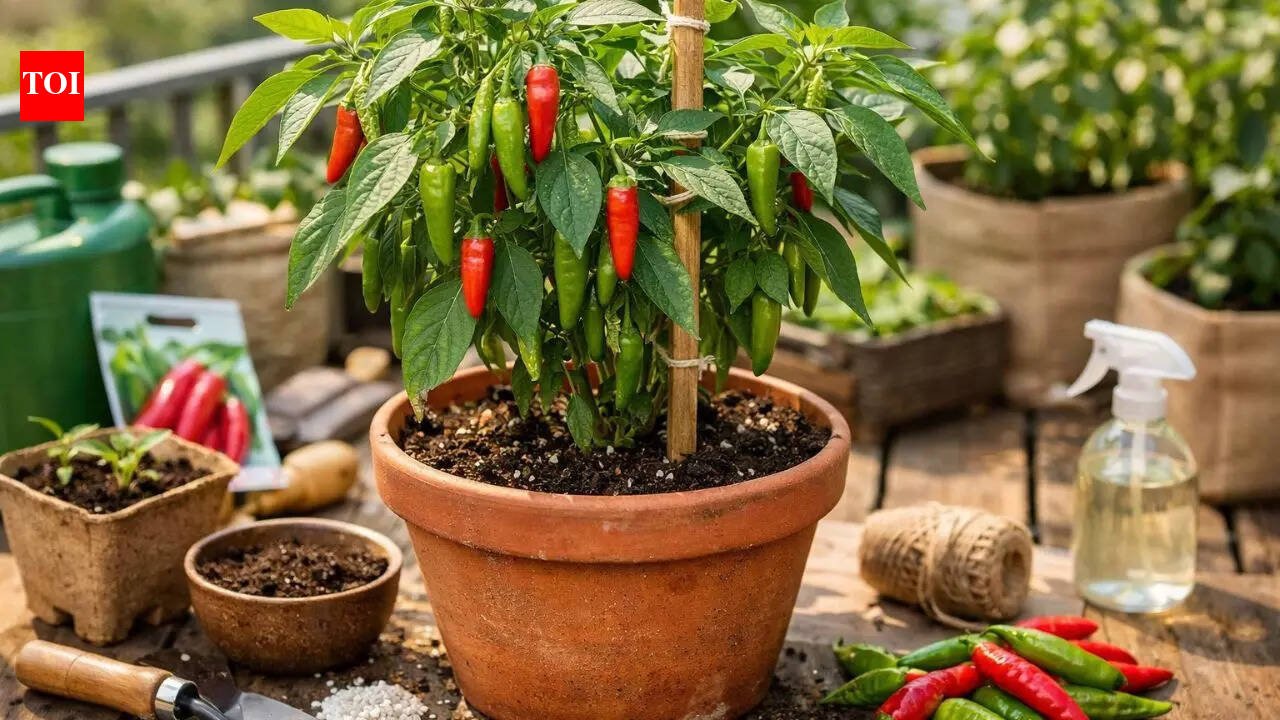
There is a certain satisfaction in growing your own food, even if it is just a tiny plant on a balcony or in a window. One of the easiest and most rewarding plants you can grow in your home is chillies. You don’t have to have a large garden, special equipment, or even be an expert gardener. With a pot and some basic care, one plant can give you fresh chillies for months.What makes chilli plants particularly appealing is their versatility. Chillies can be grown in pots, respond well to attention, and prefer warm weather. If you are new to gardening or want to start small, growing chillies can be a good way to begin.
Tips to grow chillies easily at home
Choose the right starting point
A healthy plant starts from healthy plant material. You can either use seeds from dried chillies available at home or procure them from a nursery. If you are a beginner, it is always better to use a small plant, as it will be easier for you to handle and will adjust quickly.
Pick a container with proper drainage
Chilli plants don’t thrive in soggy soil. It is important to have a pot with drainage holes to prevent water from accumulating in the pot. Pots that are 8-10 inches deep will work best for growing chilli plants, as this will allow enough space for the roots to develop.
Use a balanced and airy soil mix
The quality of soil is one of the most important factors for plant growth. A mixture of garden soil, compost, and cocopeat is ideal. This mixture will help hold moisture and allow for air circulation, which is essential for plant growth.
Sow seeds with enough space
Seeds should be planted shallowly, i.e., just below the soil’s surface. If you are planting a number of seeds in one pot, space them out. This ensures that the plants are not crowded and receive adequate nutrients and light.
Ensure enough sunlight every day
Chilli plants need sunlight to thrive. An area receiving at least five or six hours of direct sunlight on a daily basis is recommended. If not, the plant may become weak and bear fewer fruits.
Water carefully and consistently
Watering of the plant needs to be done based on the condition of the soil. If the soil on top is dry, it is time to water the plant. The aim is to keep it moist and not too wet. If it is too wet, it will affect the roots of the plant, and if it is too dry, it will hinder its growth.
Feed the plant regularly
As it develops, it requires more nutrients to ensure that it produces flowers and fruits. This can be achieved by adding compost or organic fertiliser to the plant every few weeks. This ensures that the plant remains productive.
Support the plant as it grows
As the chilli plants grow, they may become a little heavy, especially when the fruits develop. Supporting them with a small stick or a stake ensures that they do not topple over and damage the stem.
Watch out for pests early
It’s a good idea to look at the leaves to ensure that any pest issues are detected early. Insects like aphids or mites can have a negative impact on plants. Easy solutions are available to deal with them.
Harvest at the right time
The chillies can be picked when they are still green or allowed to mature completely on the plant. Most plants tend to produce chillies within a matter of months. Proper harvesting ensures that the plant continues to produce more chillies.


