


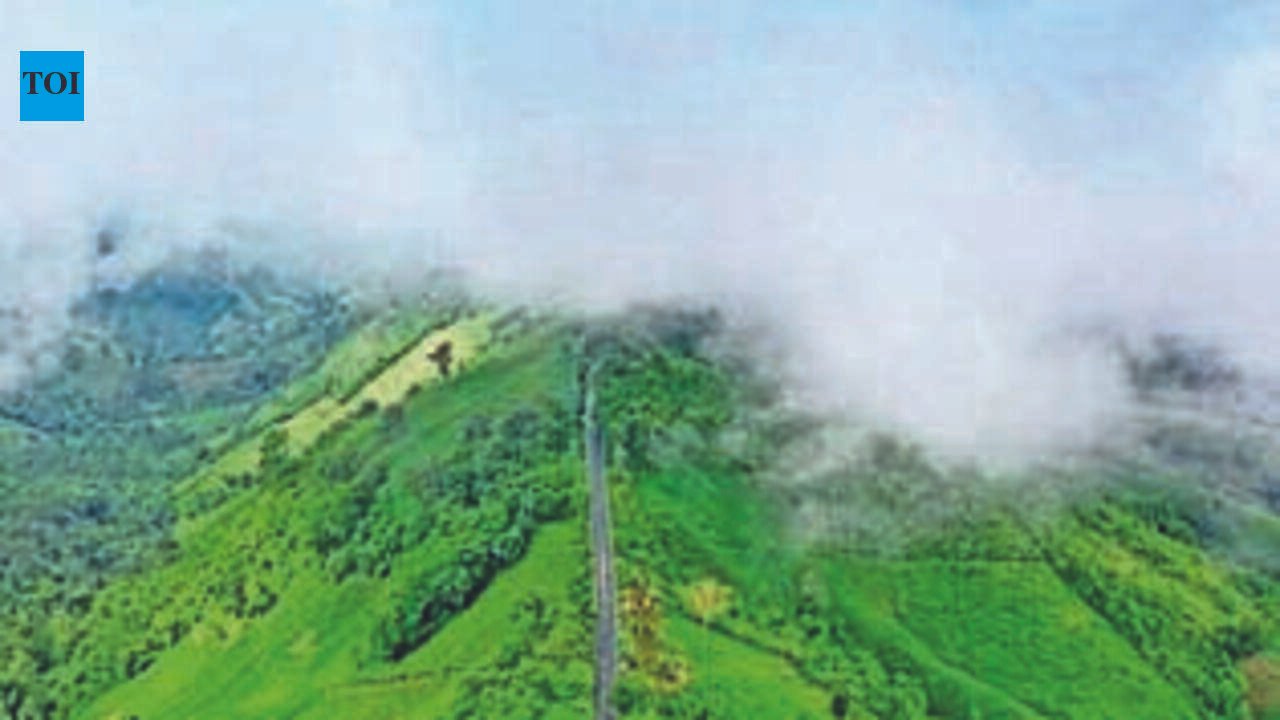
Chikkamagaluru: Environmentalists, politicians, and residents have strongly opposed the Union govt’s latest draft notification declaring ecologically sensitive areas in the Western Ghats, claiming it will threaten the livelihoods of farmers in the Malnad region.The Union govt’s seventh draft notification on the Eco-Sensitive Zone (ESZ) in the Western Ghats proposes identifying 20,668sqkm as an ESZ. Critics have described the proposal as “unscientific”. Environmentalist Kalkuli Vittala Hegde said, “People living luxurious lives in cities are drafting reports without adequate knowledge of the region. It is the farmers of Malnad, who love and protect the land through agriculture, who are paying the price.”He said the NDA govt rejected the 2012 Madhav Gadgil Report and instead implemented the Kasturirangan Report in 2014. According to him, 127 villages in Chikkamagaluru district fall under its purview. “This new draft notification is yet another attempt to mislead the people of Malnad,” he alleged.Hegde pointed out that farmers in Malnad use Bordeaux mixture for plantation crops. “If this report is implemented, crops will be severely affected. The proposed restrictions on pesticides, weedicides, and chemical fertilisers will devastate coffee and horticulture farmers,” he said.He also noted that the state govt has been encouraging people to apply for the regularisation of encroached land, with thousands of applications still pending. “If the ESZ notification comes into force, people may not even be allowed to build houses,” he said. Hegde urged the state govt to reject the draft notification and demanded its immediate withdrawal by the Centre.Activists alleged that the villages were included in the ESZ based solely on aerial surveys, without any field verification by officials. Former minister DN Jeevaraj claimed that satellite imagery cannot accurately distinguish between forest land and human settlements. “Villages with schools, temples, houses, and farmland have been identified as eco-sensitive areas. Declaring them as such on paper will destroy the livelihoods of farmers, labourers, and tribal families,” Jeevaraj said. He urged the authorities to make a final decision only after consulting gram panchayats and local representatives.
