





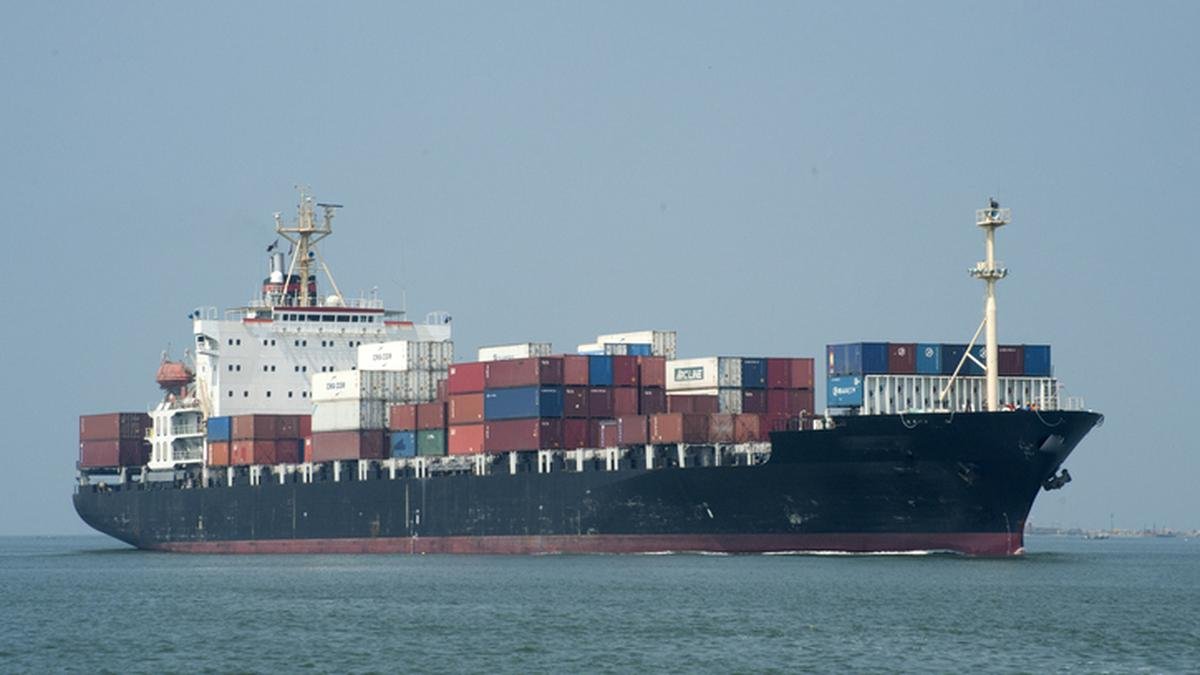
In a normal year, Iran buys almost 4.5 million tonnes of basmati rice from India. “It is difficult for the ships to pass through the Strait of Hormuz now. Availability of vessels from Kandla or Mumbai to Iran is very poor,” says Prem Garg, president of the Indian Rice Exporters Federation. A 20-foot container carrying 26.5 tonnes of rice now costs about $5,000 to book. “But we never know when a vessel will be available,” he says.
The uncertainty carries a steep price. R. Rajeshkumar, president of the Custom Broker and Shipping Agents Association, Coimbatore, recalls a customer who booked a container from Kochi to Iraq for $1,500. With the West Asia conflict stranding empty containers at major ports, procuring an empty container eventually cost $50,000.
Coffee exporters face similar disruption. Most Indian coffee containers now travel around the Cape of Good Hope instead of through the Red Sea and Suez Canal, says Ramesh Rajah, president of the Coffee Exporters Association of India. The diversion adds 10 to 22 sailing days and several thousand nautical miles. Freight per container has climbed from about $1,200 before the crisis to $3,800 because of the detour, while international buyers continue insisting on pre-contracted freight rates.
Across sectors, exporters are grappling with container shortages, fewer mother vessels and soaring freight costs. Large container ships that once called at Thoothukudi and Kochi have steadily declined since Covid. Instead, vessels carrying up to 20,000 containers now mostly dock at Nhava Sheva.
“The freight cost from Nhava Sheva is almost 50% less compared with the ports in the south, and the time taken is also less,” says P. Subramaniam, former Coimbatore president of the Customs Broker Association. As a result, more than 40% of cargo that once moved through Thoothukudi or Kochi has shifted to Nhava Sheva.
Infra constraints
Infrastructure constraints have compounded the problem. Vallarpadam is still some years away from becoming fully operational. Thoothukudi will be able to handle larger mother vessels only after completion of its ₹15,000 crore Outer Harbour Project. Vizhinjam, meanwhile, remains focused largely on EXIM cargo because of connectivity limitations. Freight rates continue to surge. Shipping a container from Kochi to Jebel Ali has risen from $1,000-1,500 to nearly $7,000, increasing by roughly $500 in just the last three days. Rajeshkumar says Chinese exporters secure containers more easily because of stronger demand, while Indian exporters pay heavily to book containers or recover empty ones stranded at hubs such as Dubai, Khor Fakkan and Sohar.
The problem is structural, says Amitabh Kumar, former Director General of Shipping. India has weathered five major shipping disruptions this decade — COVID, the Suez Canal blockage, the Ukraine war, Houthi attacks in the Red Sea and now tensions around the Strait of Hormuz.
Container shipping operates on fixed schedules. When routes become unsafe, ships divert, often around the Cape of Good Hope, adding 10 to 12 days to voyages. Shipping lines also prioritise their busiest routes, particularly China-Europe and China-U.S. services.
“India has lots of trade here but these are not popular ports for container ships,” Mr. Kumar says, referring to routes serving Africa, Iran and Eastern Europe. Even a modest reduction in shipping capacity can clog Indian ports, delay container turnaround and push freight rates higher. Perishable exports such as prawns are among the first casualties, while agricultural and chemical exports also suffer as shipping capacity shrinks. “We don’t have the tonnage in India to substitute for foreign container ships skipping ours,” Mr. Kumar says. Foreign shipping lines carry 90-95% of India’s cargo, leaving India vulnerable whenever global operators redeploy vessels elsewhere. Container shortages worsen as turnaround times lengthen.
Domestic production
Domestic container production also remains modest, restricting options for exporters. According to a Lok Sabha reply in March, India manufactured around 24,000 TEUs in FY24 compared with China’s output running into several million annually.
The government has unveiled two initiatives to reduce this dependence — one to expand container manufacturing and another to build an Indian container shipping line.
The ₹10,000-crore container manufacturing scheme announced in the Union Budget 2026-27 aims to increase domestic production tenfold. Its first outcome came on July 3, when an India-made EXIM container built by DCM Shriram Group was unveiled at Dadri for Maersk, which has placed a follow-on order for another 1,000 containers. Location is a crucial factor, Kumar says. Indian-made containers cost roughly 20% more than Chinese ones because Chinese containers often arrive in India already loaded with cargo, allowing transport costs to be absorbed into freight. Indian-made containers must first be transported empty to loading points, increasing costs. Manufacturing closer to ports such as Dadri can reduce this disadvantage.
The challenge, Kumar argues, is less about manufacturing capability than closing this cost gap through policy support.
The second initiative focuses on shipping ownership. In February, the Shipping Corporation of India, Container Corporation of India and the port authorities of Jawaharlal Nehru, Tuticorin and Chennai signed an MoU to establish the Bharat Container Shipping Line, India’s first national container carrier. A shipping industry observer welcomed the move but cautioned that substantial work remains before BCSL becomes operational, including identifying trade routes, recruiting experienced liner-shipping personnel, appointing agents, acquiring vessels and managing a fleet.
Published – July 11, 2026 11:04 pm IST


