



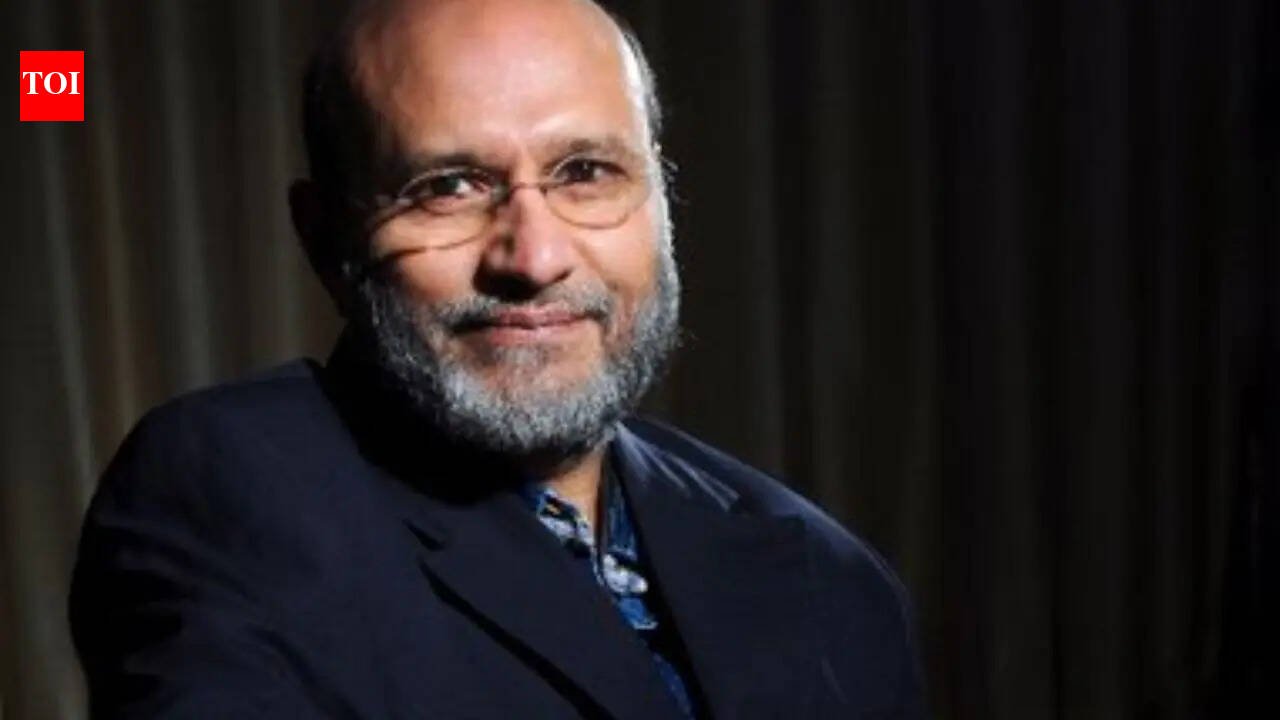
With 121 million young Indians neither studying nor working, 80 million people having moved back into agriculture between 2020 and 2024 and youth unemployment having tripled since 2012, a new book arrives as a reckoning. Co-authored by development economist Santosh Mehrotra, visiting professor at the University of Bath’s Centre for Development Studies and Jajati Parida, professor of economics at the University of Hyderabad, India Out of Work challenges India’s growth narrative. In an interview, Mehrotra speaks to Sharmila Ganesan Ram about a ‘lost decade’, what Latin America has to do with India’s future and possible answers to the national jobs crisisYou spent 15 years in the UN, then returned to serve in India’s Planning Commission before leading the National Institute of Labour Economics Research and Development only to watch both institutions effectively dismantled. You’ve also been warning about jobless growth for over a decade. Was this book born as a culmination of those warnings?This book is motivated by my warnings having come true. In 2017, the Periodic Labour Force Survey informed India that we had experienced the worst open unemployment rate in the 45-year history of the labour force survey. Youth unemployment had tripled compared to 2012, just as new entrants were increasing and they are expected to keep increasing till 2030. Government denied the reality. Growth rates fell every quarter to early 2020. Then India’s economy contracted by nearly twice as much as the global economy in FY21. A K-shaped recovery followed. And from this point onwards, the situation is likely to worsen.One of the book’s most startling claims is that nearly 80 million people moved back into agriculture between 2020 and 2024 — something virtually unheard of in a developing economy. Yet headline GDP growth remained relatively strong. How do you reconcile the two trends?If high-end services and capital-intensive infrastructure drive growth, it benefits at best the top deciles of the income distribution; the bottom 80% get left out. What had been happening is structural retrogression: from 42% of the workforce producing 16% of India’s GDP in agriculture in 2019, now 46% was doing the same. Never in human history had 80 million workers been added to an already labour-surplus farm sector in just four years. Government economists claimed India added 80 million new jobs — but they were in agriculture. The economic recovery was inevitably K-shaped. This is the foundational reason consumption of the bottom 50% is not rising.You argue India has until roughly 2040 before the demographic dividend window closes. At this point, does it still represent an opportunity, or has it become a narrowing escape window?We lost the last decade — yes, it is a ‘lost decade’ — by not generating sufficient jobs for three groups needing non-farm work: the stock of surplus labour in agriculture; the stock of unemployed, including around 100 million 15-to-29-year-old NEETs; and the flow of around 6 million new entrants to the labour force every year. What was still an opportunity a decade ago is now only a narrowing escape window.You’re sharply critical of the PLI scheme. What is fundamentally missing from India’s industrial approach?Manufacturing as a share of gross value added had been around 16-17% for 25 years after 1991. It fell well below that starting 2016 and has never recovered. Manufacturing employment — 60 million in 2012 — had fallen to 55 million by 2019. That had never happened since independence. India has not had a horizontal industrial policy for 35 years; the result is that manufacturing’s share of GVA is still not rising. Without manufacturing growth supported by an employment policy — still hitherto absent — there cannot be non-farm job growth with rising wages. Real wages have stagnated for a decade.You note that 96% of discouraged workers are women. Yet you also argue women’s participation in manufacturing is one of the strongest drivers of per capita income growth. Why does India still see women’s employment primarily as a welfare issue?This framing shows that policymakers don’t understand that non-farm job creation for women is key to transforming society. By 2015, India achieved near-universal secondary enrolment for girls — a remarkable achievement. Higher education enrolment shot up, with gender parity. But young women’s unemployment is much higher than for young men. What is achievable is shown by Tamil Nadu. Over 40% of India’s women factory workers are employed in Tamil Nadu, which has only 5-6% of India’s population. Why can’t the Hindi-belt states follow similar policies? There is no chance for India being ‘Viksit’ without gender equality, especially in north India.Government has claimed credit for a rise in female labour force participation since 2020 — ignoring that it is almost entirely driven by women returning to agriculture and rising unpaid family labour. There is little that is positive in any of these trends for the autonomy, agency or earnings of women.You cite 121 million young Indians not in education, employment, or training, and describe this as “fertile ground for inevitable social conflict.” Do you believe India is underestimating the political consequences?Economists issue stark warnings based on data. The worker riots that began recently in Gurgaon spread rapidly to Faridabad, then Noida. Workers will not stand any longer for Rs 10,000 monthly wages with zero social insurance. The slightest increase in prices — now inevitable — will trigger both quiet desperation and rioting. The number of exam paper leaks for competitive exams has shot up to 90 in the last decade, with organized mafias operating. The young will not take this worsening situation lying down.The book repeatedly questions the disconnect between headline GDP numbers and lived economic reality. At what point does the growth narrative itself face a credibility crisis?The growth narrative has been questioned by professional economists since 2017. After 2016, the unorganized sector saw a dramatic increase in unit closures and job losses — but the CSO continued estimating GDP without regard to these changes. GDP growth was being systematically overstated. The IMF confirmed this critique in its 2025 Article IV Assessment, downgrading India’s national accounts statistics to a “C” rating. The government has since announced a statistical overhaul. Our critique was legitimate.Graduate and postgraduate unemployment is now significantly higher than unemployment among the illiterate. Is this a failure of the education system or of the economy?That the better-educated have higher unemployment than the poorly educated is a developing-country phenomenon. The bigger problem is that graduate unemployment has at least doubled since 2012. This is mainly because non-farm job creation fell compared to a decade ago, while the number of labour force entrants increased — and as massification occurred in schooling and then higher education, learning quality dropped precipitously.Is this book ultimately an argument for optimism?The optimism is currently confined to within government circles, who refuse to acknowledge the reality. There is no optimism among the 800 million Indians who depend on free rations. China’s leaders have said since about 2015: “Europe became old after they became rich; we have become old without becoming rich.”China’s per capita income is 2.3 times India’s today. Our only hope for slightly extending the window of opportunity is that women obtain non-farm work — for which there is still no evidence.If there were one policy decision the government could take in the next two years that would most alter India’s trajectory, what would it be?The difference between India and East Asian success stories — including Vietnam — is a manufacturing strategy. The book spells out eight components of an industrial policy for India that will create jobs and enable inclusive growth: the opposite of what we have seen for the past decade.


