



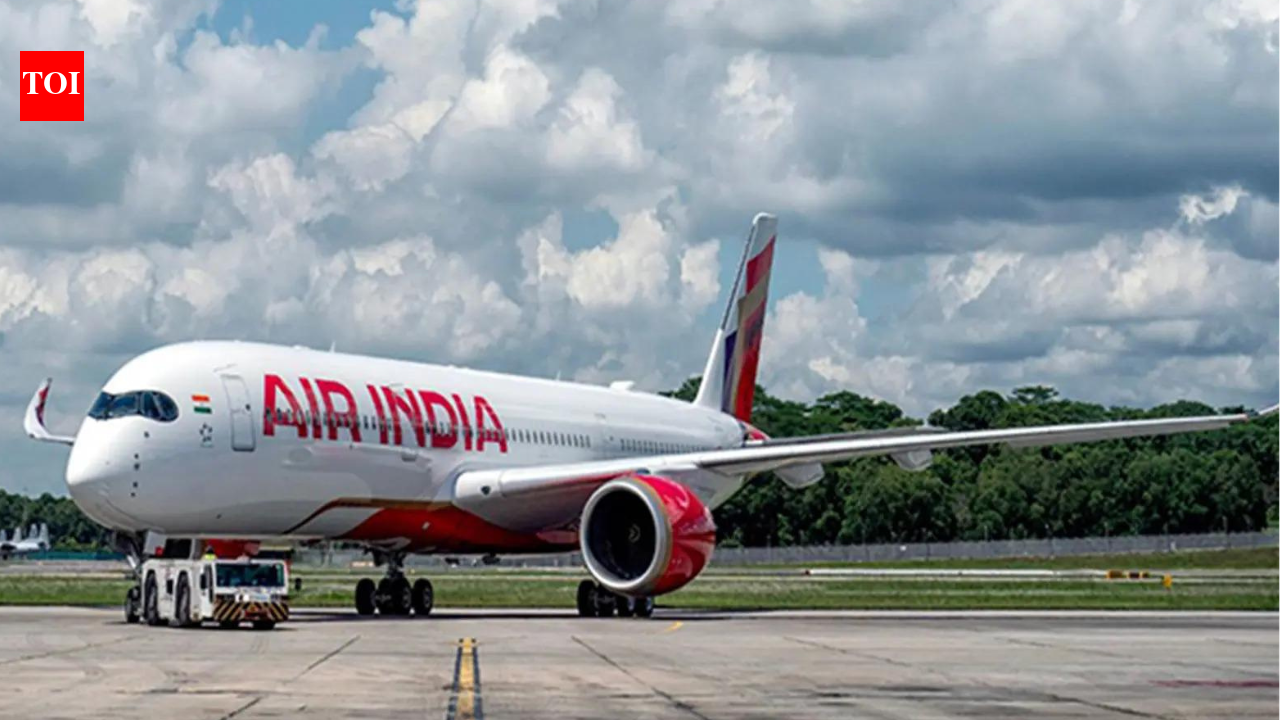
NEW DELHI: Air India Thursday listed the steps it has taken to bolster safety and said it has gone “beyond regulatory compliance” in risk-based audit planning. “Air India has taken a series of proactive measures following the AI171 accident to further strengthen operational resilience and organisational effectiveness. These initiatives are not related to safety or airworthiness, but are focused on enhancing fleet reliability, improving operational consistency, and reinforcing mental health and human performance frameworks for its people,” the airline said.A Boeing 787 Dreamliner operating as AI 171 from Ahmedabad to London last June 12 had crashed seconds after take off, killing 260 people. One one out of the 242 people onboard had survived the crash and 19 others on ground had lost their lives too.“Air India continues to operate to the highest standards of safety across all its aircraft and flight operations, in full compliance with regulatory requirements and global aviation best practices.There have been no changes to Air India’s core safety protocols or airworthiness practices, which remain robust, well-established, and continuously monitored,” it said.The airline reiterated that a “safety pause” taken right after the crash when flights were reduced to thoroughly inspect planes did not find any “issues” with its Dreamliners. “Inspect(ed) fuel control switch mechanism of Boeing 737 and 787-8 aircraft, with no findings.”“Air India has been progressively strengthening the day-to-day operational performance of its widebody fleet (B787 and B777), with a clear shift towards long-term improvements in consistency and efficiency. Fleet reliability enhancement programs are structured initiatives aimed at improving how consistently an airline’s fleet operate day-to-day – reducing technical interruptions, delays, and cancellations. They focus on identifying recurring issues, carrying out component upgrades, and strengthening maintenance and spare parts support so flights run more smoothly and on schedule. Importantly, these programmes are about operational performance and consistency, not about safety or airworthiness, which are always governed by stringent regulatory standards,” the airline said.“The scope of Air India’s reliability enhancement programme for widebody aircraft (B787 and B777 fleets) with target completion by FY 2027, has expanded over the last year, reflecting a deeper effort to identify and address opportunities to improve operational performance across the fleet over time. On the B787 fleet, execution has strengthened significantly – the progress of initial programs has increased from nearly 75% to 87% in the last one year, while the number of reliability programs expanded from 36 to 45, with overall completion level having increased from 48% to 65% in the last year.”“Additionally, over 35 reliability enhancements have been incorporated during the ongoing B787 retrofit program, translating into visible improvements in day-to-day operational performance post retrofit.”The airline says it has built a “comprehensive training and mental health framework — well established even prior to the AI171 accident — to strengthen regulatory compliance, safety culture, and human performance. The programme integrates structured training across flight crew, cadets, cabin crew, and other employees, and is designed to be proactive, preventive, and non-punitive.”“Post-AI171 accident response: Building on this existing framework, Air India strengthened its mental health programme through a comprehensive, Wellness.AI initiative, delivering tailored psychological support based on employee exposure and needs. A network of 265 psychologists was deployed to provide large-scale, accessible mental health support, complemented by confidential therapy and psychiatry access for employees and their families (employee + up to three family members).”


