



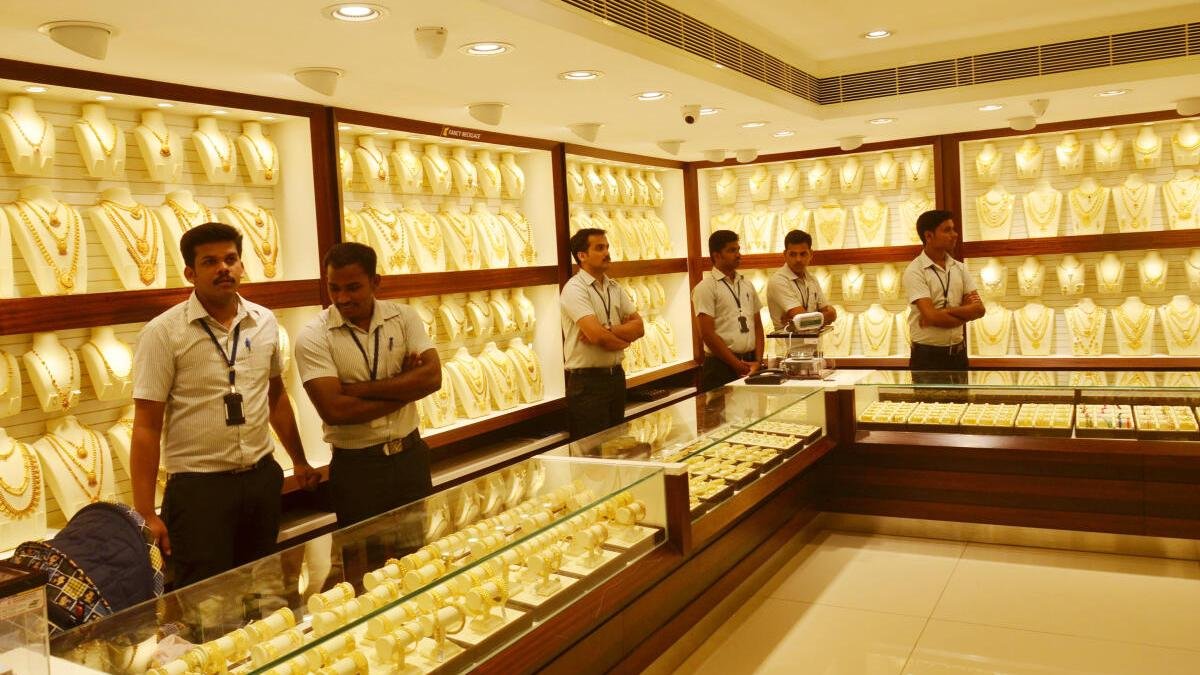
Jewellery retailers are emerging as a key demand driver in Tamil Nadu’s commercial real estate market. As brands accelerate expansion across Chennai and high-growth tier-II cities, real estate selection has become a critical component of their growth strategy, with location, visibility and customer accessibility increasingly shaping investment decisions.
Chennai has emerged as the second-largest leasing market for the jewellery sector in India in 2025, accounting for 27% of total jewellery leasing activity, a sharp rise from 16% in 2024, according to an analysis done by real estate consultancy CBRE South Asia Pvt Ltd. Chennai recorded approximately 0.25 million sq. ft of leasing during 2023-25 in the jewellery space.
Further, the city, along with Hyderabad, Bengaluru, Delhi-NCR, and Mumbai, accounted for over 90% of total jewellery leasing volume in 2025, CBRE notes.
Industry sources say jewellery retailers typically look for showroom spaces of 3,000 sq. ft. and above, while larger brands often opt for properties spanning 10,000-12,000 sq. ft. In key high-street locations, rentals range from ₹250 to ₹300 per sq. ft.
Jewellery retailers can broadly be divided into two categories, traditional homegrown brands and pan-India chains, each with a distinct real estate strategy. “Traditional homegrown jewellery brands typically prefer owning their properties and focus on securing prime locations with long-term value,” says V.S. Sridhar, executive managing director, Tamil Nadu & Kerala, and head GCC advisory (operations & emerging cities), Cushman & Wakefield, Chennai. “For these brands, real estate is an integral part of their business model and can account for 2%-3% of the overall project cost. Pan-India players, on the other hand, largely operate on a leasing model.”
He adds that brands generally avoid malls in Tamil Nadu and prefer standalone buildings on prominent arterial roads. Such properties offer greater flexibility for branding, façade visibility, security infrastructure and product display. Mall-based jewellery retail works better in luxury retail destinations such as Delhi and Gurugram, he says.
Hot spots, high rentals
According to Sridhar, rental values in Chennai’s established jewellery corridors remain among the highest in the State. In T. Nagar’s G.N. Chetty Road, rents range between ₹250 and ₹300 per sq. ft., while in Anna Nagar they typically range from ₹200 to ₹250 per sq. ft.
Anshuman Magazine, Chairman and CEO, India, South-East Asia, Middle East and Africa, CBRE, says leasing continues to be the preferred expansion model for most organised jewellery retailers, as it provides operational flexibility while allowing brands to channel capital towards inventory, technology and customer experience. “In 2025, stores above 8,000 sq. ft. accounted for 50% of total leasing activity in the jewellery sector, compared with just 14% in 2019,” Magazine says.
In Chennai, T. Nagar continues to be the city’s undisputed jewellery hub, while Anna Nagar has emerged as a strong secondary market. As the city expands, jewellery brands are increasingly establishing a presence in suburban catchments such as Velachery, Chromepet and Tambaram.
Beyond Chennai, cities including Coimbatore, Madurai, Tiruchi, Erode and Karur, along with several tier-II and tier-III towns, are witnessing robust growth and have become key targets for retailers looking to expand their footprint.
Beyond gilded stakes
Expansion today involves investments far beyond gold inventory. Capital is being deployed towards land acquisition, rentals, showroom design, façade development, vault infrastructure and experiential retail spaces. Factors such as neighbourhood affluence, traffic movement, accessibility and brand visibility are shaping real estate decisions.
“When we choose a location for our business, security is our primary consideration. Customers who walk out of our premises must feel safe. Alternatively, the location should be in a busy area where there is natural surveillance,” says Amarendran Vummidi, managing partner, VBJ (Vummidi Bangaru Jewellers). “If you look at our Anna Salai property, it is in a secure location. Today, adequate car parking has become a critical factor in site selection for jewellery retailers. Properties that can accommodate either open parking areas or multi-level stack parking systems are preferred.”
VBJ recently opened a multi-level, 14,000 sq. ft. showroom at Chennai’s Anna Salai in a secure location. The ground floor houses gold, precious and jadau jewellery. The first floor is dedicated to diamond, solitaire and platinum collections, offering a more focused setting.
The second floor moves away from conventional retail approach with Atelier VBJ, a new format for a more private and immersive environment. It features dedicated lounges, private viewing rooms, and personalised service. “The layout has been structured so each category has its own environment, making the journey more intuitive,” says Vummidi. “We have paid close attention to how the store transitions across floors — from the material choices to the overall spatial experience — so that each level serves a distinct purpose while remaining connected to the brand’s roots.” VBJ is set to open a new showroom on Usman Road in Chennai.
“In Coimbatore, we are developing what will be our largest-format store to date, spanning nearly 21,000 sq. ft.,” he adds. “We are also launching a new outlet in Tiruchi and actively evaluating opportunities in Madurai. We expect to finalise the Madurai location within the next three to four months.”
For Madurai-based Thangamayil Jewellery Ltd, location is central to store performance. Ba. Ramesh, the company’s joint managing director, says customer expectations are changing rapidly and the company is increasingly focusing on sites outside traditional bazaar areas that offer easier access, better parking and a more premium shopping experience.
No room for impulse buying
Ramesh says that “unlike fashion or lifestyle retail, jewellery stores cannot rely purely on impulse purchases. Customers visit with their families, spend considerable time evaluating purchases and expect a premium yet secure shopping environment. Therefore, visibility, safety and accessibility become extremely important. As a result, showroom infrastructure and location selection have become closely linked to overall brand positioning and customer perception”.
For flagship stores, visibility is especially important because the showroom itself becomes a statement of brand strength. Corner properties and road-facing buildings with larger façades are generally preferred. Ramesh adds, “The ideal showroom size we look for is a minimum of approximately 5,000 sq. ft., depending on the city profile, market potential and target audience, as the industry is increasingly moving towards experiential retail rather than simply displaying products.”
Expanding footprints
Over the next year, Thangamayil Jewellery plans to open 10 to 15 new stores. Kerala-headquartered Kalyan Jewellers currently has 29 touchpoints across Tamil Nadu, spanning major cities such as Chennai, Coimbatore and Madurai, as well as several smaller towns across the State. The company enters a market only when it finds retail space that reflects the brand’s scale and customer experience aspirations.
“Most of our properties operate on a long-term lease or rental model, which supports our asset-light growth strategy. However, we do have some marquee properties that we have developed ourselves over the years,” says Ramesh Kalyanaraman, executive director, Kalyan Jewellers. “Square footage is not one-size-fits-all. In major retail districts, we look for larger spaces that can accommodate a wider product range and provide a more immersive shopping experience, whereas in tier-II and tier-III cities, formats are more compact and optimised for local demand.”
Following the franchise-owned, company-operated (FOCO) model, Kalyan Jewellers’ expansion plans for the coming year remains robust, including for its Gen Z- and millennial-focused brand Candere. Its growth strategy stands on a more contemporary and digital-first retail approach.
Kalyan Jewellers Candere brand is Gen Z- and millennial focused.
| Photo Credit:
Getty Images
The brand typically operates through smaller-format stores in high streets and malls, with minimalist interiors and a lifestyle-oriented shopping experience centred around self-discovery and everyday jewellery purchases. “Each brand follows a distinct retail strategy based on customer behaviour and market positioning,” Kalyanaraman concludes.
Despite rising gold prices and PM Narendra Modi’s appeal to avoid buying gold for a year to conserve foreign exchange amid global uncertainty, Tamil Nadu’s consumer demand for the yellow metal remains strong, driving jewellery brands’ expansion.


