


The evil eye is, in many ways, a universal superstition. We all fear the envy (at best) and ill intentions (at worst) of others will alter our fate.
The eyes, those windows to the soul, are generally considered gateways to these intentions. So we guard the face (with a large, black tika on a chubby baby) and ward off the evil eye with charms and amulets.
Children, pregnant women and those who have had a recent change in fortune for the better are generally thought to be prime targets. Luck is so fickle a thing that even an inadvertent glance of latent malice, it is thought, could scare it away. So, it is closely guarded. People are protected, and so are homes, workstations, livestock, crops and even cars.
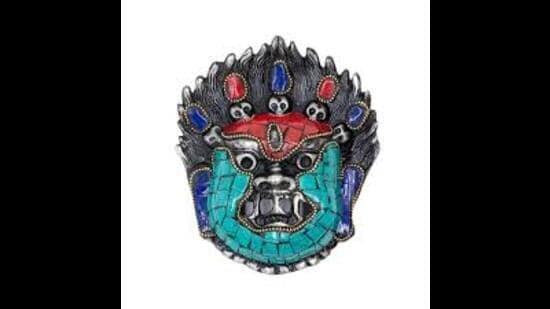
Amulets typically feature colours and materials considered auspicious and powerful. These include the colour blue, glass beads, phallic charms (symbolising continued fertility, symbolic eyes and the hamsa (thought to represent the blessings and hand of Fatima, daughter of the prophet Muhammad; “hamsa” in Arabic means “five”).
There are gestures, charms and chants designed to ward off malice in cultures ranging from the Jewish, Islamic, Christian and Hindu to Greek, Turkish and Ancient Roman.
Iranians seek to protect babies by burning rue, a shrub with bitter-tasting leaves and berries thought to force evil spirits out of the house. The crackle and pop of the seeds have the added bonus of sounding like evil eyes being eliminated.
In certain Asian cultures, a protective verse is written on paper, sealed in cloth and hung around the neck of a newborn. Armenian parents pin a blue bead to the baby’s clothing.
Ashkenazi Jews with roots in Eastern Europe tie a red ribbon to a crib or handle of a baby carriage, to invoke protection from evil spirits.
In India, a child born during an eclipse (when the eye of the world is occluded) is considered so ill-fated that a range of rites must be performed before its father is even allowed to see it.
In regions ranging from Syria to Turkey, a disk of blue glass with a white centre, usually worn around the wrist or neck or in the hair, protects adults and children alike. These beads are thought to both absorb negative energy, and reflect it back towards the sender.
If a little one is sickly, give it the name of a wild beast and something of that animal’s strength and power will enter the child and frighten the spirits away too, it is said.
In a range of coastal cultures, stylised, thick-browed eyes are painted onto boats as protective symbols. Meanwhile, in the Middle-East today, cars are often the most visible symbols of success. As such, they are prized and greatly envied. So bangles are hung from rear-view mirrors, to draw the eye of the onlooker away from the vehicle itself. Bangles with eyes on them are particularly sought-after.
If all this seems a bit strange, I invite you to pause a minute. Think of something that means a lot to you, and the little things you do to protect it. From what, I’m sure it would be hard to say. But the feeling is still universal, isn’t it? Underpinned by fear, but also, I like to think, by joy. “I can’t believe I have got hold of this good fortune,” such practices seem to say. “May I never be without it again.”
(Adam Jacot de Boinod is the author of The Meaning of Tingo and Other Extraordinary Words from Around the World. The views expressed are personal)


