



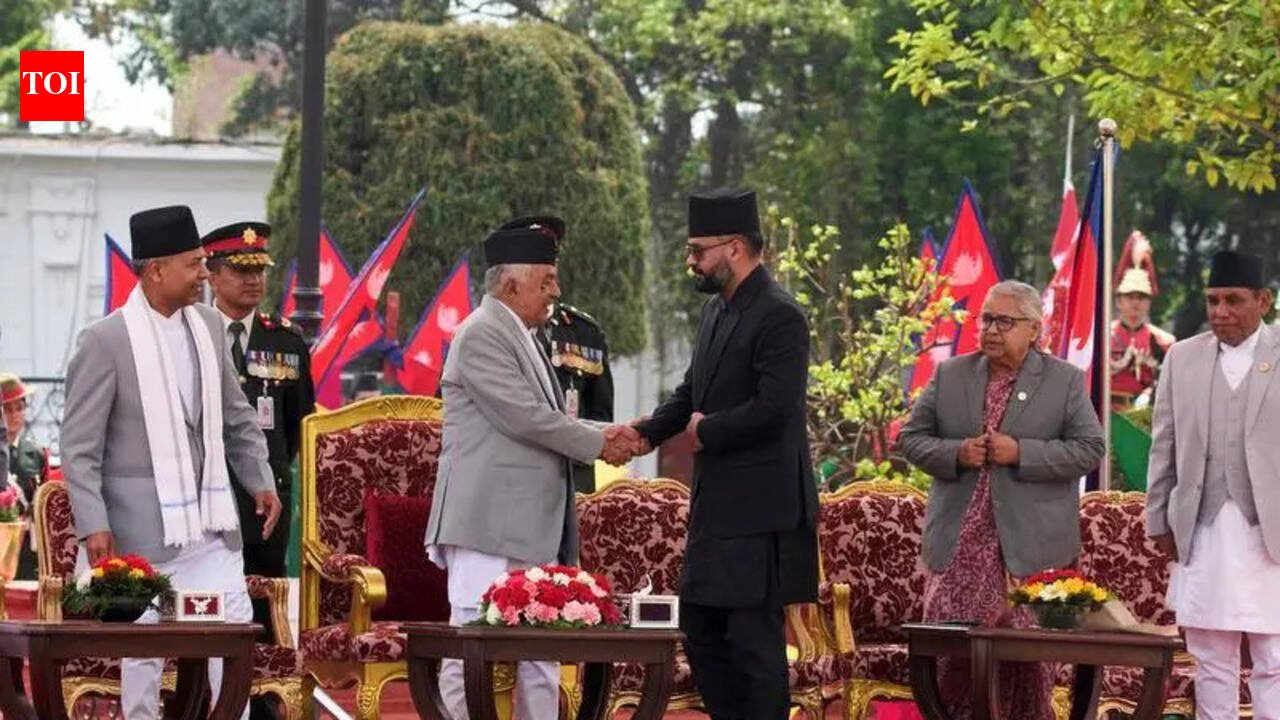
Global attention is riveted on West Asia, awaiting the outcome of a regime-change mission that appears to have gone astray. In our neighbourhood, however, a regime reset has taken place in three countries over the last three months — Myanmar, Bangladesh and Nepal.Myanmar has opted for a military junta-vectored regime, while the other two have made a bold break from their previous dispensations. The poll verdicts have been decisive and clear, raising optimism for stability and expectations of promised reforms. The polling process itself was largely peaceful, though the previous dispensations were forced out after considerable unrest and arson.Myanmar The 2020 elections in Myanmar were won by the National League for Democracy (NLD), led by Aung San Suu Kyi (ASK). However, after the military coup in 2021, she was imprisoned, tried, and her party dissolved.The country has since suffered a prolonged civil war, with a number of Ethnic Armed Organizations (EAOs) and the National Unity Government (NUG), led by the NLD, battling the junta. The Army is estimated to control only around 60% of the country. Cartographically, the inner core remains under Army writ, while peripheral regions are controlled by rebels.Elections could not be held in 67 towns. Compared with a 70% turnout in 2020, turnout this time was around 55%. Eight countries, including India, sent observers, but the EU and ASEAN have refused to endorse the process.After much delay, a somewhat contrived electoral exercise was orchestrated by Gen Min Aung Hlaing. The Union Solidarity and Democratic Party (USDP) secured around 80% of seats in both the lower and upper houses. This tally will be further bolstered by the co-option of 25% members, who, under constitutional provisions, must come from the security forces.Who says only the Pakistan Army has a government? Even in Myanmar, no regime can survive without the Army’s support.In such a scenario, leveraging our nominal military diplomacy is long overdue. Another trump card could be spiritual (Buddhist) tourism.India must also contend with the overpowering influence of China, which has bolstered the Tatmadaw while simultaneously propping up a few militias. India’s immediate interests lie in maintaining and improving ties with the new regime and reconciling itself to a reality beyond ASK.Except for Sittwe port, the regime has yielded control of Arakan state to EAOs. There is also a concurrent need to work out a modus vivendi with the Arakan Army and Chin National Army to move forward on the much-delayed Kaladan Multi-Modal Transit Transport Project.The initial, pragmatic outreach to Kachin militias, who control rare earth mines, needs to be converted into viable commercial arrangements.The recent apprehension of foreign mercenaries, an American and six Ukrainians, after a reported drone supply and training mission in Myanmar has underscored the danger of spillover into Mizoram and Manipur. It is imperative to strengthen the surveillance and intelligence network.Bangladesh The widespread violent protests and riots against the Sheikh Hasina regime in August 2024, followed by the installation of an interim government, were a major setback for India.Mohammed Yunus, as de facto head, displayed a marked anti-India bias. However, the Army under Gen Waqar redeemed itself by facilitating elections and stymieing ill-advised American attempts to set up a humanitarian corridor for the Rohingyas.With the Awami League banned and Sheikh Hasina in exile, the Bangladesh Nationalist Party (BNP) under Tarique Rahman, returning after 17 years in exile, secured 211 out of 300 seats (70%) in the unicameral parliament. The 50 seats reserved for women will be distributed on a proportional basis.Mercifully, Jamaat-e-Islami secured only 68 seats — though this is still its highest tally in electoral history — while the National Citizens Party, led by students, managed a meagre six.Yet the concentration of Jamaat’s seats along the western and northern border has ominous portents.The seemingly diabolical plan of Mohammed Yunus to conduct a complex, concurrent referendum on the July Charter, containing 84 proposals, appears to have hit a roadblock. The BNP has not joined the proposed Constitution Reforms Council, as the suggested reforms seek to limit the PM’s powers.There is, however, welcome pragmatism and signs of a reset in ties. PM Tarique has not only made reassuring statements but has also punctured the hype around cozying up to Pakistan by denouncing the Pakistan Army’s genocide during Operation Searchlight (1970–71).Interestingly, a sweeping reshuffle in the military hierarchy — including the CGS, DGFI chief, AG and QMG — has been ordered. The all-powerful Lt Gen Kamrul Hasan, PSO in the PMO, has been replaced and is reportedly being packed off on a diplomatic assignment.The way ahead remains challenging because of legacy irritants such as the Farakka barrage, stalled projects, infiltration, transit and cattle smuggling.It may be worthwhile to reorient ourselves to the reality of growing radicalism. The real challenge lies in theological dialogue to revive a cultural/national Islam distinct from the ISIS variety.Most importantly, we must avoid stereotyping and pushing Bangladesh into becoming another Pakistan.Nepal The elections in Nepal have thrown up the Rashtriya Swatantra Party (RSP), a new party, at the helm with a decisive mandate — 182 out of 275 seats and 48% of the vote.There is optimism that this may end the chronic instability and desperate alliances that have long plagued Nepalese politics. Traditional parties and leaders, including India-baiter Sharma Oli, have been routed, and he is now under arrest.The new dispensation has 37% MPs under the age of 40. There were 8 million new voters and a 59% turnout.Unlike India, Nepal combines elections in 165 constituencies with 110 seats allocated on proportional vote share.The new PM, Balendra Shah, is a man of many parts — Madheshi, structural engineer, rapper and former Mayor of Kathmandu. He has put together a promising cabinet of highly regarded professionals.Due credit must also be given to interim PM Mrs Sushila Karki, former Chief Justice of Nepal, for providing stability during the transition.Our challenges lie in resolving cartographic revision issues around Kalapani. More importantly, we should renew joint hydropower projects such as Arun-3 to ramp up clean energy and grid connectivity.Way Ahead With each of these countries, we face different issues. Yet the need to navigate around China’s expanding footprint and the growing influence of the US remains the common strategic challenge.(The author is former GOC-in-C of Western Command, Indian Army)


