



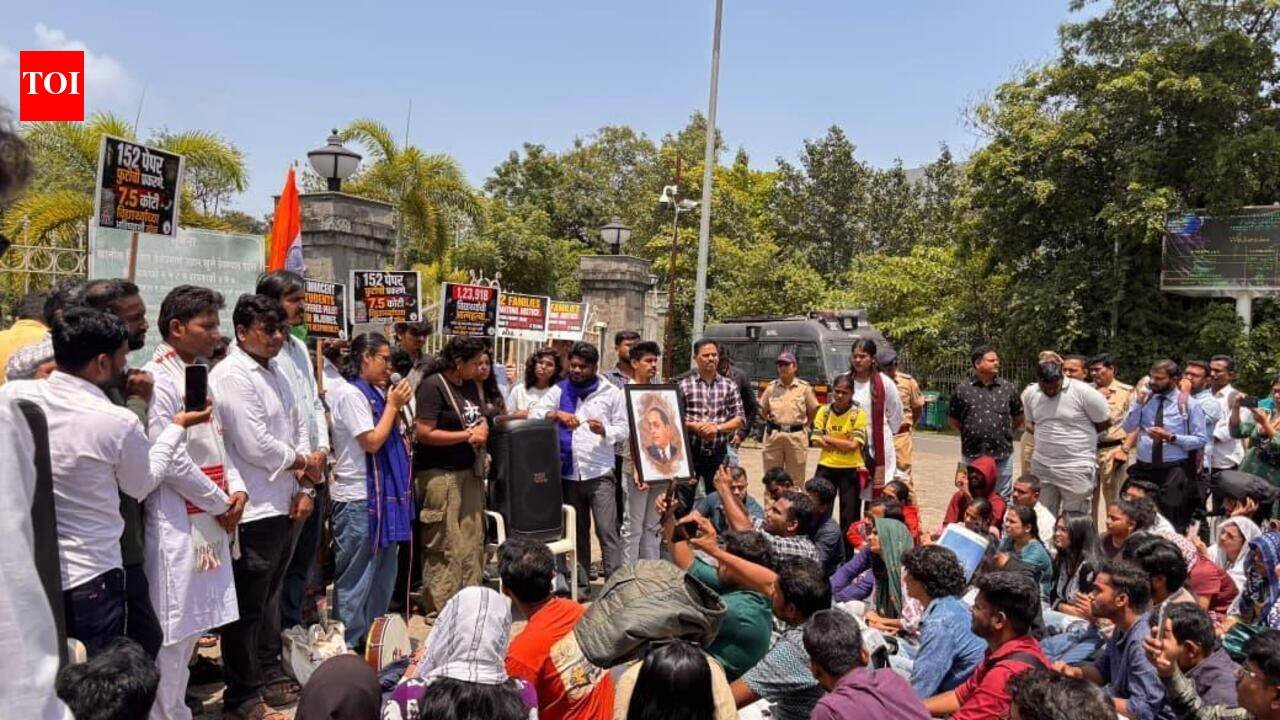
Pune: For a generation navigating competitive examinations, rising unemployment and an increasingly uncertain education system, the fight against examination irregularities is about more than protecting the sanctity of tests. It is about ensuring that students do not lose years of effort and their aspirations because of systemic failures, said All India Students’ Association (AISA) national president Neha Bora during an interaction with students at Savitribai Phule Pune University (SPPU) on Wednesday.Bora was speaking at an open student dialogue organised by progressive organisations on the Dr Babasaheb Ambedkar statue premises in the university. She said the younger generation also had a responsibility to protect opportunities created through the struggles of earlier generations.“Our fight is not only against paper leaks. It is also about protecting our dreams from being destroyed. Students from Dalit and marginalised communities have access to universities today because previous generations fought to open these doors. It is our responsibility to ensure that these doors remain open for future generations,” she said.The interaction focused on issues concerning young people, including alleged irregularities in competitive examinations, unemployment, students’ rights and the role of youth in the current social and educational environment.Bora said irregularities in recruitment examinations conducted by public service commissions and civil services examinations were particularly concerning because students spend years preparing for them.“When there are irregularities in examinations, it is not just the examination that is affected. Students who have spent years preparing see their plans and hopes disrupted. So, students need to raise their voice for reforms in the education system,” she said.She also urged students to engage with debates on social justice and reservation, particularly those concerning Dalit, tribal and OBC students. Referring to Pune’s history of education and social reform, she said young people should understand the contributions of Savitribai Phule, Jyotirao Phule and Fatima Sheikh, among others.“The younger generation should know the history of the struggles that made education accessible to many sections of society. It is important when we discuss equality and social justice today,” Bora said.She said young people across the country were seeking a society free from discrimination based on caste, religion, language or gender.“The responsibility of educating children from poor families should not fall on those families alone. Education must remain a responsibility of the govt,” she said.Speaking about the growing student-led movements, Bora said the response has been overwhelming and noted that protests are taking place across the country, with students raising issues ranging from mess food and hostel infrastructure to examinations and paper leaks.She said, “Students are taking the nation towards change. All protests are equally important and inspiring”Students and representatives of various organisations attended the dialogue, which also touched upon unemployment and democratic rights. Bora said Gen Z had a role in shaping a more equal social and educational system while maintaining critical engagement with issues affecting their future.(With inputs from Aditya Waikul)


