



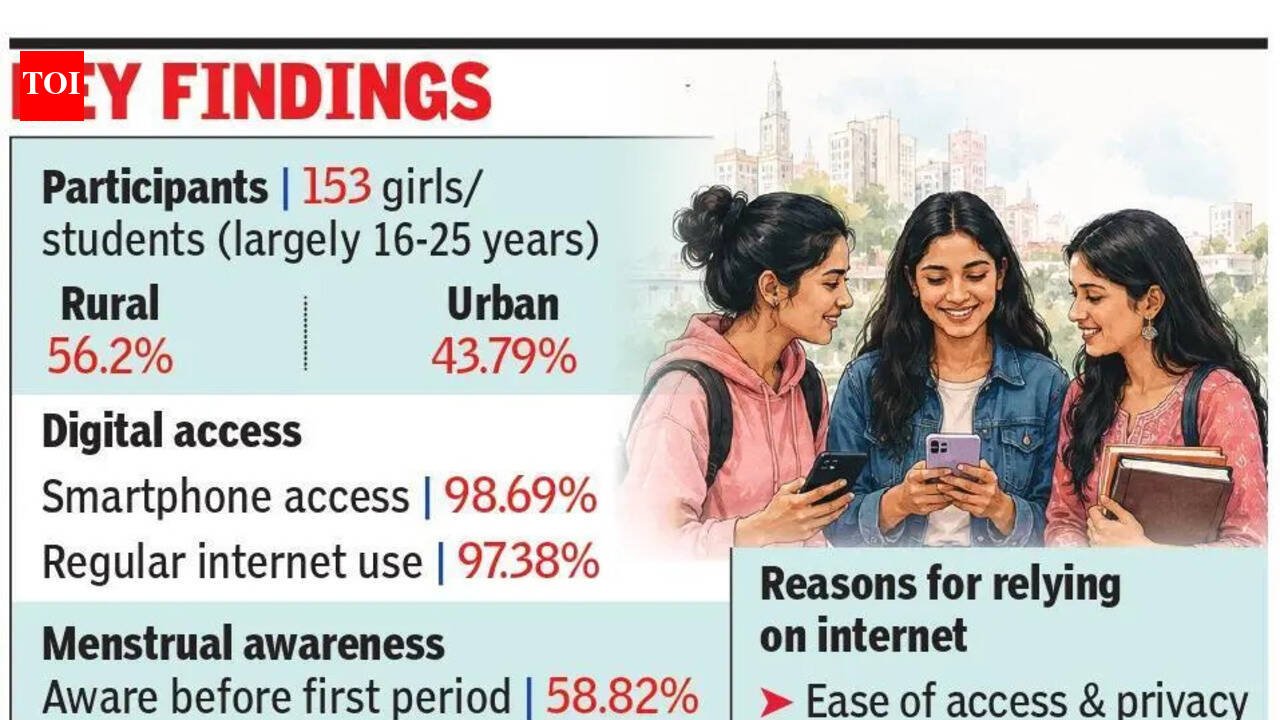
Lucknow: For generations, menstruation arrived with little warning for many girls — often accompanied by confusion, anxiety and whispered explanations at home. But smartphones and social media seem to have changed the norm, finds a study undertaken by Queen Mary Hospital’s Centre of Excellence for Adolescent Health and Development.Noting that the city’s Gen Z girls are turning to screens before sisters or mothers for answers on periods, researchers Prof Sujata Dev and counsellor Soumya Singh said the study found nearly 60% of the young respondents were aware of menstruation before their first period, with YouTube and Google emerging as top sources of information.“We interviewed 153 girls in the 16-25-year age group. Of these, almost all participants were using smartphones and had regular internet access. More than three-fourths felt digital platforms had improved their health awareness,” said Prof Sujata Dev, sharing the findings ahead of World Menstrual Hygiene Day.HOD Prof Anju Agrawal noted that the shift reflects how smartphones, internet access and social media platforms are increasingly filling information gaps around menstrual health — a subject that traditionally remained under-discussed in many homes and communities.Counsellor Soumya noted that among online sources, YouTube was the most widely used platform for health-related information, while menstrual health was the most searched topic. “Participants also relied on the internet to deal with period pain, understand hygiene and even sexually transmitted infections,” she said, adding that “We also found that a good number of girls purchased menstrual hygiene products online as it helped them evade embarrassment at medical stores, while over a third used period-tracking apps too.”Prof Dev noted that the study also revealed that there was a need to work on human papilloma virus (HPV) and its vaccination.“While 50% of the girls were aware of HPV, only 12% were vaccinated, thus underlining the need for more targeted health education both online and on campuses,” Prof Dev said.The team recommended sustained awareness campaigns in schools, colleges and communities, along with reliable digital health education and expert-led counselling, to ensure that adolescents receive accurate information early and are able to make informed health decisions.


