



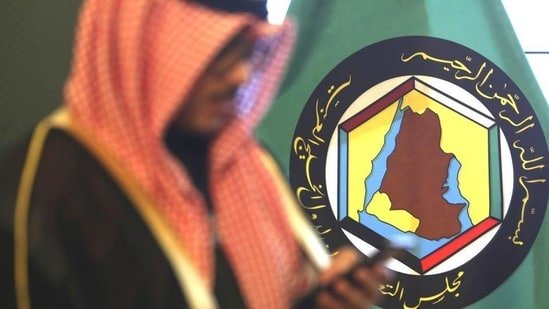
The recent escalation of tensions in West Asia, marked by Iran’s attacks on US military bases in Gulf Cooperation Council (GCC) countries and its retaliation against Israel, raises fundamental questions about the role and vulnerability of the Gulf monarchies in regional conflicts. Why are these countries being targeted despite not being direct parties to the ongoing wars? A closer look at history suggests that the GCC States have long been closely aligned with western military interventions across West Asia and North Africa, making them deeply embedded in the conflicts in the region and elsewhere.


The GCC was established in 1981 against the backdrop of two major developments: the 1979 Iranian Revolution, which alarmed Gulf monarchies with its revolutionary and anti-monarchical message, and the outbreak of the Iran–Iraq War, which heightened security anxieties across the Gulf. However, the 1991 Gulf War marked a turning point. In the aftermath of Iraq’s invasion of Kuwait and the subsequent US-led military intervention, American forces established a permanent military presence across the GCC. Over time, the US developed major bases in all six GCC States.
These bases became critical logistical hubs for western military operations. The GCC countries supported troop deployments, intelligence sharing, aerial refuelling, and financial backing for conflicts across the region. Their importance grew further after the September 11 attacks in the US, when Washington launched its global war on terror. From Afghanistan to Iraq and later Libya, GCC-based facilities served as essential operational platforms for the West. Qatar’s Al Udeid air base, for example, became a central command hub for American military operations during the Iraq War.
The GCC governments broadly supported these western wars despite significant international controversies. The 2003 invasion of Iraq, justified by claims by the West that Baghdad possessed weapons of mass destruction, received political and financial backing from several Gulf states. This support came even as many countries—including India—questioned the war’s legitimacy. In fact, western powers often cited the backing of Gulf and Muslim-majority States to persuade India to support their war on Iraq and elsewhere. India, however, resisted pressure and maintained that its foreign policy decisions were independent and not subject to others’ policies. When no weapons of mass destruction were ultimately found in Iraq, the credibility of the war—and the Gulf States’ support for it—came under serious scrutiny. Similarly, there were credible reports that Qatar pumped in more than $ 4 billion to overthrow the Assad regime at the behest of Saudi Arabia unsuccessfully. They extended support to the West in their anti-Assad campaign on the same pretext as that of Iraq, of possessing chemical weapons. No such chemical weapons were found in Syria. Such support illustrates how the GCC countries have often piggybacked on western military interventions in conflicts across the region.
Divisions within the GCC appeared during the Arab Spring uprisings of 2011. Qatar supported Muslim religious and political movements that emerged in Tunisia, Egypt, Libya, and Syria. At the same time, Saudi Arabia, the UAE, and Bahrain viewed political Islam as a direct threat to monarchical rule. These differences culminated in the 2017 crisis, when Saudi Arabia, the UAE, and Bahrain imposed a blockade on Qatar, accusing it of supporting the Muslim Brotherhood, the vanguard of the Arab Spring, and destabilising the region. The rifts extended beyond ideological differences. Rivalries between Saudi Arabia and the UAE also played out across several regional conflicts. In Yemen, the UAE’s backing of southern separatist groups complicated Saudi Arabia’s strategy of preserving Yemeni territorial unity. In Libya, the UAE provided military support to the rebel group headed by General Khalifa Haftar and his Libyan National Army. In contrast, other regional actors supported the internationally recognised government in Tripoli. Similar divergences appeared in Sudan and parts of the Horn of Africa, where both countries supported competing political actors.
The UAE’s growing influence in Africa also created friction with Saudi Arabia. In the Horn of Africa, the UAE established quasi-diplomatic relations with semi-autonomous regions such as Somaliland and Puntland in Somalia and is in the process of establishing military facilities and infrastructure projects. Saudi Arabia, by contrast, emphasised Somalia’s territorial integrity, viewing fragmentation as a potential source of instability.
Another point of divergence emerged with the normalisation of relations between some Arab states and Israel under the Abraham Accords of 2020. The United Arab Emirates and Bahrain established diplomatic relations with Israel, partly reflecting Gulf concerns about Iran’s expanding regional influence, supported tacitly by Saudi Arabia. Yet this new alignment also added complexity to regional security calculations.
These complexities became evident in September 2025 when Israel struck targets in Qatar and other GCC States despite their hosting major U.S. bases. The attacks exposed the Gulf monarchies’ precarious security position and prompted a reassessment of regional threats, with the threat from Israel appearing more concerning than that of Iran. In fact, this shift had begun earlier with the China-brokered 2023 Saudi–Iran rapprochement, signalling efforts at de-escalation with Iran. Subsequent developments, including Operation Epic Fury, deepened GCC concerns that Washington prioritised Israel’s security over defending Gulf territories from Iranian missile threats.
Iran has long argued that American and Israeli military operations against it would not be possible without the network of US bases in the Gulf. In fact, one of the major objectives of the Iranian attacks on the GCC countries is to expel the American bases from the GCC countries. Beyond the military bases, the strikes on infrastructure, ports, hotels, oil facilities, and other targets point to a broader assault on the US’ military and economic footprint in the region with this objective in mind.
Despite weakened extremist groups, their narratives endure. GCC monarchies now face mounting pressures—regional conflicts, Iranian retaliation against US bases, internal divisions, and widening public discontent, as well as growing economic woes in the backdrop of the destruction of their energy infrastructure — are straining their long-standing security and social contracts. The unresolved legacy of the 2011 Arab Spring looms larger at this stage of another defining moment in their history.
This article is authored by B Bala Bhaskar, former ambassador and specialist, West Asia and Gulf affairs.


