



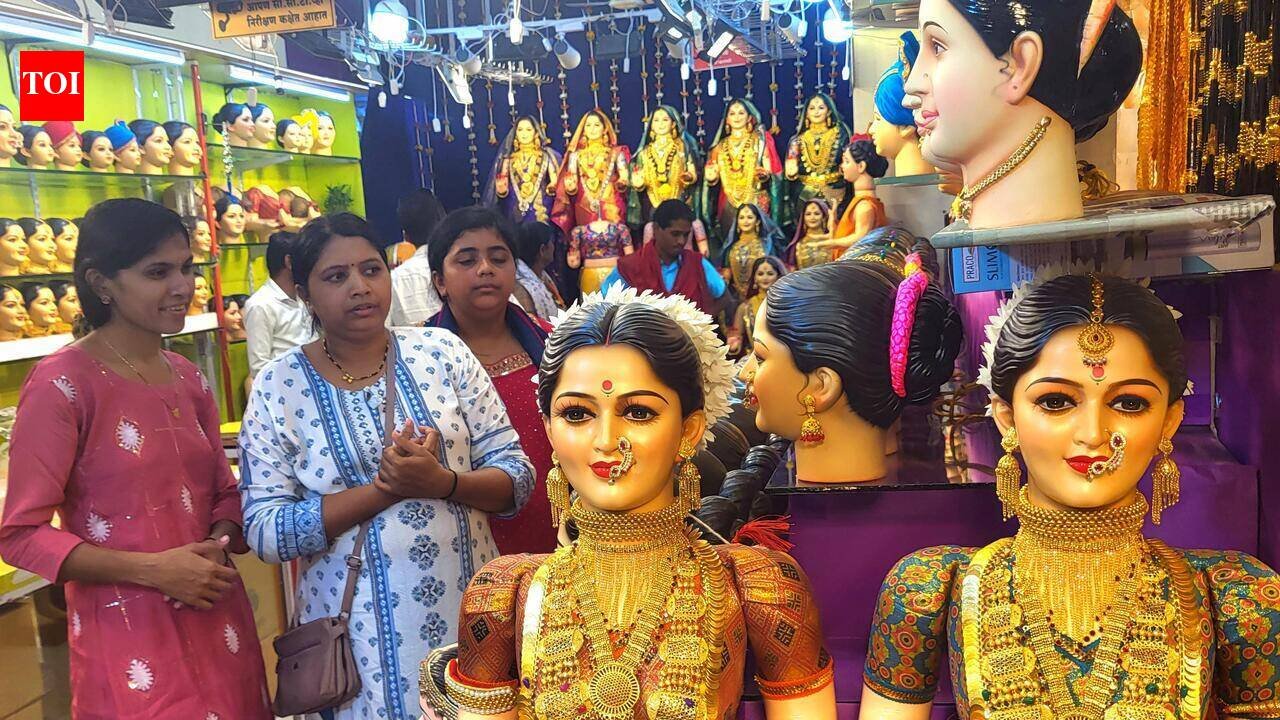
Pune: From new saris and rangoli at the doorstep to plates of traditional food shared with guests, Gauri puja is adding an intimate note to Ganeshotsav celebrations in Pune. Homes across the city are observing the three-day festival from Sept 17 to 19, with Gauri Avahan, the ceremonial welcoming of the goddess on Thursday, Gauri puja on Friday and immersion on Saturday.“Families perform Gauri puja to seek health, happiness, abundance and good fortune. The goddess is also associated with marital well-being. Married women traditionally pray for the long life and welfare of their husbands, a peaceful family life and the prosperity of their children,” said Meenakshi Patil, a resident of Aundh.The way Gauri is welcomed varies from family to family, but the rituals often begin at the doorstep. In many homes, the goddess is dressed in a new sari and placed beside the Ganapati idol. The entrance and puja area are decorated with rangoli, flowers and lamps before she is ceremonially brought into the house.“Gauri is ceremonially welcomed into the home. At the doorstep, we perform a puja and welcome Gauri with offerings of water, milk, haldi, kumkum, flowers and akshata,” said Priya Singh, a resident of Bavdhan.Akshata refers to uncooked rice grains sanctified during worship and used as a blessing.Some families follow more elaborate customs. The feet of the woman carrying the Gauri representation may be washed before she enters, symbolically honouring the goddess. A trail of footprints is then drawn from the entrance to the puja area using kumkum, turmeric or rangoli, symbolising Gauri entering the home. In some traditions, milk is poured over the footprints before an aarti, the ritual offering of a lit lamp accompanied by prayers.The festival also brings women together for haldi-kumkum, food and conversation. During these gatherings, married women apply turmeric and kumkum, or red vermilion powder, to one another, exchange gifts and share festive food. Some households also offer return gifts, such as small hampers containing bangles, vermilion boxes and combs.Food is an integral part of these gatherings. “Through the welcoming of Gauri, households celebrate devotion, hospitality and women’s cultural participation. It also reflects the enduring idea that prosperity is best enjoyed when shared with others,” said Sayali Kulkarni, a resident of Erandwane.For many women, these gatherings are also a way of keeping family and community traditions alive. “We make the Konkani dish ghavan-ghatle during Gauri puja. Ghavan is a soft, thin rice-based preparation similar to a crepe, while ghatle is a sweet coconut-and-jaggery preparation served with it. Friends, colleagues and neighbours come over for lunch and participate in haldi-kumkum. They come craving this dish,” said Surbhi Bhagwat, a resident of NIBM Road.
