






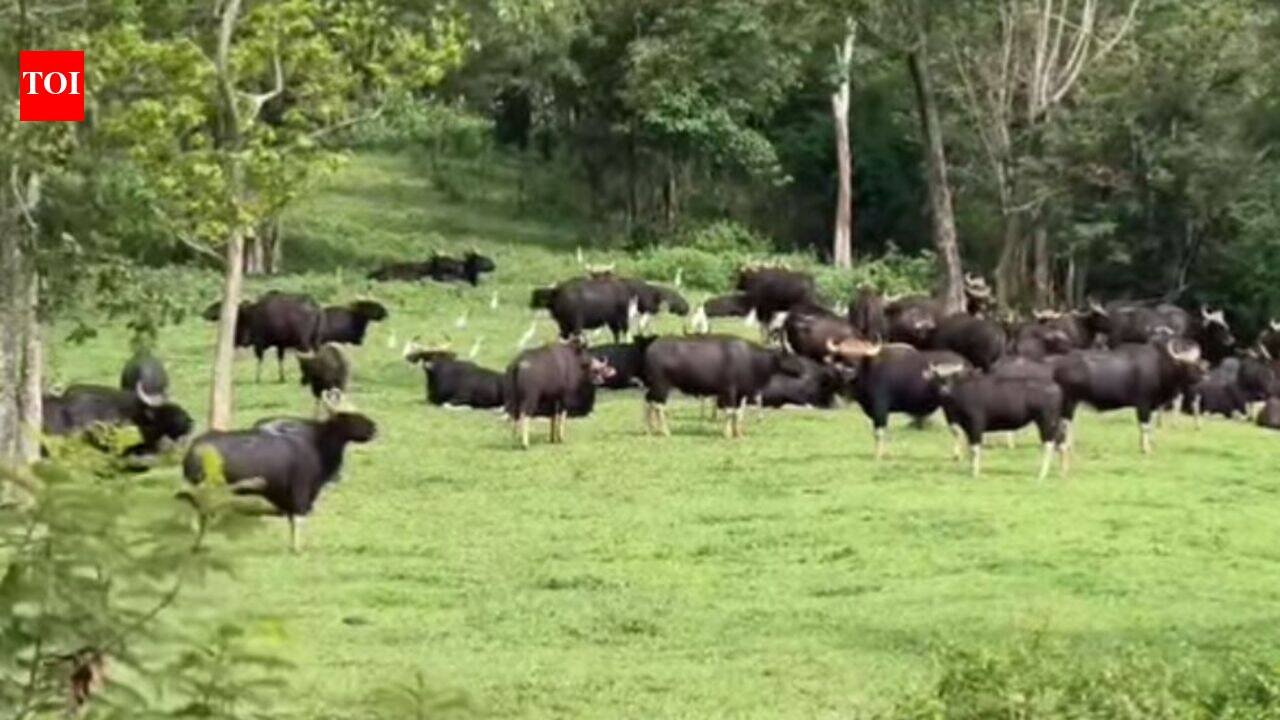
Bettiah: The population of gaur, or Indian bison, in Valmiki Tiger Reserve (VTR) in West Champaran has risen nearly fivefold in two decades, from around 50 recorded during studies between 2003 and 2011 to more than 250 now.Major gaur groups are found in the valleys of the Triveni and Raghia forest blocks, while perennial water sources in the northern hills provide suitable habitat. Improved habitat, water availability and better protection are considered key factors behind the rise. Gaur, once largely confined to Sonha-Pachnad valley in Triveni and Kapan-Achhoh in Raghia, are now found in adjoining forest blocks.WTI director Samir Kumar Sinha said VTR is part of the approximately 3,550 sq km Chitwan-Parsa-Valmiki landscape, which includes Nepal’s Chitwan and Parsa National Parks.“Gaur conservation is important in this transboundary forest landscape. In 2007, 296 gaur were recorded in Chitwan National Park and in 2008, 37 gaur were recorded in the 170 sq km area of Parsa National Park. Earlier, gaur would occasionally move from Chitwan towards VTR, but over time their permanent presence in VTR has been recorded,” he said.VTR’s gaur habitats contain sal, Mallotus philippensis, Lagerstroemia parviflora, Adina cordifolia and bamboo, while grasses such as Imperata cylindrica, Cymbopogon sp., Phragmites karka, Vetiveria spp. and Themeda spp. form an important part of their diet.Experts, however, caution that the growing population makes habitat protection increasingly important. Non-native teak plantations, Phoenix humilis and Mikania invasion can reduce natural fodder. Cattle grazing also creates competition for food and water and poses a potential disease-transmission risk, though no gaur deaths in VTR have been attributed to livestock-borne diseases.Sinha said tigers are the main natural predators of gaur in VTR with records of predation in 2003 and 2011.Experts recommend removing invasive vegetation, promoting native fodder, protecting water sources and regulating livestock grazing and human activity. Regular monitoring of gaur numbers, breeding, seasonal movement and feeding behaviour will also be important.


