



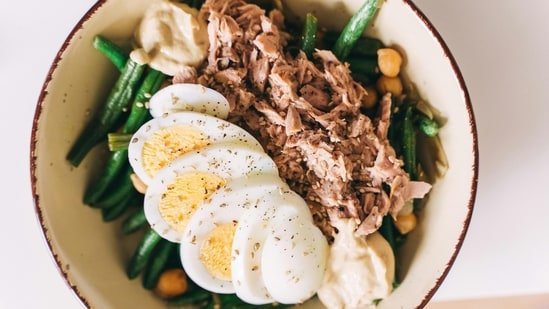
The importance of protein in our meals cannot be overstated. They are the building blocks of our body, help us stay full for longer, increase muscle mass and promote weight loss, among other things.
According to US board-certified gastroenterologist Dr Palaniappan Manickam, one should aim to have 20 grams of protein with every meal. That is equivalent to approximately 80 grams of chicken.
However, it is not likely that one will have chicken with every meal. In some desi households, it is not an option at all. To help find alternatives, Dr Manickam took to Instagram on March 15 and shared a list of ten foods other than chicken to help us meet the 20 g protein quota in each meal.
Foods that provide 20g of protein
- Fish – 100g
- Eggs, whole – 3
- Dry soy chunks – 30g
- Paneer – 100g
- Greek yoghurt – 200g
- Chickpeas – 110g
- Rajma – 100g
- Tempeh (for people with bloating issues) – 100g
- Lean beef – 100g
- Lean mutton – 100g
In addition to the above natural ingredients, Dr Manickam also recommended plant protein powder or whey protein powder for those who wanted to supplement their protein intake.
Why should one have protein in every meal?
While hitting the protein target is important, the distribution of consumption throughout the day is what helps maximise the benefits. In a conversation with HT Lifestyle, Manjula Sridhar, nutritionist, certified diabetes educator and certified renal nutritionist at Apollo Spectra Hospitals, Chennai, shared that loading up on protein in a single meal is not the right way forward.
“The body does not have a ‘storage tank’ for protein as it does for fat. It can only process a certain amount for muscle repair in a single sitting, usually between 20g and 40g,” she said.
Thus, if a person consumes more than the required amount of protein in one sitting, the body utilises the amount it needs for repair and burns the rest for energy. The meals in which there is less protein, the muscles remain in a “breakdown state” for hours, and there is a loss of prime recovery time.
According to Manjula, there are three windows in which protein intake is non-negotiable. These are as follows:
- Breakfast: The body breaks down muscles for energy while asleep. Protein at breakfast helps jumpstart the repair process.
- Post-workout: One should consume protein within two hours of exercise as this is when the muscles are most sensitive to nutrients.
- Before sleep: Eating a slow-digesting protein like Greek yoghurt or cottage cheese before bed fuels overnight recovery.


