






It’s been a while since India had a disastrous overseas cricketing sojourn. A long, long while, come to think of it.
There was a time even the most invested and committed supporter of the Indian team would take the worst for granted when their heroes embarked on an away Test tour, especially of Australia or England or New Zealand (from 2006, the voodoo of South Africa went away, though it is the only land where India haven’t won a series yet). A draw was viewed as a moral victory, inasmuch as something like that exists, while a defeat of any kind was accepted philosophically and with equanimity.
All that has changed in the last decade or so. Adding belief and self-confidence to their kitbag to go with historically unquestioned immense skills, India have become a gathering force in overseas conditions too. They haven’t lost a Test series in Sri Lanka since 2008, stacked up consecutive triumphs in Australia (2019 and 2021), held England to a creditable 2-2 draw last summer despite embracing the exciting and nervy phase of transition, and have tamed the West Indian lion in its own den every time since the three-match series in 2006 when they came away on the right side of a 1-0 score line.
Apart from establishing themselves as a formidable Test entity everywhere in the world, except perhaps in New Zealand where their only series victory in the last 55 or so years came in 2009, India are a gun white-ball force. They have been there and thereabouts in all significant competitions, are the simultaneous holders of the 50-over Champions Trophy and T29 World Cup crowns, and have lost a mere twice in the last four ICC limited-overs events between and including the 2023 50-over World Cup and the 2026 T20 World Cup.
The excellent run is testament to the strong systems in place in the country to identify and nurture talent. While India may not be as open as Pakistan in blooding delicately young talent or as Sri Lanka in placing faith in the unorthodox, they are slowly shaking off the conventional straitjacket to which they often restricted themselves. That’s why they didn’t think twice about unleashing Jasprit Bumrah, the extraordinary bowler with the extraordinary release — among other things — more than a decade back, or the supremely gifted and precocious 15-year-old from Bihar’s Samastipur, Vaibhav Sooryavanshi, less than a week back.
Sooryavanshi’s international debut was eagerly awaited from the time he proved in the summer during IPL 2026 that his exploits to that point weren’t just a flash in the pan. A tournament-high 776 runs that earned him the Orange Cap ahead of such established names as Virat Kohli and current Test and ODI skipper Shubman Gill, as well as last edition’s leading run-getter B. Sai Sudharsan, meant his tender age could no longer work against him. Sooryavanshi didn’t do a great deal in his first two T20Is in England, scoring 14 in his maiden appearance and backing it up with 13 in the second, but 24 of those runs have come through a brace of sixes in each of the two outings, most certainly the teasing appetiser before what ought to be a sumptuous main course.
The clamour for Sooryavanshi’s inclusion had reached a crescendo immediately after Ajit Agarkar’s selection panel picked him for the seven-match T20I odyssey in Ireland (two games) and England. Almost as if because they felt they had to keep the growing voices at bay, India delayed his introduction by three games. But once they were stunned by the Irish in both games and once Sanju Samson courted a third successive failure by following up scores of 5 and 0 against Ireland with 1 in the first T20I against the English in Chester-le-Street, the think-tank was almost compelled to unshackle the devastating left-handed opener.
Dividing opinion
That Sooryavanshi’s induction came at the expense of Samson has divided opinion. The frustratingly inconsistent Samson – he averages 27.01 in 65 T20Is despite posting three centuries and six half-tons in 57 innings – appeared to have turned the corner with a hat-trick of match-winning knocks at the business-end of the home T20 World Cup in February-March. The Player of the Tournament at the World Cup is still very much in the scheme of things; he figures in the Asian Games squad even though he has been left out of the team to play three matches in Zimbabwe later this month. But as India scrambled to accommodate Sooryavanshi, Samson it was who had to be sacrificed.
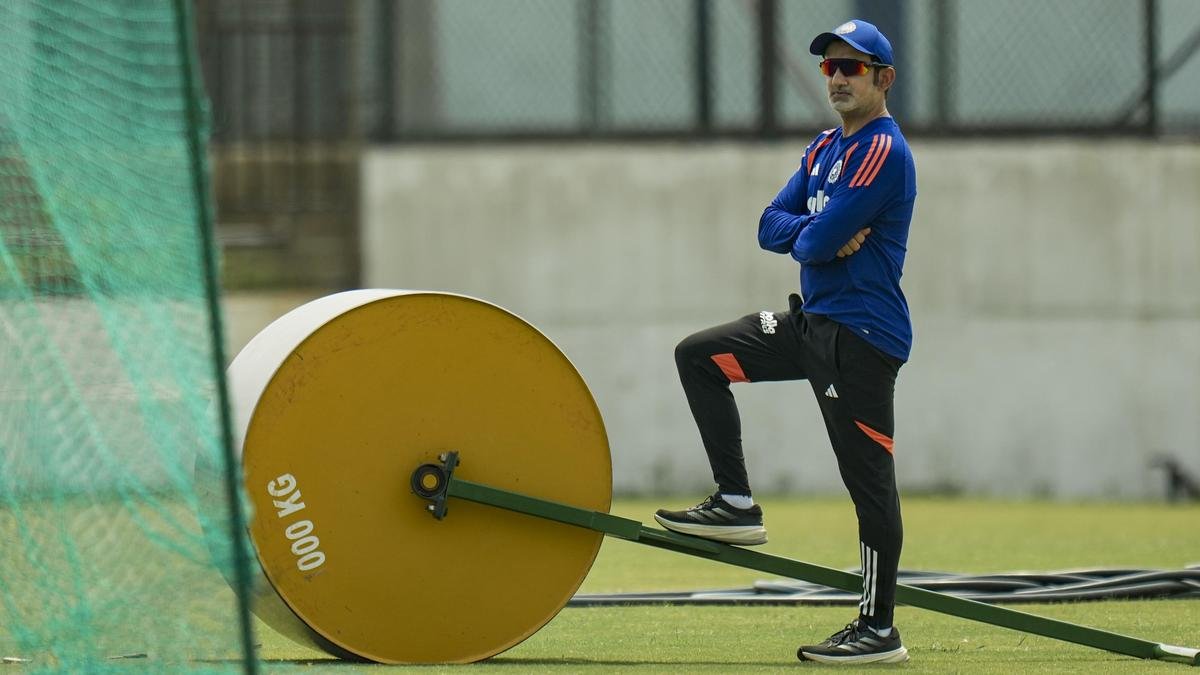
Head coach Gautam Gambhir, in the crosshairs after this latest UK misadventure, said at a press conference on Monday that he had had a conversation with the Kerala wicketkeeper-opener, insisting that Samson knew the score but adding that whatever was spoken would remain between the coach and the dropped player. Gambhir is fiercely passionate and an extremely proud professional, wonderful but hardly unexpected qualities; he might not believe so, but he is under pressure to deliver results after a mixed bag.
Depending on which side of the fence one is on, Gambhir is slightly in the red or moderately in the blue in his two years in charge of a successful, settled squad he inherited from Rahul Dravid in July 2024. His very first tour at the helm was a precursor of things to come. India swept the T20I series 3-0 in Sri Lanka, fashioning victories from impossible situations including in the Super Over in the final game in Pallekele. But they were also humbled 2-0 in the ODIs – the first ended in a tie and the umpires seemed to forget that the ICC mandated a Super Over to break the deadlock – as the first indications that India’s fallibility against spin would come back to haunt them lay exposed.
Subsequently, Gambhir has overseen stunning title runs in the Champions Trophy, the T20 Asia Cup and the T20 World Cup, but he has also presided over some of the darkest phases in Indian cricket. A singularly humiliating 46 all out against New Zealand in the Bengaluru Test in October 2024. A record 408-run hammering at the hands of South Africa in November last year. A 3-0 surrender to New Zealand in November 2024 followed by a 2-0 annihilation by South Africa 12 months later meant Gambhir’s CV was already replete with diametrically opposite results. Now, India’s longest winless streak in T20I history has added to the feisty former opener’s discomfiture because while he might hold the view that results alone don’t dictate progress, there is no other tangible, measurable yardstick, is there?
Will/should Gambhir count the Test retirements in that order, within five months of each other, of R. Ashwin, Rohit Sharma and Virat Kohli between December 2024 and May 2025, as a success of sorts? The loss of this bulk of experience and quality inevitably plunged India to the throes of transition – at one stage, he didn’t like that word, choosing instead to go with inexperience before transition returned to his lexicon after the Protean rout. With challenging away tours of Sri Lanka and New Zealand in wait ahead of the five-Test home showdown against Australia early next year, Gambhir will know in his heart of hearts that anything less than a third entry into the final of the World Test Championship in four editions will be perceived as a huge comedown.
Of all the failures that have liberally dotted his brief tenure, the most chastening will be the 2-0 rout in Ireland, followed closely by 76 all out against England in Nottingham earlier this week, which consigned Shreyas Iyer’s men to their heaviest defeat in 20-over internationals. Gambhir harped on the ‘high risk, high reward’ theme to almost wish away the disaster, falling back on the absence of key figures (Bumrah, Hardik Pandya) as an oblique excuse of sorts. Had he not been party to the dumping and omission from the squad of World Cup-winning skipper Suryakumar Yadav, he could have invoked that eventuality too, one suspects. The fact of the matter is that India have been slow to react and adapt, both against the spunky Irish and a fired-up England, themselves looking for minor crumbs of consolation after their outstanding chase of India’s 253 in the semifinal of the World Cup ended just seven agonising runs short.
India have parted ways with coaches with much better results – Anil Kumble walked away in a huff in 2017, acknowledging that his partnership with skipper Kohli was no longer ‘tenable’ despite overseeing Test series wins in the Caribbean, and at home against England and Australia, as well as taking the team to the final of the Champions Trophy in England where we might have had a different tale to tell had Kohli adamantly not chosen to chase on a superb batting surface. If Gambhir seems immune to the slew of defeats that would almost certainly have consumed anyone else, it is because he knows that he continues to enjoy the confidence and the backing of those who make the influential calls in Indian cricket, whether they are a part of the Indian board or not.
Several of India’s methods in the last couple of years have been steeped in madness that is all too visible, not least the ill-advised recall to the T20 setup as vice-captain, no less, of Gill and his subsequent omission with the World Cup imminent, all in the space of five months. Gambhir is open to accountability just as much as the next individual is, and it’s time he helps the side turn the corner and stack up the consistency that has made India so feared across formats for so many years.
The predicament of the coach and their support group of any team at any level anywhere in the world is unenviable. For all the strategising and analysing and the backroom work that goes in before a match or a tournament, there is nothing they can do in realistic terms once the action begins beyond hoping that their charges remember the plans and are up to scratch when it comes to execution on a given day. But the buck will stop with the coach, of that there can be no arguments. Gambhir often speaks of wanting to fulfil the aspirations of India’s 140 crore people. This would be as good a time as any to translate words into deeds.
Published – July 10, 2026 12:34 am IST


