



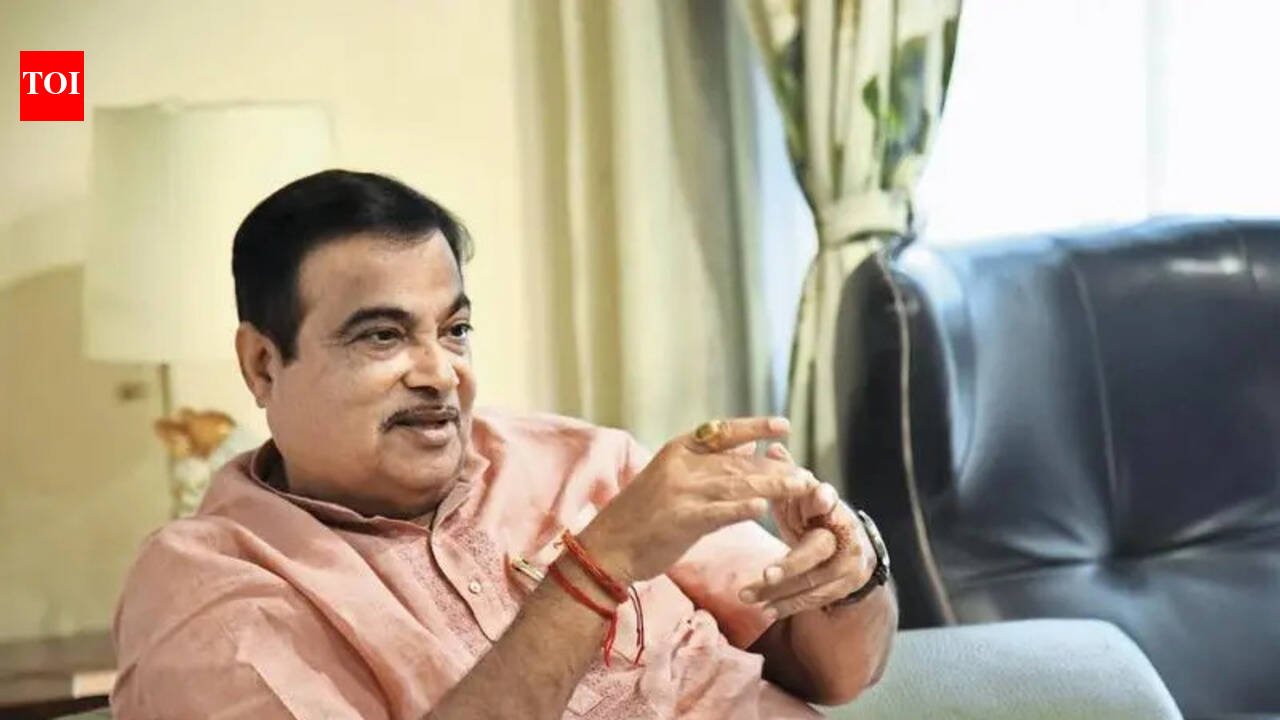
Nagpur: Union minister and Nagpur MP Nitin Gadkari has outlined an ambitious roadmap to transform the city into an international-standard urban hub. Speaking in an exclusive interview, Gadkari framed 2026 as a decisive phase for Nagpur’s evolution, where civic governance must translate long-term planning into visible, everyday outcomes for citizens. Emphasising sustainability, efficiency and economic vitality, he said the coming year should consolidate gains in infrastructure while pushing the city toward global benchmarks in cleanliness, connectivity and quality of life.Q: What is your long-term vision for Nagpur as a city?A: My goal is to make Nagpur a truly international city. That means it should be one of the cleanest, greenest, well-connected and most efficient cities in the country. It must be pollution-free, well-planned and economically vibrant, with efficient public transport, clean water, scientific waste management, strong logistics, quality education and sustainable industry. If we continue with discipline and planning, the city can be among the world’s best places to live. Cleanliness and the environment are my top priorities.Q: What do you consider BJP’s biggest civic achievement in its 15 years of rule at NMC? A: Water supply is the biggest achievement. Nagpur is the first city in the country to implement a 24×7 water supply project. It has been running for nearly ten years. Earlier, shortages were routine. Today, supply ranges from a minimum of 8 to 10 hours to, in many areas, a full 24 hours. There is no shortage of water in the city now. This has completely changed the quality of life.Q: Candidate selection often becomes contentious in civic polls. What will guide BJP’s choices? A: Merit and credibility. Tickets should go to those who have people’s support and the confidence of party workers. Caste, religion, language, or individual pressure should not decide candidates. Performance and public acceptance must come first. We have conducted multiple surveys to assess performance in each ward.Q: The Nagpur airport redevelopment has seen delays. Why? A: The new airport, to be built by the GMR group, will be a completely world-class facility. The existing building will be demolished and replaced with a modern terminal with international-standard access roads. Even the Metro will be directly connected to the airport. Delays were procedural, not political. The proposal may come up in the central cabinet meeting next month, and we are confident that work will commence soon after.Q: How has the water project strengthened the city financially? A: The NMC is the first in India to generate revenue by selling recycled wastewater. We earn around ₹300 crore by supplying treated wastewater to MSEDCL’s Khaperkheda power plant. We have been doing this for the last nine years. It ensures water security and also strengthens municipal finances.Q: Waste management has been a long-standing challenge in Indian cities. A: We have moved from dumping waste to creating value from it. Legacy garbage has been cleared, and reclaimed land is being used productively. Segregation is the key. We receive about 1,200 tonnes of garbage daily, which will be fully segregated and recycled, including glass and metals. Under our waste-to-wealth concept, we are setting up a plant to produce CNG and hydrogen from garbage. We will also produce fertilisers from organic waste. In the next two years, citizens won’t see any garbage dump yard in the city.Q: You have often cited the transformation of dump yards into education hubs. A: Because it shows how urban land can be reclaimed meaningfully. We converted the 90 acres municipal dump yard into world-class educational institutions. Today, over hundreds of students study at the Symbiosis International University campus there. The Narsee Monjee group is also setting up a large campus offering education from nursery to postgraduation. Earlier, students went to Mumbai or Pune. Now, they can get quality education in Nagpur itself.Q: Urban flooding became a major issue after the 2023 Ambazari lake incident. A: It has, though there were serious problems earlier. In 2023, after heavy rainfall, parts of Shankar Nagar went underwater and there were losses to life and property. This year, despite heavier rainfall, there was no flooding in those areas. That happened because nullahs were widened, encroachments were removed, and drainage basins were strengthened, including at Ambazari. We are systematically fixing the drainage network.Q: Drainage remains a concern across the city. What is being done structurally? A: Drainage is complex and capital-intensive. That is why ₹2,400 crore has been sanctioned for the Nag river rejuvenation project, with assistance from the World Bank and Japan’s JICA. Initially, work will cover three assembly segments, but the plan is citywide, which included laying a new drainage system. Along with NIT and NMC, we are preparing a comprehensive master plan covering all rivers and nullahs in Nagpur.Q: Critics argue that infrastructure projects look impressive but don’t always translate into quality on the ground. A: Quality is non-negotiable. Nagpur today has concrete roads across most areas. You will not easily find potholes now. Of course, minor deficiencies can occur anywhere, but overall standards are far better than before. We have created multi-level transport corridors to reduce congestion and set engineering benchmarks in urban road design.Q: You often cite engineering records achieved in Nagpur. Why do these matter? A: They matter because they reflect planning and efficiency, not just scale. Nagpur is the first city to have double-decker flyovers at two locations. At one place, we have a road below, a railway line above it, then a flyover and a Metro corridor — all integrated. This is a world record in urban transport design. We have also developed the country’s first Divyang park for persons with disabilities, which reflects inclusive planning.Q: How central is public transport to your vision for Nagpur? A: Extremely important. Pollution and congestion cannot be solved without strong public transport. Nagpur’s city bus fleet is steadily shifting to electric buses. Diesel buses are being phased out, and charging infrastructure is being created. In the next few years, all public transport buses in the city will be electric. Metro expansion is underway towards outer areas like Kamptee and Butibori. If public transport is comfortable, reliable, and affordable, people will naturally reduce private vehicle use.Q: How critical is connectivity to Nagpur’s economic future? A: Extremely critical. Nagpur’s zero-mile location gives it a natural advantage. Highways, railways, air connectivity, and logistics parks together can make the city a logistics capital. Investments worth thousands of crores are underway in logistics, manufacturing, and agro-processing. Chief Minister Devendra Fadnavis and I are making all efforts to make Nagpur India’s logistics hub. New highways are coming up from Nagpur to Hyderabad and from Gadchiroli to Visakhapatnam.Q: Employment remains a key voter concern. What is your assessment of job creation? A: More than one lakh people have already received direct employment in MIHAN. These are audited figures. Many more jobs are in the pipeline. Six major IT companies, including TCS, Infosys, HCL, and Mahindra-Satyam, have employed thousands of software engineers. TAL Manufacturing Solutions is making parts for Airbus and Boeing, and the Reliance–Dassault facility is manufacturing Falcon aircraft and components for Rafale fighter planes. These are high-quality, sustainable jobs.Q: The Oxygen Park on Wardha Road has not attracted as many visitors as expected. A: The project is being expanded. In its second phase, we will open a bird park and adventure sports facilities. The tender will be finalised soon. The forest department has sanctioned ₹22 crore, and from NHAI we are allotting ₹50–60 crore for traffic-related works. Once these facilities come up, the park will attract far more citizens.


