



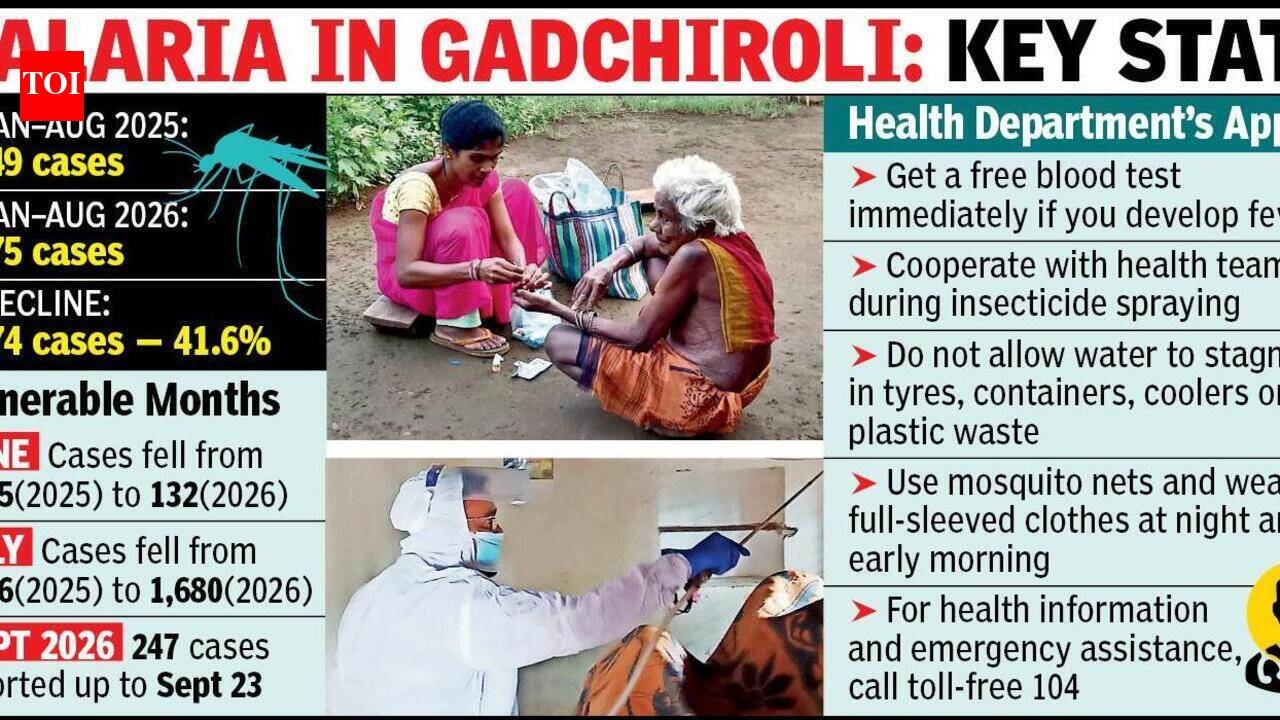
Gadchiroli: In a district where remote forest settlements can remain cut off during the monsoon, malaria control depends as much on reaching people in time as on treating those who fall sick. Gadchiroli has now recorded a 41.6% decline in malaria cases compared with last year, with the health administration intensifying testing, treatment and mosquito-control measures across vulnerable areas.The district’s difficult geography — dense forests, scattered tribal hamlets and swollen streams during the rains — has long made regular health outreach difficult. The legacy of Left-Wing Extremism has added to these challenges in some areas. Yet health workers continue house-to-house surveillance, including in remote hamlets, using rapid diagnostic kits for immediate testing.Where a malaria case is detected, health teams continue surveillance for 28 days. Asha workers and other health staff also follow up with patients to ensure that treatment is completed. The district has distributed 1,16,372 insecticide-treated mosquito nets and deployed 25 teams for insecticide spraying in 1,195 villages. Spraying has been completed across Bhamragarh taluka. Regular control and monitoring are being carried out at vulnerable Primary Health Centres with an Annual Parasite Index (API) of more than two.Collector Avishyant Panda said the district’s focus was to take preventive measures to the last settlement rather than wait for patients to reach health facilities.“Health teams are working in the remote hamlets, including areas around ashram schools. Citizens should observe one dry day every week and ensure that water does not stagnate around their homes. Community participation is essential to sustain malaria control,” Panda said.The administration has also sought help from people who are often the first point of contact for patients. Local priests (Pujari) and traditional healers (Vaidu Baba) are being encouraged to refer people with fever for govt testing. They receive Rs15 for referring a fever patient and Rs200 when malaria is confirmed. So far, Rs15,250 has been transferred as incentives.“To ensure that residents of remote areas do not lose their wages due to illness, patients who complete their full course of treatment are being provided Rs500 as compensation for lost wages, directly deposited into their bank accounts. So far, Rs2.83 lakh has been credited to the accounts of 566 patients. Additionally, 672 nodal teachers have been appointed across 1,908 schools in the district to raise awareness among students,” said Suhas Gade, chief executive officer, Zilla Parishad, Gadchiroli.District Health Officer Dr Pratap Shinde said: “Our field teams are maintaining regular surveillance in vulnerable villages. Rapid testing allows suspected cases to be identified quickly, while follow-up ensures that patients complete the prescribed treatment. Preventive measures such as spraying and mosquito-net use have to continue alongside diagnosis and treatment.”The decline is significant, but officials acknowledge that malaria transmission has not disappeared. Sustained surveillance through the monsoon, timely treatment and community cooperation will remain crucial, particularly in border areas adjoining Chhattisgarh and Telangana.
