



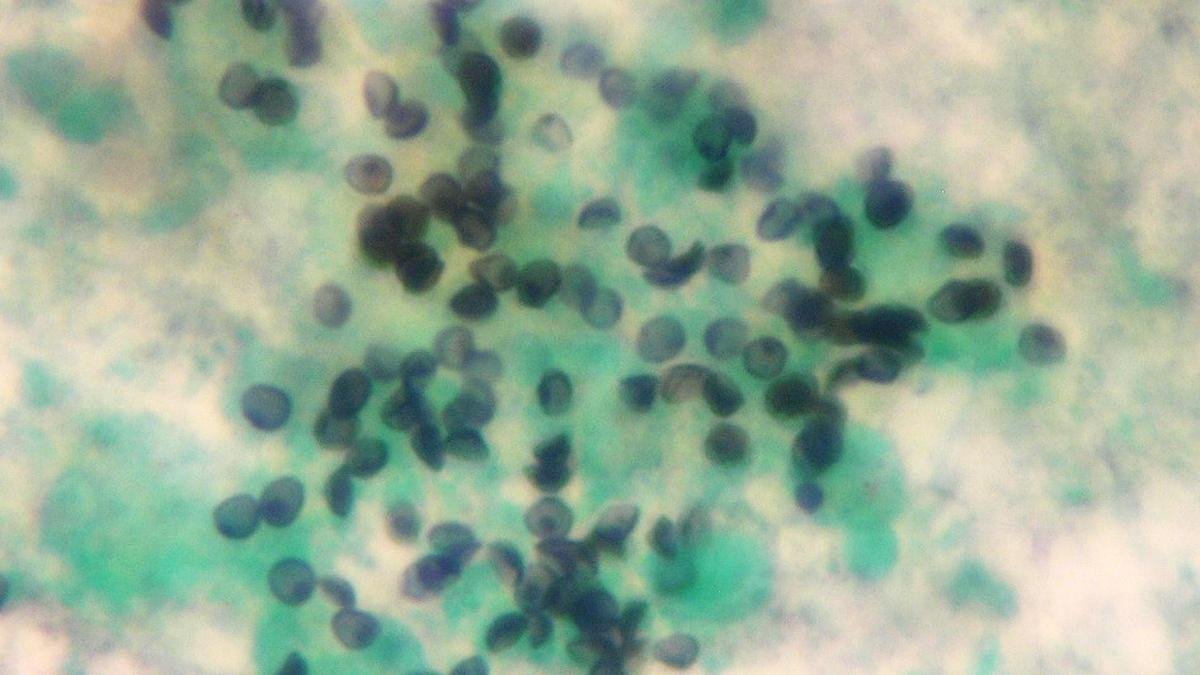
A view of Pneumocystis jiroveci fungi under a microscope.
| Photo Credit: Pulmonary Pathology (CC BY-SA)
A fungus that can cause severe pneumonia in people with weaker or weakened immune systems appears to have become resistant to a drug that never intended to kill it, according to the findings of a study by researchers from around the world published in Science Translational Medicine.
The study focused on mycophenolic acid (MPA), an immunosuppressive drug used with people who have received solid-organ transplants. MPA helps keep the immune system from rejecting the organ — but it was also found to affect Pneumocystis jirovecii fungi.
The team analysed 163 P. jirovecii samples from China, Denmark, Germany, Japan, Switzerland, and the U.S., of which 96 came from recipients of transplanted organs, most of whom were also involved in pneumocystis pneumonia outbreaks from 2005 to 2019. The remaining samples were controls.
MPA works by inhibiting an enzyme called IMPDH in human immune cells. The fungus possesses a similar enzyme, and the researchers believe this could be the link. The team found six relatively common mutations in the fungal gene that produces IMPDH. Some 86% of samples from transplant recipients contained a mutation in that gene, versus 13% in the non-transplant samples.
The researchers also produced normal and mutated versions of the fungal IMPDH enzyme in the lab and exposed them to MPA. Depending on the mutation, considerably more MPA was required to inhibit the mutated enzymes than the normal enzyme.
The mutations also appeared in at least 11 fungal strains and varied between countries and over time. That is, rather than resistance arising once and spreading from that source, P. jirovecii seem to have evolved similar adaptations as different populations encountered the same selective pressure.
The researchers have acknowledged that they have only established resistance at the enzyme level, rather than in infected patients, and that their cohort sizes and clinical data were limited.
Nonetheless, researchers understand antimicrobial resistance as microorganisms evolving to resist antibiotics, antifungals or other medicines. But in the study, a drug intended to act on the human body was found unintentionally exerting pressure on a pathogen as well. And mutant fungi that could better tolerate MPA may have enjoyed an advantage among transplant recipients taking the drug, allowing them to survive and spread.
The “results challenge the current status quo on P. jirovecii’s unknown resistance,” the study authors wrote, “calling for reevaluating immunosuppressive strategies and infection control measures and highlighting the broader potential for other pathogens to evolve under selective pressures imposed by human-targeted therapies.”
Published – September 19, 2026 08:30 am IST
