






Need extra funds for your next purchase?
Loan up to ₹5 Lakhs
Starting at 11% p.a.*
Every August 15, Indian fashion gets a little more patriotic. Tricolour outfits appear everywhere, khadi makes its annual comeback, and wardrobes suddenly fill up with handloom sarees, kurtas, Nehru jackets and Indian prints. But Independence Day fashion isn’t really about wearing saffron, white and green anymore.
Look at how we dress today, and you’ll see something far more interesting: a country whose fashion identity has changed dramatically over the decades, absorbing global trends while constantly finding new ways to reinterpret its own heritage.
From khadi being closely associated with the freedom movement to handlooms becoming contemporary fashion statements, and from the classic kurta-pyjama to crop tops, co-ords and sneakers styled with sarees, Indian fashion has come a long way.
And perhaps that evolution is exactly what makes Independence Day dressing so interesting today.
Evolution of Indian fashion:
The story began with khadi
It is impossible to talk about Indian fashion and independence without talking about khadi.
During the freedom movement, khadi became much more than a fabric. It was closely associated with self-reliance, swadeshi and resistance to British-made textiles. Clothing itself became a way of expressing political and cultural identity.
The simplicity of khadi also stood in contrast to elaborate colonial-era dressing. Hand-spun and handwoven fabrics represented an India looking towards its own artisans, materials and traditions.
Today, however, khadi has moved far beyond the traditional kurta.
Designers have experimented with khadi sarees, dresses, jackets, trousers and even contemporary separates, proving that a fabric once associated primarily with simplicity can have a distinctly modern personality.
That shift says a lot about Indian fashion: heritage hasn’t disappeared; it has been restyled.
The saree went from everyday uniform to fashion statement
There was a time when the saree was simply everyday clothing for millions of Indian women. It was worn to work, at home, to weddings, during festivals and everywhere in between.
Today, the saree still holds that cultural relevance, but the way it is styled has changed dramatically.
The traditional blouse has been joined by corsets, halter necks, tube tops, shirts and even oversized jackets. Sneakers have replaced heels. Belts have replaced traditional waist accessories. Pre-draped and ready-to-wear sarees have made the six-yard silhouette considerably easier to wear.
And Bollywood has played a huge role in this evolution.
From the glamorous chiffon sarees of Hindi cinema to contemporary stars pairing minimal sarees with sculptural blouses and statement jewellery, the saree has repeatedly reinvented itself for new generations.
For Independence Day, this makes the saree one of the easiest ways to dress patriotically without looking like you’re wearing a costume. A handloom saree with a modern blouse, for instance, can feel festive without being overly literal.
The kurta got a modern makeover
The kurta has arguably undergone one of the biggest transformations.
Once firmly associated with traditional Indian dressing, it is now available in practically every silhouette imaginable. Straight kurtas, short kurtis, A-line styles, oversized versions, asymmetrical hemlines and contemporary co-ord sets have made the category relevant to younger wardrobes.
The styling has changed just as much.
A kurta can now be worn with denim, wide-leg trousers, sneakers, boots or even a leather jacket. The traditional dupatta is optional rather than mandatory.
This is particularly relevant to Independence Day dressing because you don’t necessarily need a heavily embroidered ethnic outfit to celebrate Indian fashion. A simple white cotton kurta with blue denim and a pair of jhumkas can feel just as appropriate, and far more wearable.
Indian prints stopped being “traditional” and became cool again
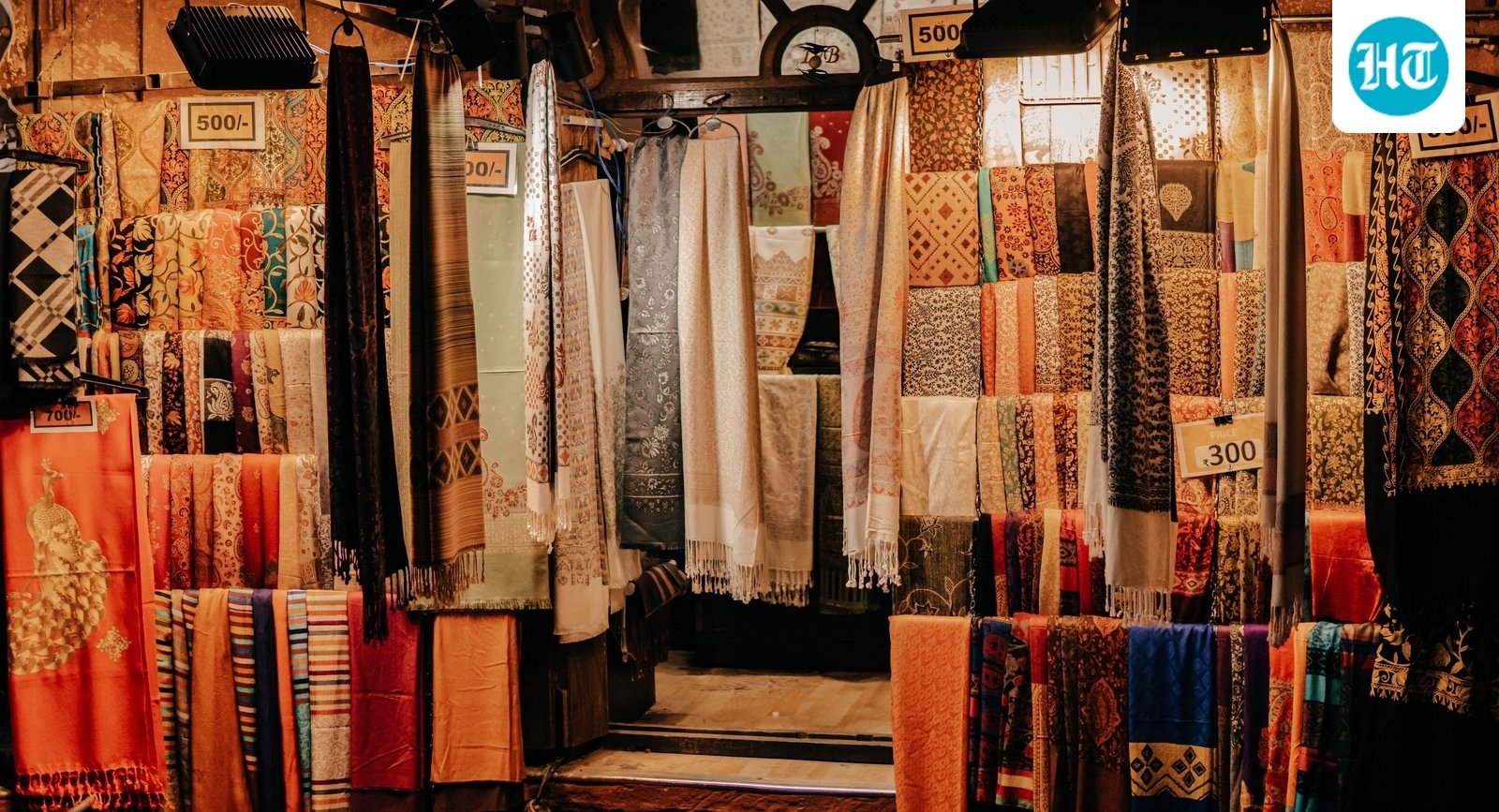
Block prints, Ajrakh, Kalamkari, Bandhani, Ikat and Bagru have increasingly found their way into contemporary wardrobes.
What was once categorised simply as “ethnic wear” is now being styled with western silhouettes.
Think an Ajrakh shirt with jeans. A block-printed co-ord set with sneakers. An Ikat jacket over a dress. A Kalamkari skirt with a fitted tank top.
This mixing of aesthetics is one of the defining characteristics of modern Indian fashion.
We’re no longer choosing between Indian and Western clothing. We’re combining both.
And that Indo-western attitude perhaps captures contemporary India better than any perfectly coordinated tricolour outfit could.
Handloom isn’t just for special occasions anymore
Handloom fashion has also experienced an interesting shift.
Earlier, handloom sarees were often associated with specific occasions, regions or generations. Today, younger consumers and designers are increasingly styling them as everyday fashion.
A lightweight cotton saree can be worn with a crop top. A linen saree can be paired with a structured blouse. A handloom jacket can be worn over jeans. A woven dupatta can become the focal point of an otherwise minimal outfit.
Social media has played a major role here, making regional crafts more visible and giving consumers new styling references beyond conventional ethnicwear.
The conversation has also expanded from simply asking whether something looks beautiful to asking who made it, where it came from and how it was produced.
That makes the resurgence of Indian textiles feel less like nostalgia and more like a conscious fashion movement.
Bollywood changed the way India dresses
Indian cinema has always influenced fashion, but the relationship between Bollywood and fashion has become even more immediate in the social media era.
Earlier, audiences would recreate a celebrity’s saree, hairstyle or salwar suit after watching a film. Today, a celebrity airport look can influence fashion trends within hours.
The result is a fascinating mix of influences.
A celebrity might wear a traditional Banarasi saree with a contemporary blouse one day and an oversized Indian-print shirt with jeans the next. A lehenga might be styled with sneakers. A kurta might be paired with a corset. A saree might be worn with a blazer.
Indian fashion is increasingly about how you style the garment rather than whether the garment belongs to one particular category.
Even patriotic dressing has become less literal
This is perhaps the biggest change of all.
Independence Day dressing used to mean reaching for obvious patriotic colours or traditional Indian clothing. There’s nothing wrong with that, but today’s fashion gives us considerably more room to interpret the occasion.
You could wear an all-white outfit with green accessories. Choose a handloom saree with subtle saffron detailing. Style an Indian-print shirt with denim. Wear a simple cotton kurta and accessorise with handmade jewellery.
Even a tricolour-inspired manicure, scarf or handbag can make the connection without turning your outfit into a walking flag.
The idea is to celebrate Indian fashion rather than simply dress in India’s colours.
What modern Indian fashion says about us
The most interesting thing about Indian fashion today is that it isn’t trying to choose between tradition and modernity.
It is doing both.
We still wear sarees, kurtas, lehengas, jhumkas and handloom fabrics—but we style them differently. We have access to international trends, but we continue returning to our own textiles, crafts and silhouettes.
That’s why Independence Day is such a fitting moment to look at how far Indian fashion has travelled.
The evolution isn’t about abandoning tradition for Western fashion. It is about taking what is distinctly Indian and giving it a new context.
So this August 15, perhaps the most fashionable way to celebrate isn’t to ask, “What should I wear in the colours of the flag?”
Instead, ask: “Which part of Indian fashion do I want to bring into my wardrobe—and how can I make it feel like me?”
Because Indian fashion today isn’t one silhouette, one fabric or one aesthetic.
It’s a conversation between where we’ve come from and where we’re going.


