



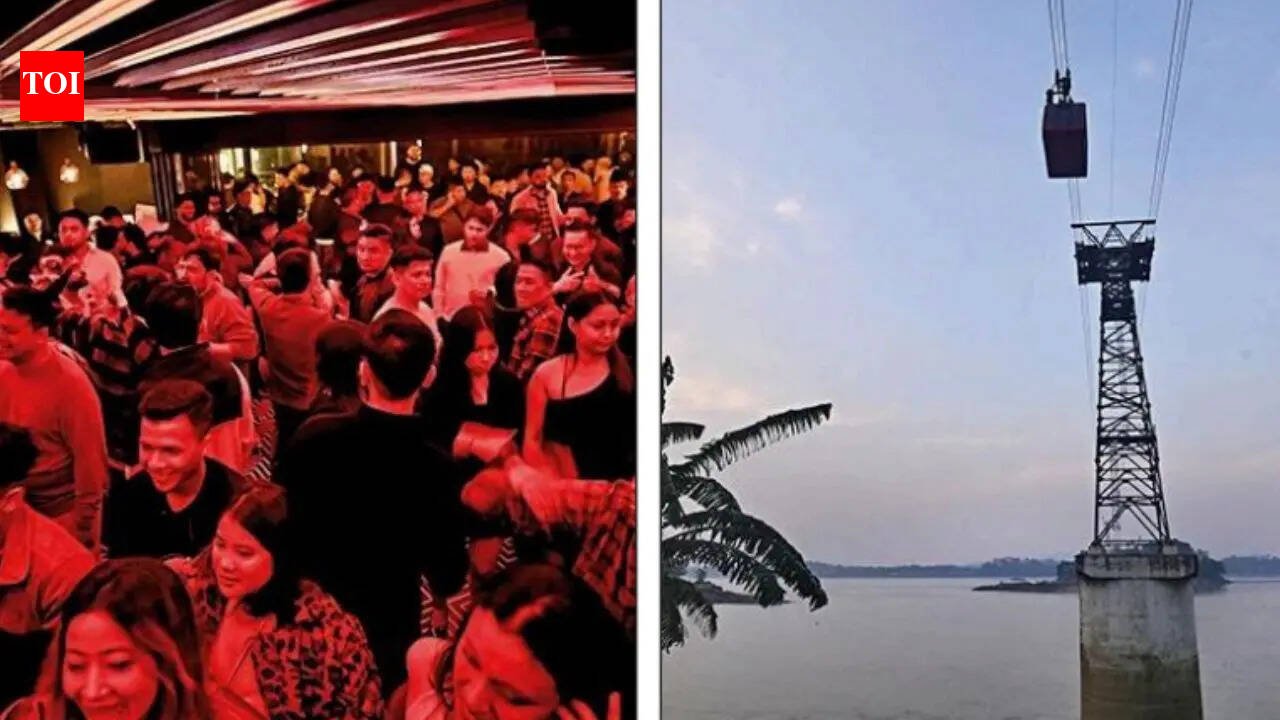
GUWAHATI: As EDM floods the room, people push through a crowd, trying to find space to sway on a dance floor. Some cheer when a server tur-ns up with a tray full of drin-ks, others pass a sheesha pipe.It is 2am in Guwahati. And the night is just beginning.Open till 6am, these after-party clubs epitomise the changing face of the city, which is embracing a template of urban aspiration.Varun Vohra, F&B COO of a 3-star hotel and a professional DJ, says, “There used to be only one club here; it was in a 4-star hotel. Around 15 clubs have opened over the years. There are also about 100 bars in the city.”The target demographic has also changed. While earlier establishments mainly catered to the non-Assamese population from high income brackets, locals have now become part of the nightlife.Yoorisa Pde, who owns a cafe in Uzan Bazar, says there has been a steady rise in the number of visitors over the years. “Many now prefer the relaxed vibe of cafes over that of restaurants, where the setting is more formal,” she says, of the shift in the Assam capital towards the culture of a metropolitan city.Uzan Bazar is now a foodie hotspot, with street stalls, pocket-friendly cafes and even bungalows refurbished as eateries, serving everything from dosa to handmade pasta to matcha. Some also encourage professionals working from home to set up their laptops there.Employment opportunities in the hospitality industry have increased as the demand for baristas, chefs and bartenders rises. This has created jobs and raised aspirations and, in election season, expectations from political parties to bring more development projects and employment to local youths.“People who had skills did not have a place to work. They had to leave the state even if they wanted to stay with their families. But now, there’s space. People are willing to come back home,” says Yoosari. “There are around seven 5-star hotels coming up in and around the city. This will help many people from the region find jobs closer to home,” Varun says.Alongside its lifestyle shift, there has also been a visible infrastructural transformation across Guwahati over the years, with a total of 30 bridges and flyovers built.Guwahati also has another mode of transportation that can make urban mobility simpler – India’s longest cable car. While it is used by 650-700 tourists every day, govt is looking at the ropeway as a viable option for daily commuters. Hundreds cross the Brahmaputra on the 20-minute ferry but during the monsoon, they are in a fix. The 1.8km-long cable car crosses the river in 9 minutes.“The ropeway is an option when the Brahmaputra swells, but it has to be subsidised,” says Nitu Moni Das, a travel guide. Echoing this, Raktim Buragohain, a trader, says, “It’s fast, smooth, and you can enjoy a great view. But it’s impractical if the ticket price isn’t reduced.”A one-way trip costs Rs 100, compared to Rs 6 on the ferry.Change also comes at a price – at some places, the development is hurried, haphazard, and the pressure of traffic mounts every day. Maharaja Prithu flyover was inaugurated on March 10, just before EC announced the poll date, and the work is incomplete. It is the same for Kumar Bhaskar Varma bridge. Sanjiv Shyam, chief engineer, PWD (roads), says govt had to ensure Maharaja Prithu flyover did not affect structures like Burha Jame Masjid. But residents say roads are too narrow to divert traffic.Insurgency to industryIn 1979, Assam saw the rise of Ulfa, formed over grievances about resources being exploited. But the organisation began hurting the people it claimed to be fighting for. Pipeline bombings, kidnappings and extortion bled the state dry. Investors fled. Tea gardens paid “taxes” to militants.Decades on, Upper Assam is seeing the emergence of industry – from the world’s first 2G bamboo-based bio-ethanol plant in Golaghat district’s Numaligarh to the Rs 11,000-crore ammonia-urea project in Dibrugarh district’s Namrup.Abhishek Singha, founder of NGO All & Sundry, said, “We hope the bioethanol plant promotes sustainable green energy.” Creation of jobs would reduce migration to metros, he added.Ishantor Sobhapandit, NER regional director at Indian Chamber of Commerce, said, “While one project focuses on fertiliser security, cuts down import dependence, and revitalises a legacy industrial hub, another links rural populations with a green energy economy.”BJP neta and Assam Chamber of Commerce chairman Rupam Goswami also pointed to the Rs 27,000-crore semiconductor plant under construction in Jagiroad.


