





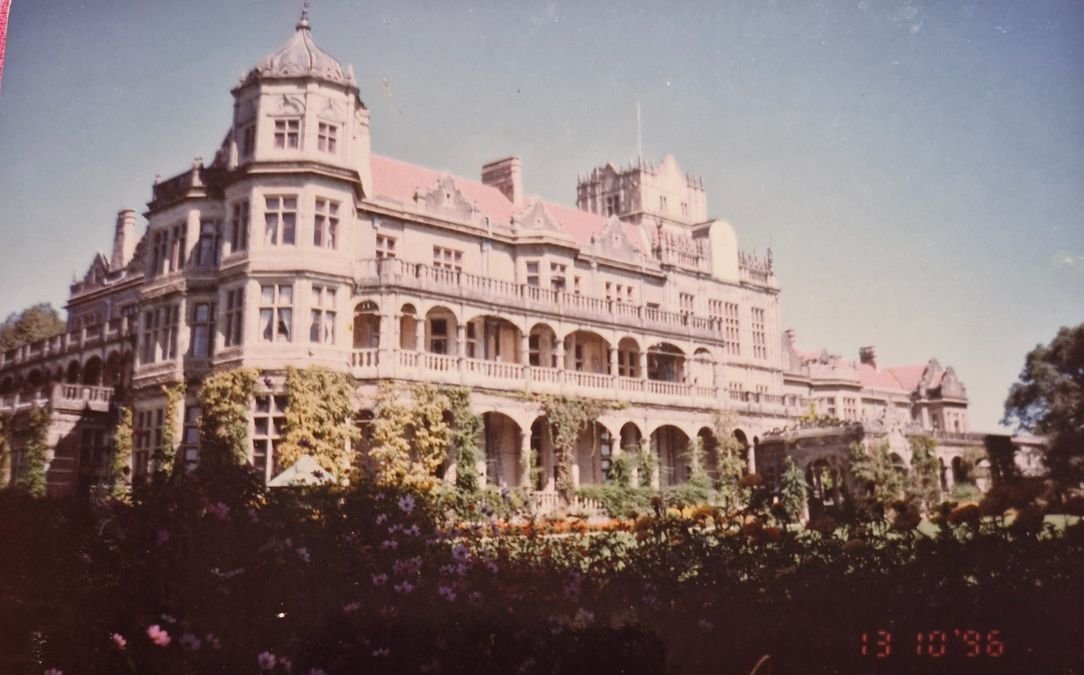
For more than many millennia, the world over has been shaped up by the architects of the societies, a.k.a the teachers. And none are more evocative in the Indian context when one visualises the likes of Dronachayra and Sage Vishwamitra or even Vashistha; the epitomes of teachers so very vividly brought out in our mythological treatises of the Mahabharata & Ramayana respectively.
Year after year, on 05th September, India pauses to celebrate its teachers. There are speeches, flowers, felicitations, photographs, and familiar words about the sacredness of the teaching profession. Yet somewhere between the ceremonial applause and the obligatory greetings, we often miss the larger question: ‘What exactly is a teacher expected to give to a society? At the ‘Indian Institute of Advanced Studies’ (IIAS), Shimla, that question carries a special resonance.
For IIAS is not merely another academic institution; it is, in many ways, the physical embodiment of an extraordinary idea associated with Dr S. Radhakrishnan – the philosopher, teacher and former President of India whose birthday became ‘Teacher’s Day’. All on his own insistence to the countrymen. Deeply against ostentation both in his public and private life, his directives to the countrymen were very straightforward – ‘do not observe my birthday as a special occasion, but convert the same into a national celebration marked for the architects of the society’; and hence came up ‘Teacher’s Day ’.
The idea of penning down this article of mine is not the usual eulogising of the architects of the society on Teacher’s Day. Albeit it is to highlight the second president’s lifelong commitment to his first profession, i.e., the teaching community, in a more tangible manner. And that tangibility did manifest during his presidential years, when in 1963/64 he went ahead and mooted the idea of converting the centuries-old ‘Viceregal Lodge’ cum Rashtrapati Nivas at Shimla into a centre of higher studies. A place where the best of brains could confluence together and confabulate on matters concerning the advancement of the society per se.
It was last December that I happened to visit this imposing Gothic-era-designed sprawling building in the heart of Shimla as part of my winter sojourn in the Himalayas. It was a visit that stayed with me long after I left the erstwhile summer capital of India. There was something unusually compelling about the place. Perhaps it was the silence that seemed to belong to the building itself, punctuated, of course, with the chatter of the tourists who, like me, too had congregated at this sacred place. Or perhaps it was the realisation that these corridors, rooms and lawns had witnessed a remarkable transition –from the seat of imperial authority to a sanctuary of scholarship.
And as Teacher’s Day approaches, that thought becomes particularly relevant. The erstwhile ‘Rashtrapati Nivas’ is not merely an impressive colonial–era structure but much more than that. Built in the late nineteenth century as the summer residence for the viceroy of India, it was conceived as an assertion of imperial power. Yet history has a wonderful habit of giving buildings meanings that their architects never anticipated. Built between 1884 and 1888, the building was designed by British architect ‘Henry Irwin’ in a distinctive Scottish/ Indo-Gothic style overlooking the entire Shimla valley.
The building was the seat of British imperial government in Shimla from 1888 to 1947, housing successive viceroys including Dufferin, Curzon, Irwin, Linlithgow, Wavell and Mountbatten. After independence, this imposing symbol of colonial authority acquired an entirely different purpose.
Though intermittently used as a retreat for the first citizen of the nation, it was only in 1963/64 that, under the vision of Dr S.Radhakrishnan, philosopher, educationist, and the second president of India, this imperialistic façade became synonymous with the high and mighty concerning advancements in education in the sub-continent. That transformation is perhaps the most beautiful facet of IIAS, epitomising India placing the quest for knowledge over power.
Dr Radhakrishnan understood something that modern education forgets: universities and institutions of higher learning are not factories producing scholars who have scant regard for knowledge. Cast a look around in today’s milieu and my above statement will stand testimony to the above truth in all its nakedness. The larger purpose of the creation of IIAS was to inculcate an environment in which the human mind could question, explore, disagree, imagine and finally discover.
IIAS was conceived as a place where scholars could withdraw, think deeply and work across disciplinary boundaries. Philosophy could meet history, literature could converse with sociology, and science could encounter the humanities, thereby widening the frontiers of knowledge that were hitherto confined to the narrow labyrinthine of our myriad universities propagating mediocrity in the education sector.
Walking through the corridors of IIAS is almost like walking through a maze of ideas laced with opportunities, as also crystal gazing into the future that holds a subtle chance for the humanity to leapfrog its fortunes. The grandeur of the building initially captures one’s attention. The stone walls, wooden interiors (Burma teak), high ceilings, fireplaces and expensive lawns evoke another era. In particular are a few items and rooms which transport a visitor to the pre-independence era.
The oval-shaped mahogany table on which Cyril Radcliffe drew the Radcliffe line partitioning the subcontinent in 1947 and the dining hall, which had hosted the last viceroy and his wife partaking in their last meal before flying back to England, are some of the memories of a bygone era in this historical building. This place has survived because its real value is not in its architecture; it is in what happens inside the mind of the person who comes here. That is where IIAS becomes particularly relevant to Teacher’s Day.
We often speak of teachers as people who impart knowledge, but the greatest teachers do something much more difficult. They teach us to broaden our horizons and lay our focus on things we don’t know already, but to look beyond that are visible to us. That is the underlying spirit of IIAS. Advanced scholarship begins where conventional answers end.
Visitors like me come to IIAS expecting to see another historic building; instead, the place quietly reminds us that civilisation advances because some people refuse to accept that the existing explanation is necessary the final one. Perhaps that is why Dr Radhakrishnan’s association with IIAS is so significant.
The institution he helped create carries something of this above-mentioned philosophy. Shimla has long attracted people seeking respite from the heat and noise of the plains. IIAS takes that physical stress and converts it into an intellectual one. Scholars come here not simply to escape the bustle of everyday life, but to find the quietude necessary for serious thought.
My visit to IIAS last December therefore became more than a sightseeing experience. It became an encounter with an idea—an idea that education is ultimately about the liberation of mind. The building itself seemed to tell a different story. Power came here once; today ideas live here.
That journey – from authority to inquiry – is perhaps a metaphor for India’s own journey. And hence my single most reason to dedicate this write-up on this Teacher’s Day to an offbeat subject like IIAS, and yet remaining centred around the subject as such.
(The writer is a retired army officer and a regular scribe of Rising Kashmir paper. He can be approached at his email—[email protected])


