







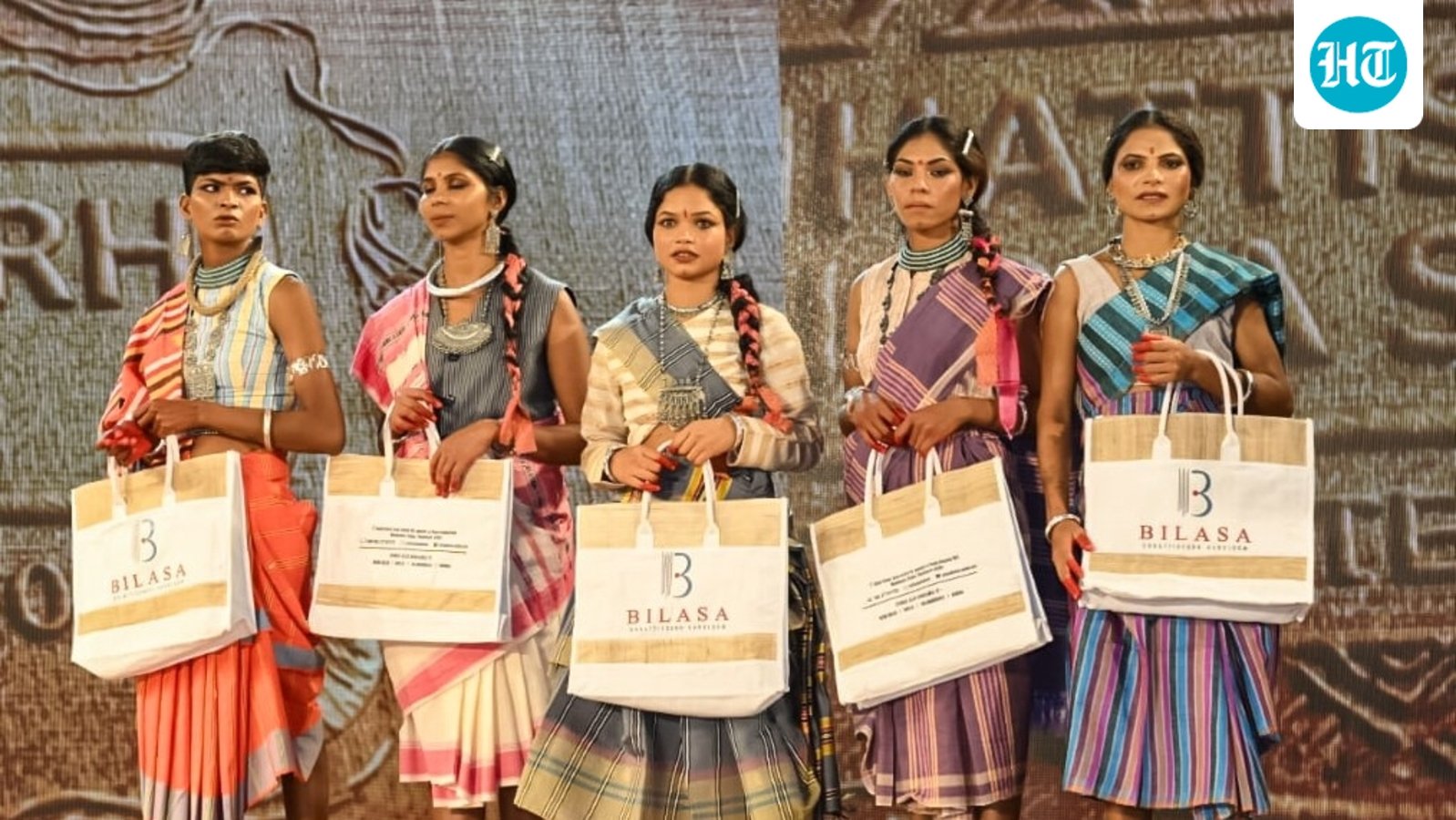
What did they wear on the ramp walk?
They walked the ramp at Deendayal Upadhyay Auditorium in Raipur, a significant contrast to their former lives in Bastar’s forests, where they carried weapons, but now they carry the legacy of Indian craftsmanship, showing how rehabilitation can open new paths when supported by opportunity and education.
The women were beautifully styled in heirloom sarees with rich traditional prints, accessorised with silver waist belts and jhumkas. Their distinctive saree drapes and neatly braided hair kept each look firmly rooted in regional culture.
Why is this more than a fashion moment?
This was more than just a sartorial spectacle. In a post on X (formerly Twitter), Chhattisgarh Chief Minister Vishnu Deo Sai praised the women’s journey from carrying weapons in the forests of Bastar to presenting the state’s rich handloom heritage before the nation.
He described their transformation as inspirational and as an expression of Chhattisgarh’s proactive movement from violence towards development. He also stressed that this demonstrates that fashion can be a powerful tool for social change.
“A new chapter is unfolding in Bastar – one of peace, progress and possibilities. The Bastar of hope, opportunity and aspiration is now taking centre stage. Hands that once held weapons are today weaving a new story of dignity, confidence and hope. From violence to opportunity, from fear to freedom – this transformation is the true triumph of peace and development,” he wrote.


