






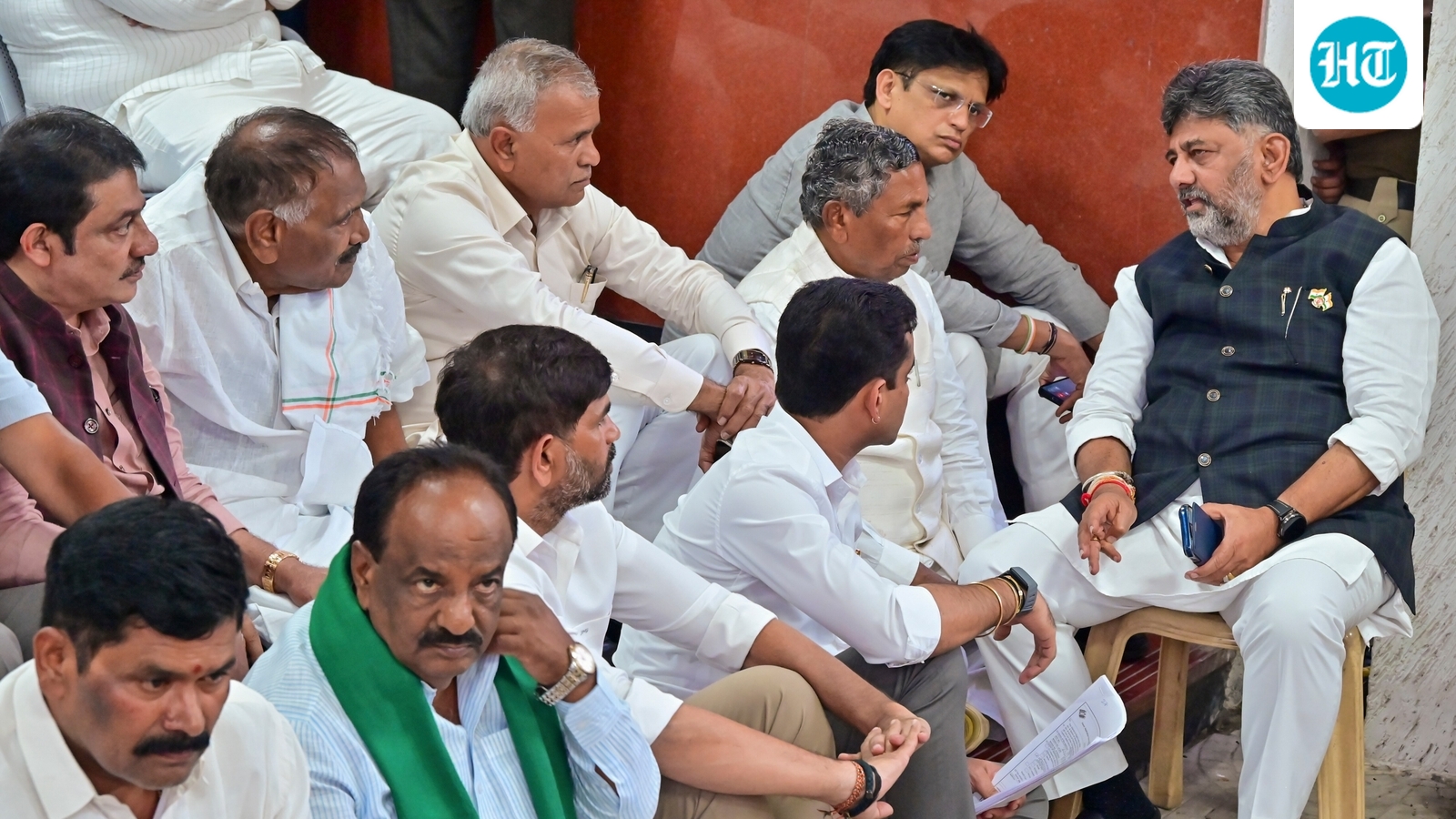
Karnataka chief minister DK Shivakumar on Thursday, accompanied by six cabinet ministers, met state chief electoral officer V Anbukkumar, and demanded an FIR and a time-bound criminal investigation into alleged bulk submission of fraudulent Form 7 objections.

The sit-in lasted about five hours. He alleged that pre-printed Form 7s carrying voters’ names, addresses and EPIC (unique voter ID) numbers were being supplied to BJP workers.
The BJP denied these charges. Party leader R Ashoka said his party would answer only a court or the Election Commission.
Karnataka is not the only state. Similar instances of the alleged misuse of Form 7 to target genuine voters have been reported from several other states, including Odisha and Uttarakhand, as the Special Intensive Revision (SIR) exercise for electoral rolls is underway in its third phase.
A look at what is Form 7 and why it is at the centre of a controversy:
Also read: ECI removes extra SIR declaration from Form 6 in states where revision is complete
What is Form 7?
Form 7 is the application for objecting to the inclusion of a name, seeking deletion of one’s own name, or seeking deletion of another person’s name in the electoral rolls due to death or shifting.
It is prescribed under the Registration of Electors Rules, 1960. Any registered elector of the constituency can file it.
Rule 13(2) of the 1960 Rules says an objection must be filed in Form 7 by a person whose name is already on the electoral roll for a constituency. The current form, as published by state electoral officers, asks the objector to tick one of five grounds: death, under-age, absent or permanently shifted, already enrolled, or not an Indian citizen.
The form carries a declaration, and a false one is punishable by imprisonment of up to one year, a fine, or both under Section 31 of the Representation of the People Act, 1950, according to a government response to the Rajya Sabha in 1982.
Also read: PM’s resignation, pause SIR: Congress lists its demands amid ECI dissent row
Origin and evolution of Form 7
The central government notified the Registration of Electors Rules, 1960 on November 10, 1960, and the rules took effect on January 1, 1961. The Rules replaced an earlier set framed in 1956, according to the Election Commission of India’s (ECI) Manual on Electoral Rolls.
Until 1993, an objector also needed a second elector from the same roll to countersign the form. The Registration of Electors (Second Amendment) Rules, 1993, issued by the Union law ministry, removed that requirement.
The form was rewritten in August 2003. A 2013 amendment added space for a photograph, the ECI manual says. The Rules were revised again on June 17, 2022, after Parliament amended the Representation of the People Act, and the revised forms came into force on August 1, 2022.
How is a voter deleted?
Filing a form does not delete a name. The objector carries the burden of proving the ground cited, according to the ECI’s guidelines for filling the form.
After a Form 7 is filed, the Booth Level Officer conducts physical verification, and the voter is issued a notice and a hearing by the Electoral Registration Officer (ERO). The ECI says that no name is deleted without a notice to the affected person and an opportunity to be heard.
The 1960 Rules lay out that sequence in steps. Under Rule 18, if the Electoral Registration Officer is satisfied an objection is valid, the officer may accept it without further inquiry one week after it is listed, unless someone demands an inquiry in writing. In other cases, Rule 19 requires the officer to send notices of a hearing to both the objector and the voter whose name is challenged. Rule 20 requires a summary inquiry, and the officer may direct that evidence be given on oath.
A decision can be appealed under Rule 23 to an officer designated by the ECI, within 15 days.
Also read: Parliament for CEC, the CEC for ECs: How members of Election Commission can be removed
What’s the controversy?
The dispute is about a mismatch. In January 2026 the ECI clarified that any registered voter in a constituency can submit any number of forms, with more than five objections from one person triggering a mandatory ERO review.
Filing is cheap and verification is costly, so a batch of forms filed late can swamp field officials.
Critics have raised concerns that this may lead to targeted deletion applications.
Take a previous example from Karnataka: In Aland, 6,018 online Form 7s were submitted in December 2022, and only 24 were found genuine, according to the Karnataka CEO’s office. The remaining 5,994 were rejected and no names were deleted on their basis, the office said, adding that the Aland Electoral Registration Officer lodged an FIR on February 21, 2023.
How has EC responded?
In Karnataka, the CEO’s circular said that instances of bulk filing of Form 7 have come to notice, and it is alleged that such forms are not genuine. EROs in all 224 constituencies were asked to act under Section 31 against anyone who has made a knowingly false declaration, and such action must be preceded by an inquiry under Rule 20.
Similar actions were also ordered in Odisha, Delhi, and in the past in West Bengal.
Civil society groups and opposition parties, however, insist that the ECI release the complete, disaggregated Form 7 data for all states undergoing SIR.


