



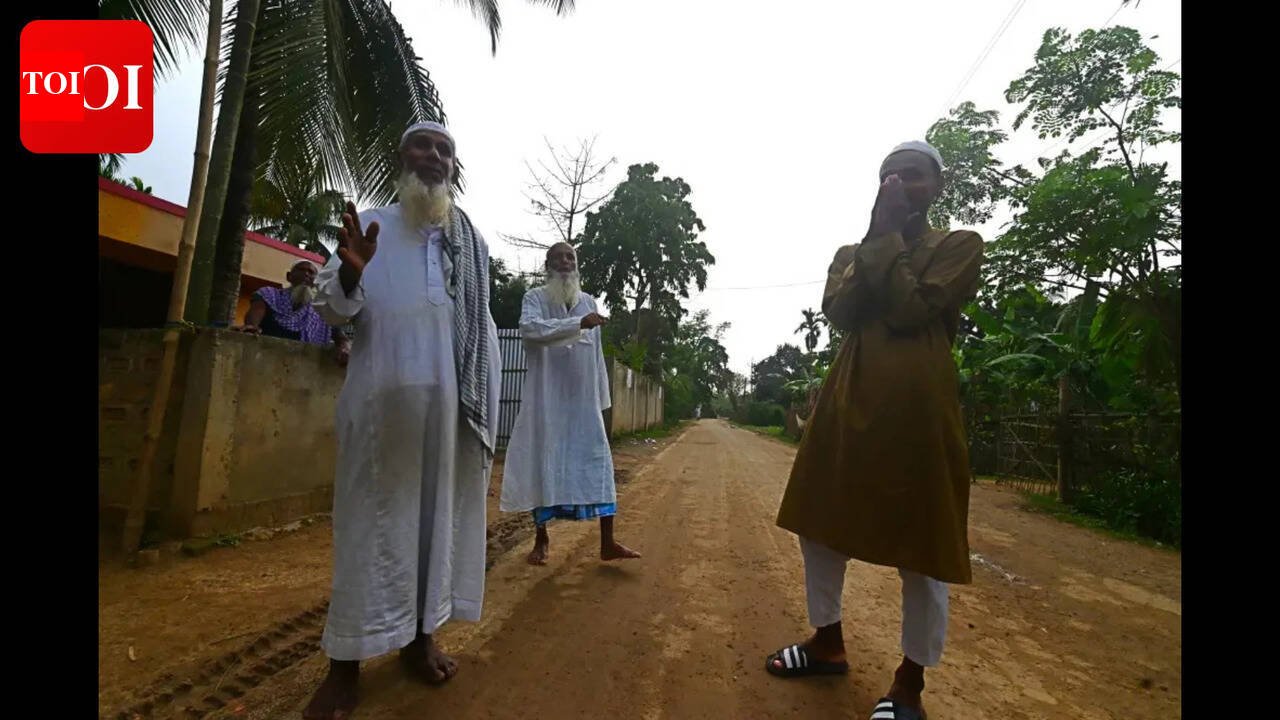
Nellie: In Borbori village of Nellie, where the 1983 massacre remains an open wound, survivors and their descendants continue to assert their democratic rights through voting and civic participation as a statement of survival. For them, who are Muslims of Bangladesh-origin, casting a ballot is both an act of belonging and defiance.Borobori is about 80 km east of Guwahati.“We will vote, it’s our personal choice,” one massacre witness said, noting that some even lean towards BJP.The paradox is stark — a community once violently targeted over questions of identity and citizenship now insists on its place in the democratic process. Their participation underscores how voting becomes a reclamation of dignity, even amid contested narratives of origin and belonging.Abdul Karim, 72, who lost 10 of 14 members of his family in the violence, said, “Many say our names are on the voters’ list. We live under the shadow of being branded foreigners. But we have our names on the voters’ list and these accusations of foreigners have never been legally established.”More than 2,000 Bangladesh-origin Muslim settlers, mostly women and children, were killed in Nellie and surrounding villages in present-day Morigaon district on Feb 18, 1983.The issue returned to focus after the Assam govt made public the Tribhuvan Prasad Tewary Commission report during the winter session of the assembly in Nov last year. The report, submitted in 1984 to then Congress CM Hiteswar Saikia and tabled by then AGP govt in 1987, had remained classified for over four decades.But survivors in Borbori said they still know little about the report and saw no meaningful follow-up after it was tabled.“The commission came here and took statements from every survivor. The report was brought by the govt in the assembly last Nov; but no discussion took place over it in the House. We have learnt to co-exist with injustice we have been facing since 1983 since no former govt till date has done anything to ensure justice to the families,” said Karim.Karim said residents of Borbori and nearby villages also faced years of scrutiny over their citizenship.He said D-voter notices were issued to hundreds of people and many were forced to fight cases in Foreigners’ Tribunals. “Judgment in around 98% FT cases came in favour of the people after their Indian citizenship was proved and remaining cases are still pending in tribunals,” he added.Recalling the massacre, Karim said his father, Abdur Rahman, who had also taken part in the freedom movement, was killed at the age of 108. He said the family still holds land documents dating back to 1930. “How could anyone be termed an illegal foreigner?” he added.Karim said the long wait has taken its toll. “We have fought since 1983 for our existence. We have tolerated and we will tolerate every difficulty; but we would be happy to get justice,” he added.Abdul Adud, 55, was 12 at the time of the massacre. He said his mother Nurjahan Begum and brothers Abdul Habez, 10, and Nur Uddin, 7, were killed in front of him.“Seeing that, I took my two-year-old sister Monowara and fled from Borbori village towards Kopili river. However, the attackers chased and snatched my sister from me and killed in front of me. I somehow escaped,” Adud said.He said the attack began around 9am to 10am on February 18, 1983, when groups surrounded villages, set houses on fire and attacked residents with sharp weapons.“I become emotional whenever I remember those killings. But we are waiting for justice even after 43 years, keeping trust in the almighty. The almighty will definitely ensure justice,” he added.Karim and Adud said election seasons bring a familiar cycle of visits and assurances from political parties, but little changes afterward.Borbori now has around 250 families. Residents said at least 200 of them belong to families that lost relatives in the massacre, while the rest either settled there later or branched out from existing families.


