



REASONS
– Climate change driving extreme rainfall
– Deforestation reducing water retention capacity
– Encroachment on floodplains and wetlands
– Unplanned urbanisation disturbing natural drainage
– Indiscriminate road cutting and construction
– Hydropower projects affecting river systems
– Accelerated soil erosion increasing siltation
CONCERNS
– 168 flash floods recorded in 12 years
– Doda, Kishtwar, Anantnag, Ganderbal emerging hotspots
– 80% slopes affected by varying soil erosion
– Flash floods no longer purely natural disasters
– Himalayan region naturally vulnerable
– Cloudbursts and glacial lake outbursts increasing
– Changing rainfall patterns — short, intense downpours
SOLUTIONS
– Restore forests and degraded slopes
– Protect wetlands and floodplains
– Enforce scientific land-use planning
– Regulate construction in ecologically sensitive areas
– Invest in climate-resilient infrastructure
– Shift from disaster response to prevention
– Sustainable environmental management
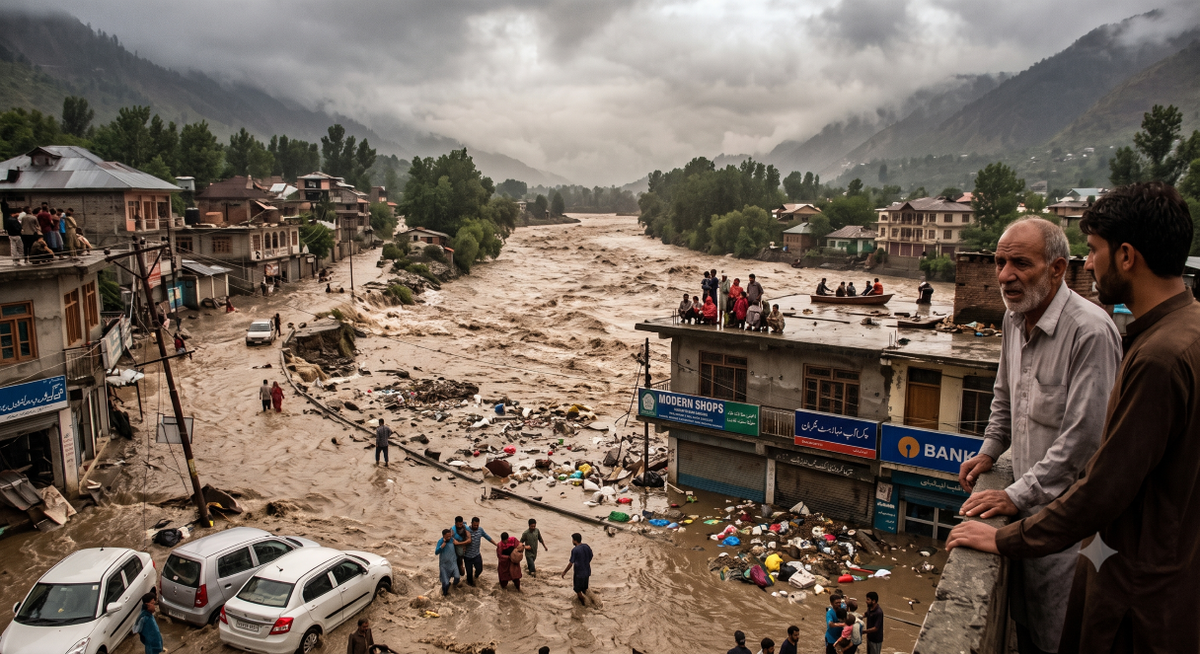
As Jammu and Kashmir grapples with a series of devastating cloudbursts and flash floods, concerns are mounting over the increasing frequency of extreme weather events across the Himalayan region. From Kishtwar and Doda to Anantnag and Ganderbal, sudden floods are leaving behind a trail of destruction, claiming lives and damaging homes, roads and agricultural land.
In this interview, environmentalist and researcher Dr Tanveer Ahmad Khan explains to Rising Kashmir’s Special Correspondent Abid Bashir why flash floods are becoming more common in Jammu and Kashmir and what must be done to prevent future disasters.
RK: Why are flash floods becoming more frequent in J&K?
Dr Khan: Flash floods are no longer isolated disasters in Jammu and Kashmir—they have become a recurring reality. Their frequency and intensity have increased significantly over the past decade, posing serious threats to lives, infrastructure, agriculture and our fragile mountain ecosystems.
There is no single factor behind this trend. Rather, it is the combined effect of climate change and human-induced degradation of the landscape.
According to IMD data, 168 flash flood incidents were recorded in Jammu and Kashmir between 2010 and 2022. The year 2026 alone has already witnessed several destructive events, including the recent catastrophic flash floods in the Doda-Kishtwar catchment.
Districts such as Kishtwar, Doda, Anantnag and Ganderbal are now experiencing these disasters with increasing frequency, indicating a worrying shift in the region’s hazard profile.
RK: Is climate change the major reason?
Dr Khan: Absolutely. Climate change is one of the principal drivers, although it interacts with several other factors.
One of the clearest manifestations of climate change is the changing pattern of rainfall. Instead of moderate rainfall spread over several days, we are increasingly witnessing short-duration, high-intensity rainfall events.
Such intense downpours generate enormous surface runoff within a matter of hours, leaving little time for infiltration or preparedness. Consequently, flash floods are becoming a recurrent hazard across the upper catchments of the Jhelum, Chenab, Tawi and Indus river systems.
RK: What changes have you observed in Himalayan catchments?
Dr Khan: During my doctoral research on the Jhelum Basin, with special reference to the Lidder Catchment in south Kashmir, I used Remote Sensing and GIS techniques supported by long-term satellite imagery, field investigations and ground-truth surveys.
The findings revealed a disturbing transformation of our mountain ecosystems, and the trend continues to this day.
Extensive deforestation and forest degradation have significantly reduced the natural water-retention capacity of mountain slopes. Large stretches of terrain have become exposed and vulnerable, with nearly 80 percent of slopes affected by varying degrees of soil erosion, ranging from slight to severe.
This has increased surface runoff, reduced groundwater recharge and accelerated the movement of water and sediment into rivers during heavy rainfall, making flash floods more destructive than before.
RK: How else is climate change affecting the region?
Dr Khan: Climate change is intensifying the entire hydrological cycle.
Rising temperatures are contributing to more frequent cloudbursts, accelerated glacier melting and the formation and expansion of unstable glacial lakes.
The young and fragile Himalayan mountains, characterised by steep slopes and highly erodible geology, naturally amplify the speed and destructive force of floodwaters once intense rainfall occurs.
RK: How have human activities contributed?
Dr Khan: Human interventions have significantly amplified these natural vulnerabilities.
Encroachment upon floodplains and wetlands has reduced the landscape’s ability to absorb excess water. Unplanned urbanisation, indiscriminate road cutting, large-scale infrastructure projects, hydropower development and construction along unstable hill slopes have disturbed natural drainage systems.
At the same time, accelerated soil erosion has increased river siltation, reducing the carrying capacity of rivers and streams.
Landslides often block mountain streams temporarily before releasing sudden surges of water downstream, further aggravating flood impacts.
RK: Why is the Himalayan region particularly vulnerable?
Dr Khan: The Himalayan region possesses unique geographical and meteorological characteristics that favour extreme weather events.
Cloudbursts, stationary monsoon systems and the interaction between the southwest monsoon and western disturbances can release enormous quantities of rainfall over a very small area within a short period.
Such conditions trigger devastating flash floods capable of destroying infrastructure, agricultural land and human settlements, often resulting in tragic loss of life.
RK: Are flash floods purely natural disasters?
Dr Khan: Not anymore.
While flash floods are natural phenomena, the increasing frequency and severity of these events in Jammu and Kashmir are largely the result of the combined impacts of climate change and unsustainable development practices. Unless we restore forests, protect wetlands and floodplains, enforce scientific land-use planning, regulate construction in ecologically sensitive areas and invest in climate-resilient infrastructure, such disasters will continue to increase in both frequency and intensity. The need of the hour is to shift from disaster response to disaster prevention through sustainable environmental management.


