



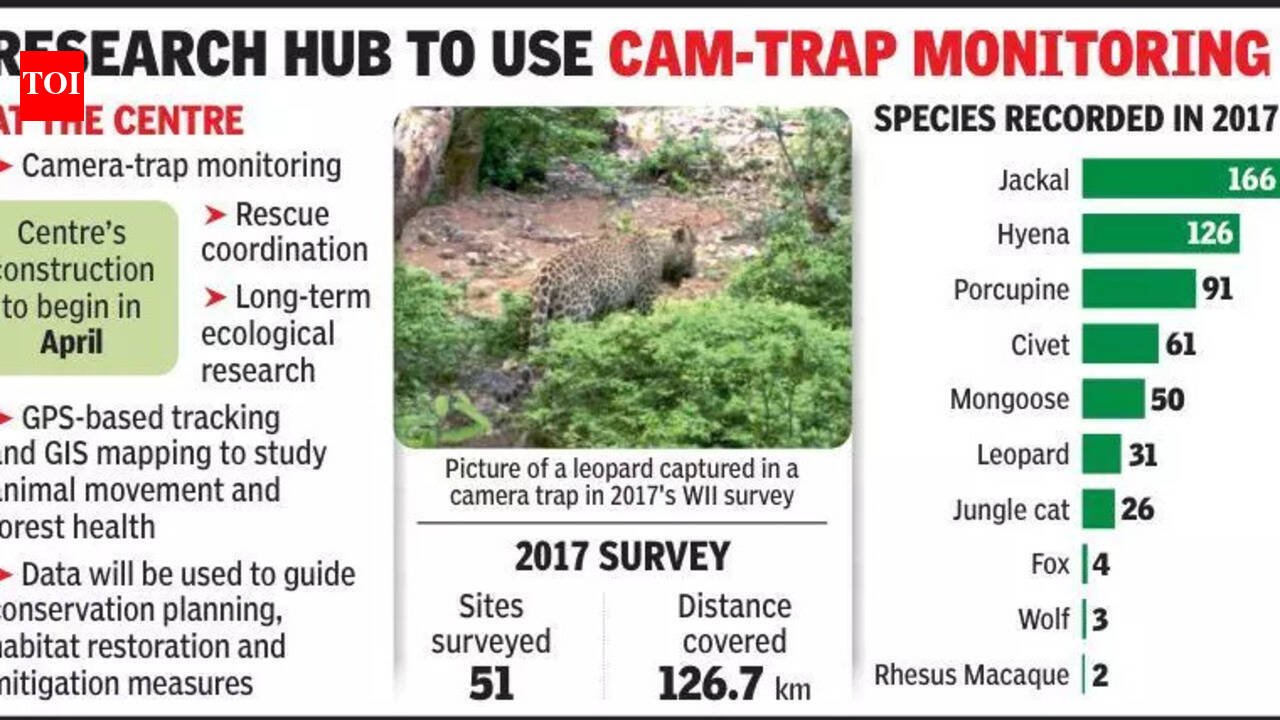
Gurgaon: In a push to strengthen wildlife conservation in southern Aravalis, Haryana forest department is setting up a wildlife monitoring and research centre in Dauj village of Faridabad. Officials said this will be the first facility of its kind in the region, aimed at systematic research, habitat monitoring and species tracking across the Aravali landscape. The centre, proposed near forested tracts of Dauj that form part of the Aravali hill system, is expected to serve as a hub for wildlife studies, camera-trap monitoring, rescue coordination and long-term ecological research. “The facility will help improve understanding of wildlife movement, population trends and human–animal interactions in Faridabad and adjoining districts,” said divisional forest officer (wildlife) R K Jangra.The Aravalis in southern Haryana have recorded frequent sightings in recent years. Leopards, hyenas, jackals, nilgai and several avian species have been spotted.According to the department, the research centre will house field staff, researchers and technical teams involved in wildlife surveys and monitoring. It is also expected to support the use of modern tools such as camera traps, GPS-based tracking and GIS mapping to study animal movement and forest health. Data generated from the facility will be used to guide conservation planning, habitat restoration and mitigation measures, especially in areas facing increasing human-wildlife interaction.Forest department officials said the location was chosen because of Dauj’s proximity to key forest corridors and protected patches in the Aravalis. The centre is likely to function as a nodal point for coordination during wildlife rescue operations and conflict situations, enabling faster response and better documentation.The move comes at a time when conservationists called for dedicated research and monitoring infrastructure in the NCR’s Aravali region, which spans multiple districts and faces mounting development pressure. “Sustained scientific monitoring is essential to assess the impact of urbanisation, road networks and changing land use on wildlife movement and biodiversity,” said Sunil Harsana, wildlife expert and ecologist.Officials added that the centre could also collaborate with academic institutions and research organisations, and may eventually support training programmes for frontline forest staff. The last survey carried by the Wildlife Institute of India in 2017 highlighted the presence of leopards, striped hyenas, jackals, nilgai, porcupines and birds in the region.Ever since, no consolidated data has been collected, even as reports of leopards being killed on roads and hyenas sighted near villages underlined how fragmented the habitat became.


