



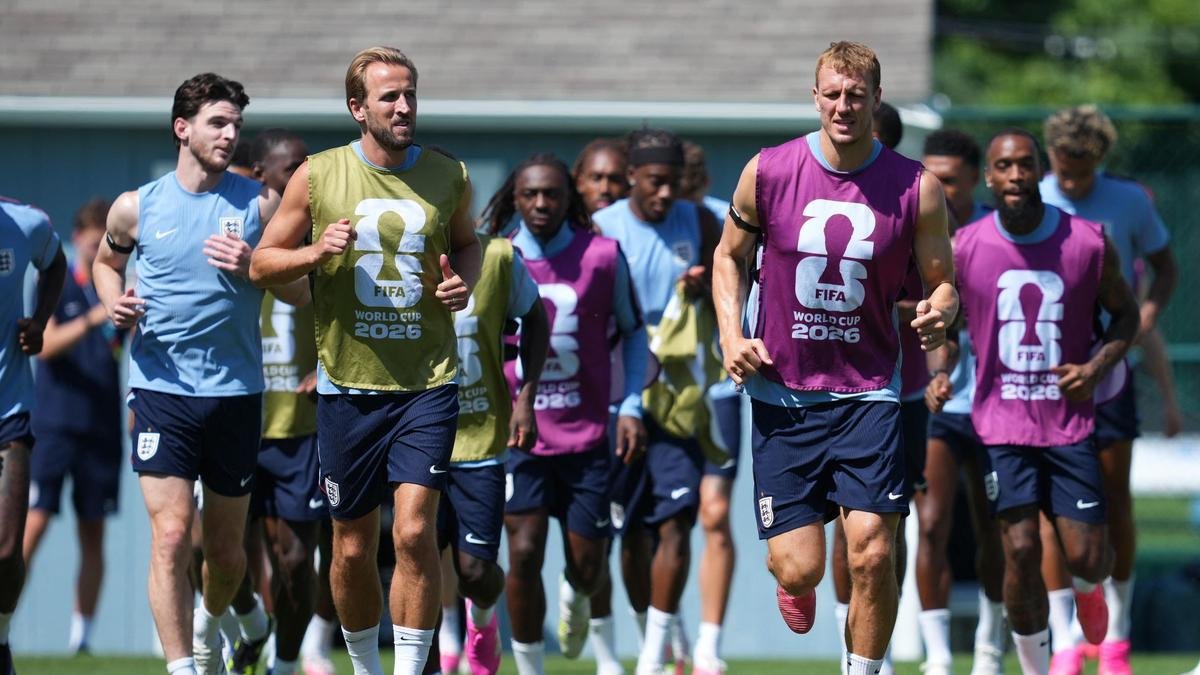
England players train ahead of the third place play-off against France.
| Photo Credit: Reuters
There is perhaps no lonelier fixture in football than the World Cup third-place playoff. For 30 days, players dream only of one destination. They imagine lifting the trophy, hearing their anthem before the final and writing themselves into history. Then, in the space of 90 heart-breaking minutes in a semifinal, that dream disappears. But instead of going home to mourn, they are asked to lace up their boots once more and play a match neither side had ever wanted to qualify for.
“None of these players, none of the French players want to play this match,” Thomas Tuchel said after England’s morale-sapping semifinal defeat. “They want to play in the final. We gave everything to be in the final. Everyone plays to win the World Cup, but it is what it is.”
The fixture itself is almost as old as the World Cup. The inaugural tournament in 1930 had no playoff, with the United States later awarded third place. FIFA introduced the bronze-medal match in 1934, omitted it only during the unique final-group format of 1950 and has staged it at every World Cup since 1954.
Germany has embraced the occasion better than anyone, finishing third a record four times. France has won the playoff twice.
For France and England, Miami offers one final test of character. Neither arrived in America dreaming of bronze. But after coming within one game of the final, bronze is now all that remains and finding the will to fight for it may be the hardest assignment of all.
Published – July 17, 2026 10:20 pm IST


