



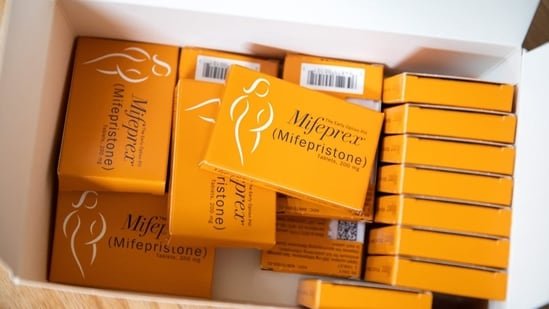
WASHINGTON—The Food and Drug Administration has launched a safety study of the abortion pill, also known as mifepristone, a step that could pave the way for the Trump administration to restrict how it is distributed and used.
The study marks a victory for antiabortion groups and Republican members of Congress, who have demanded action from the administration to crack down on the pill’s use. In recent months, antiabortion allies had lost patience with assurances from administration officials that a study would be conducted.
The effort is expected to take about six months, administration officials said, meaning it likely won’t be completed before the midterm elections. Some in the antiabortion movement had previously accused the administration of dragging its feet on the review to avoid political controversy before the elections, an allegation that both the White House and FDA have denied.
Some of the administration officials said the agency had been making preparations by acquiring data and examining whether a study was feasible. They said the administration had kicked the study into high gear because of conversations with antiabortion groups and a coming October deadline, set by a Louisiana judge this spring as part of ongoing litigation over the abortion pill. The administration is aiming for a robust study that will withstand legal criticism, the administration officials said.
The FDA website currently says that mifepristone, approved decades ago, is safe to use as indicated. It is unlikely the FDA would aim to remove the drug from the market entirely, as removing any drug from the market is highly difficult. Antiabortion advocates have instead set their sights on the agency changing its rules that allow the drug to be distributed through the mail and via telehealth.
“We already know chemical abortions kill babies and endanger women,” said Sen. Bill Cassidy (R., La.), chairman of the Senate’s health committee. “The Trump administration needs to stop dragging their feet and immediately reinstate the in-person requirement.”
Antiabortion advocates have alleged telehealth distribution of mifepristone has led to misuses of the medication and harmful health outcomes for women, including hemorrhaging. During the pandemic, the pills were first allowed to be prescribed virtually and shipped in the mail. After the Supreme Court’s decision that overturned Roe v. Wade, virtual prescribing ballooned. Doctors in blue states shipped the pills to red states where abortions face more restrictions.
Abortion-rights groups have said the pills are safe, and that the concerns about the pill’s telehealth distribution are a veiled attempt at rolling back access to the drugs. About 65% of abortions in the U.S. use the mifepristone pill regimen, according to the Guttmacher Institute. Studies have repeatedly shown that mifepristone is safe, including when prescribed remotely and taken at home. Antiabortion groups say those studies are flawed and that the federal government doesn’t closely track serious, nonfatal side effects.
“Hopefully they will adhere to FDA’s gold standard for science and we will learn once again that mifepristone is a safe and effective medicine, and the telehealth model of care is also safe and effective,” said Kirsten Moore, director of the Expanding Medication Abortion Access Project.
Former FDA Commissioner Marty Makary, ousted last month, had promised lawmakers he would launch a mifepristone study but told others in the administration that he needed new data systems for the effort. The current study is using existing drug-safety surveillance systems at the agency, according to the administration officials.
The study launch was initiated by FDA leaders but has the White House’s blessing, people familiar with the matter said. In addition to the FDA study using the agency’s own drug safety systems, the agency is also considering hiring a contractor to acquire and analyze data on mifepristone use, the administration officials said.
Some of the administration officials said they hope to have results from the study by the end of the year. They said they also expect to have preliminary, internal results from the study in July and plan to give an update to the Louisiana court by the October deadline. They said a separate court ruling legally obligated them to examine both the drug’s current telehealth rules and earlier, stricter protocols.
During the 2024 campaign and continuing into the administration, the Trump team embraced a strategy of allowing states to determine their own abortion policies—a philosophy that has come under fire from antiabortion groups that want the federal government to more closely regulate the abortion pill. White House officials recently met with representatives from Susan B. Anthony Pro-Life America, one of the groups critical of the administration’s stance.
Earlier this spring, the Supreme Court decided to maintain widespread access to mifepristone during ongoing litigation over the pill. A lower court in Louisiana also required the FDA to give an update by October on a promised review of the safety regulations governing mifepristone.
In the days following Makary’s departure, acting FDA Commissioner Kyle Diamantas called leaders in the antiabortion movement to reassure them he was committed to their cause despite previous legal work for Planned Parenthood. According to a public calendar entry, he also met in May with Cassidy, who has pushed the FDA to do the safety study.
Trump has yet to nominate a replacement for Makary, though the options have been narrowed to a shortlist, people familiar with the matter said. Diamantas has told others that he doesn’t want the job, according to people familiar with the conversations.
It is unclear if the FDA’s study will be enough to appease antiabortion groups critical of the administration.
“This study needs to be thorough,” said Kristi Hamrick, spokeswoman for Students for Life of America. “We have a lot of unanswered questions before we can be excited.”
Write to Liz Essley Whyte at liz.whyte@wsj.com


