






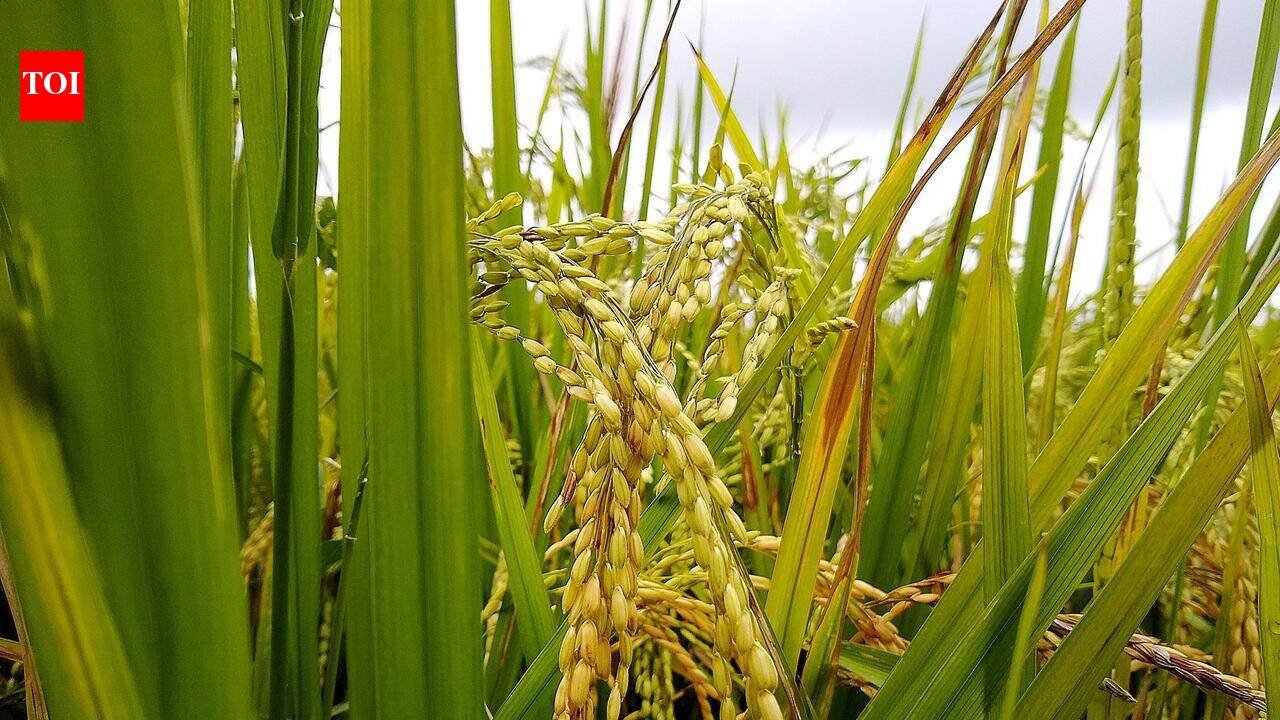
Panaji: Heavy unseasonal rainfall has flattened paddy crops in pockets of Tamboxem, Torshem and Dhargal in Pernem, and some damage has also been reported in Sattari. With harvesting disrupted, farmers are covering harvested paddy with plastic sheets to minimise losses from unpredictable weather.In Pernem, nearly 50% of the paddy crop has been harvested, but heavy rainfall has flattened some standing crops.Rudresh Kambli, zonal agriculture officer (ZAO), Pernem, said farmers were taking precautions to protect their harvested produce. “Farmers have been keeping good-quality plastic sheets ready and covering harvested paddy promptly to prevent it from getting wet. Once the crop is harvested, they store it under plastic. Drying and storage have not been a major issue,” he said.Goa experienced its wettest post-monsoon spell over the past few days, with heavy downpours on Friday and Saturday. The state recorded average daily rainfall of 27.1mm during this period.In Tiswadi, harvesting began about a fortnight ago, but some fields remain unharvested. Ranjeet Mhapsekar, ZAO, Tiswadi, said the rainfall had affected crops to some extent but had not caused widespread damage.“Harvesting in Tiswadi started around 15 days ago. A few fields are still to be harvested, but no major damage has been seen here due to direct rainfall. However, stored grains can easily get spoiled,” he said.Some farmers are selling their produce directly to cooperative societies that procure paddy at source, reducing the need for prolonged storage.In Sattari, the rainfall has both flattened some standing crops and provided relief after a dry spell during the critical grain-development stage.Vishwanath Gawas, ZAO, Sattari, said, “Some paddy had flattened, but the showers were also beneficial because the crop had lacked adequate moisture during the grain-filling and milking stages. At the time of grain filling or the milking stage, the crop requires adequate water. There was no rain then, whereas now we are getting rain every day or on alternate days.”Meanwhile, some villages have begun preparations for the rabi season, with the agriculture department starting seed sales and ploughing in areas where farmers do not cultivate during the kharif season.Farmer Vitthal Govekar said farmers’ efforts to cover, store and move harvested produce were helping contain losses, although standing crops remained vulnerable to further unpredictable showers.


