



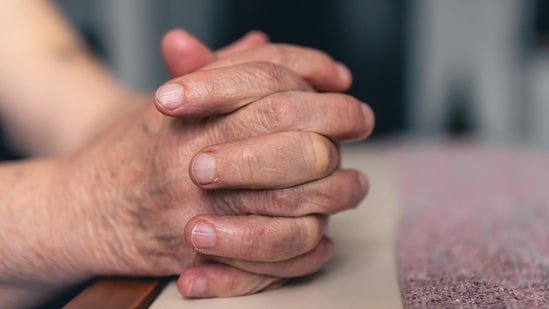
World Parkinson’s Day: The common image of Parkinson’s Disease is an elderly person with shaking hands, but neurologists are highlighting that the reality is often much subtler. The disease is a progressive neurological disorder, and because it develops slowly, early warning signs are frequently dismissed as ‘just getting older’ until significant motor loss has already occurred. Also read | Parkinson’s care: Why early signs and empathy matter
On World Parkinson’s Day (April 11), leading medical experts from Faridabad and Panchkula are seeking to dismantle the long-standing misconceptions surrounding Parkinson’s Disease. In an interview with HT Lifestyle, these specialists shared that the condition is far more complex than simple tremors and highlighted the indispensable role family members play in long-term management.
Moving beyond the ‘tremor’ myth
A primary concern for neurologists is the public’s tendency to associate Parkinson’s exclusively with the elderly or with visible shaking. Dr Ankit Amar Gupta, consultant, neurosurgery, Paras Health, Panchkula, warned that these narrow definitions can lead to missed diagnoses.
“Parkinson’s continues to be surrounded by misconceptions and is still widely misunderstood, and most people associate it only with tremors or assume it is something that happens in old age. That assumption is dangerous because it means that symptoms can sometimes manifest in younger individuals and go unrecognised for months or years,” Dr Gupta said.
He further identified specific red flags that often go ignored:
⦿ Stiffness on one side of the body
⦿ A slowness in movement
⦿ Subtle shifts in behaviour, or sleep
“These are not vague complaints. They are neurological signals, and they deserve to be taken seriously,” Dr Gupta added.
Early detection in younger Parkinson’s patients
Echoing these concerns, Dr Ritu Jha, director and HOD, neurology, Sarvodaya Hospital, Faridabad, noted that the disease does not discriminate by age as much as people think. “The myths around Parkinson’s are not harmless. When people believe it is simply part of ageing, or that symptoms are always obvious, they stop paying attention to the early signs,” Dr Jha explained.
She added, “Parkinson’s is a progressive neurological condition, and its early presentation can be quiet and can affect even young people in their 30s and 40s too.” Dr Jha further pointed out that families should look for subtle changes that precede motor issues.
“Sometimes tremors seem like the most obvious sign, but when there is reduced facial expression, a change in handwriting, and disrupted sleep… Many of these are non-motor symptoms that neither patients nor families are looking for,” she shared.
Advancements in Parkinson’s treatment
For patients whose symptoms have progressed beyond the reach of traditional medicine, Dr Gupta highlighted deep-brain stimulation (DBS) as a revolutionary tool. “When medications alone are no longer enough to control motor fluctuations or tremors, DBS becomes a necessity rather than just an option, which acts as a ‘brain pacemaker,’ offering life-changing benefits by significantly reducing involuntary movements and the daily pill burden,” Dr Gupta said.
The caregiver: the unsung pillar of treatment
Both doctors agreed that a patient’s prognosis is heavily tied to the strength of their support system at home. Dr Jha noted that ‘the journey with Parkinson’s is a long one, and no patient walks it alone’. She observed that ‘families reorganise themselves around the disease, routines shift, and the caregiver’s own health quietly takes a back seat’.
Dr Jha highlighted the need for a shift in how we approach care: “When caregivers are given structured support and honest information about what to expect at each stage, the entire care dynamic changes. Patients are more consistent with treatment, transitions are managed better, and the household carries the burden with more resilience.”
Dr Gupta reinforced that Parkinson’s management is a 24/7 commitment that extends far beyond the doctor’s office. “Managing Parkinson’s is not a clinical exercise confined to a hospital. It plays out at home, every day, and the caregiver carries much of that weight. Equipping them with the right information is not optional. A caregiver who understands the disease, recognises changes early, and supports treatment adherence will have a direct impact on how well a patient does over time,” Dr Gupta concluded.
Note to readers: This article is for informational purposes only and not a substitute for professional medical advice. Always seek the advice of your doctor with any questions about a medical condition.


