



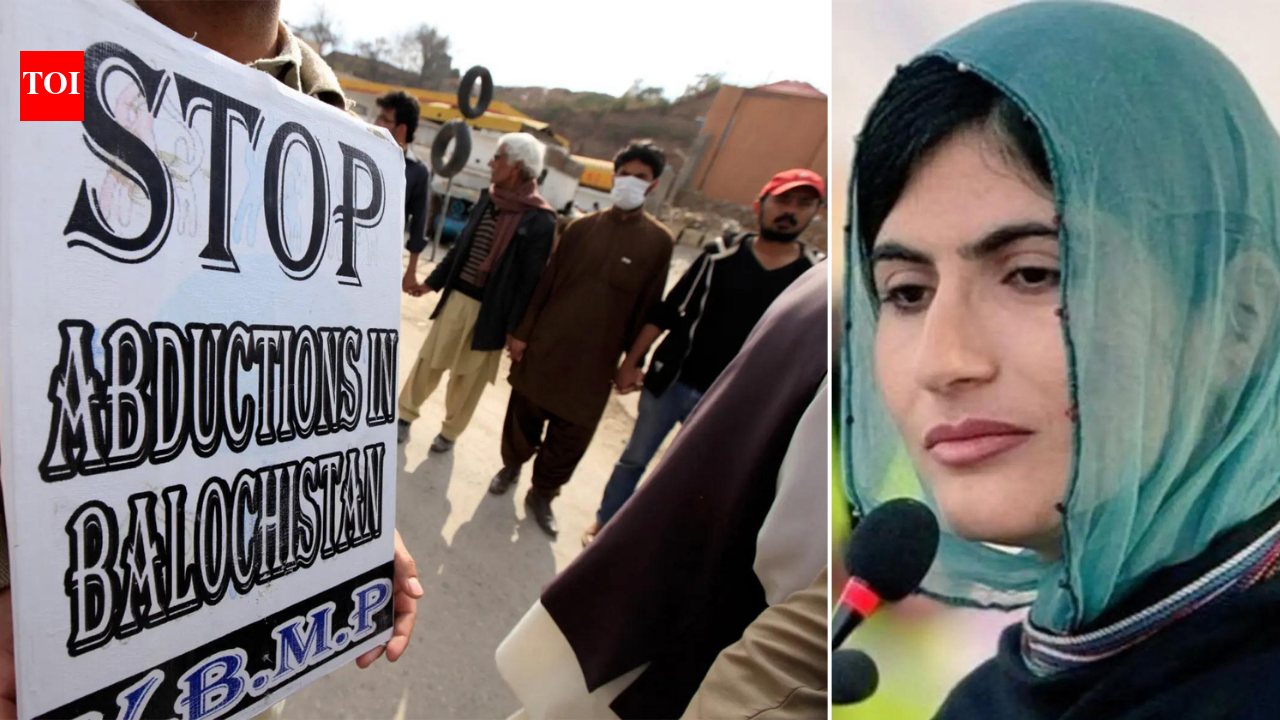
A recent surge in the alleged enforced disappearances of students and young people in Pakistan’s Balochistan province has raised fresh concerns over the treatment of those linked to peaceful political organisations. Human rights activist Sammi Deen Baloch expressed her condemnation of the events and alleged that individuals are being taken from their homes, hostels and educational institutions.In a statement posted on X, Baloch described the development as alarming and a part of a broader pattern of enforced disappearances that has persisted in the restive province.“The cycle of enforced disappearances in Balochistan has never truly stopped, but over the past few days in particular, there has been an alarmingly dangerous surge in the enforced disappearances of students,” she said in a statement posted on X.The activist alleged that the disappearances were being justified as part of counter-insurgency operations, but argued that the approach had failed to bring peace to the restive province. Instead, she said, decades of such policies had deepened resentment and contributed to a cycle of unrest and violence.“Abducting unarmed and innocent students, as well as young people affiliated with peaceful political organizations, from their homes, hostels, and educational institutions and forcibly making them disappear, and then justifying this oppression in the name of counter-insurgency, is a failed and inhumane state policy that has been imposed on Balochistan for decades,” Baloch said, “If this approach were truly a means to bring peace, Balochistan would not be drowning today in this quagmire of blood, unrest, and hatred; rather, the reality is that this policy is not fostering peace but giving birth to even more hatred and violence.”Baloch further alleged that young people were being held for years without being charged or brought before a court, and subjected to torture, humiliation and other forms of mistreatment. She argued that such treatment could itself fuel anger and a desire for revenge among those affected.“When young people are held for years in state torture chambers without any crime or judicial process, subjected to inhuman violence, humiliation, and torment, it is the state itself that nurtures feelings of revenge and hatred against it through its own policies,” she said.According to Baloch, when some of those who later reappear eventually turn to armed violence, state propaganda campaigns focus on those who speak out against enforced disappearances rather than examining the circumstances that may have contributed to the radicalisation of young people.She accused authorities of attempting to make the issue of enforced disappearances controversial by blaming peaceful political activists and human rights defenders for allegedly inciting people or recruiting them for armed groups.Baloch argued that the underlying causes of the continuing conflict were instead “illegal actions, state repression, and tyrannical policies”, which she said continued to fuel hostility towards the state.She urged the authorities to review what she described as failed, unconstitutional and oppressive policies, and questioned why decades of alleged repression, enforced disappearances, extrajudicial killings and collective punishment had failed to establish lasting peace in Balochistan.“Instead of offloading the burden of its failed, unconstitutional, and oppressive policies onto the shoulders of the oppressed people and political and human rights activists, the state should ask itself why, despite decades of repression, enforced disappearances, extrajudicial killings, and collective punishments, peace could not be established in Balochistan.”The Pakistani government has previously rejected allegations of systematic enforced disappearances, maintaining that its security operations are conducted in accordance with the law and are aimed at combating militancy and maintaining public order.


