



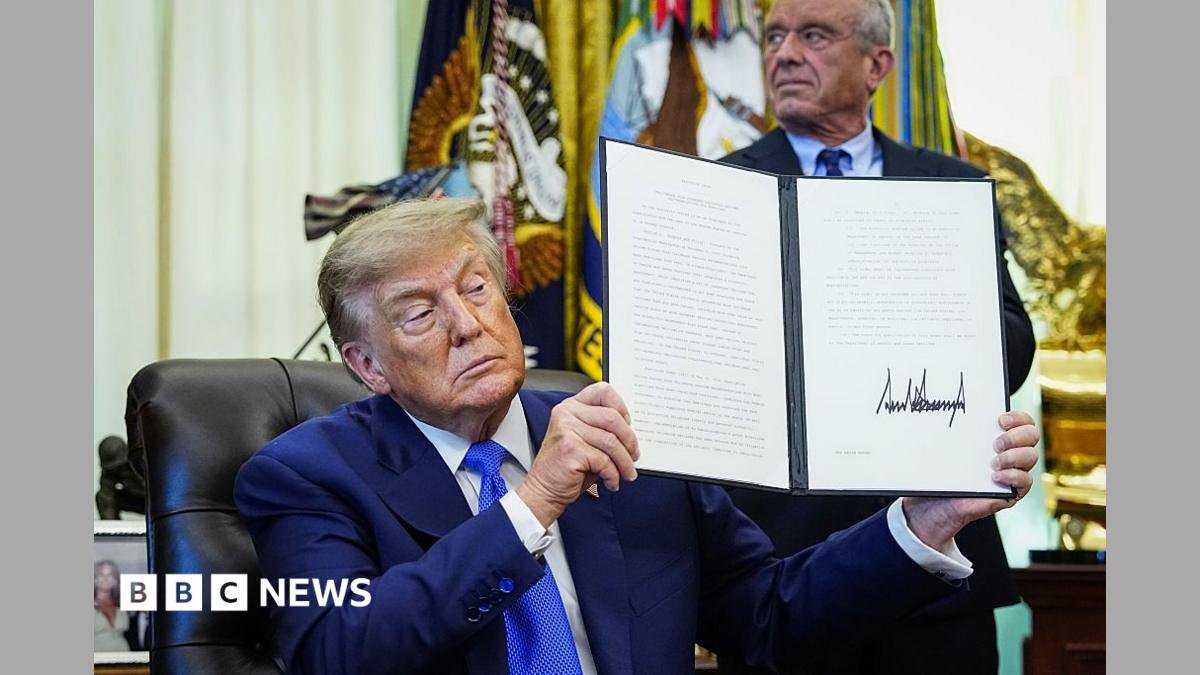
When speaking about autism the president said: “It’s many, many times what it used to be years ago, and it gets progressively worse. And we had progressively more and more vaccines.”
He said it was “one in 10,000 20 years ago”.
While that rate has increased over the last two decades, it did not grow by anything like the figure cited by Trump.
In 2006 the CDC estimated, external the rate of autism in the US population to be one in 110. In 2008 it was one in 88.
Most experts say rising rates of autism can primarily be attributed to changes in how the condition is diagnosed, as well as greater recognition of the condition and more people being tested.
And although rates of autism have been rising, multiple studies have shown no link to vaccines.
This includes a comprehensive December 2025 study by the World Health Organization, external that analysed data involving dozens of studies and millions of children across multiple countries, finding “no causal link between vaccination and [autism]”.
Experts say there is a tendency to wrongly associate vaccines with autism, because the period of childhood vaccinations – between birth and five years old – overlaps with the more common period for autism diagnoses. But they say it’s correlation not causation.
In its report, the WHO said studies highlighting theoretical risks that remain incompletely understood have “sustained public controversy, particularly in the context of widespread misinformation, disinformation and vaccine hesitancy”.


