



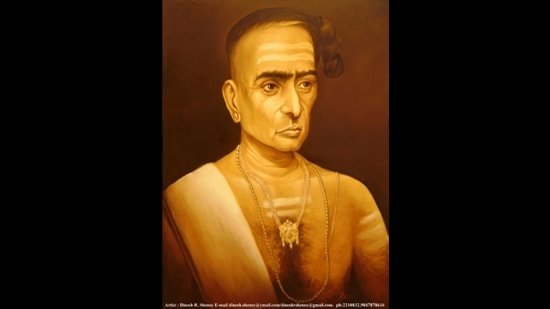
Kunjipilla took his responsibilities seriously. Growing up, he had come to know of the difficulties Cochin faced. Most of its lands had been taken over by either the Portuguese or Travancore, leaving the kingdom in a state of poverty. Though, after the defeat of the Zamorin, Komi Achan had introduced a new order based on the system implemented in Travancore by Marthanda Varma, it had to be nourished. Kunjipilla realised that the weakness in his kingdom was due to the diffusion of power among a number of hereditary chiefs, instead of power being centralised in the hands of the king. He appreciated that Komi Achan had already implemented part of Marthanda Varma’s reforms shortly after the Zamorin had been expelled from Cochin. He realised that to make the kingdom prosperous, he had to encourage trade, develop commerce and, at the same time, make the kingdom secure and safe. It was indeed a daunting task for a young 18-year-old.


Kunjipilla realised that Komi Achan, the prime minister, was a resourceful man, loyal to the kingdom of Cochin and committed to its growth… so he decided to take his counsel…
Kunjipilla went to Achan and sought his help and advice. Komi Achan was delighted and advised him to first travel across the kingdom and familiarise himself with the country. He suggested that he also visit Travancore and get a grasp of how the country was governed. Only then would he be in a position to work for the betterment and prosperity of the kingdom of Cochin. Kunjipilla agreed…
Achan and Kunjipilla rode through the entire country, observing the state of affairs within. In the evenings, he and Achan would discuss what they had seen and the steps that they could take to make things better. Achan found Kunjipilla not only an interested and quick learner but also decisive.
Kunjipilla, or Shakthan (as he was now known), knowing the size of his country, its strengths and the paucity of funds, was not inclined to wage war, especially as Cochin was sandwiched between two very strong powers – Travancore and Mysore. He said, ‘My mandate is to secure the kingdom from enemies from both within and without, to preserve peace and protect its wealth. This is what I have sworn to do and what I will do. I will not permit anyone to work against the kingdom. Anyone venturing to do so will be severely punished, even if they are my kin.’ Shakthan’s first initiative was to mobilise an army. The Raja had no standing army and, at times of war, relied on the Nair chiefs and landowners to provide troops to fight for him. The Raja himself had only a few soldiers to guard and protect him. The Zamorin and the Raja of Travancore, on the other hand, had large standing armies, which they used very effectively for their aggressive conquests and annexations. Shakthan changed this by recruiting able young men, irrespective of their caste, colour or religion. He insisted that there must be one person from every family in the army. He also recruited into this army not just Nairs but Ezhavas and Christians too. However, as opposed to an army that would go out and fight, this was a police force intended to maintain law and order and to safeguard and protect the citizens.
The men recruited were drilled by Dutch officers and garbed in uniform similar to the dress of the sepoys in the Dutch army. The Dutch governor, Angelbeek, sent Shakthan one apprentice, one drill master and one Ezhava corporal. The soldiers were trained both in the old and the new ways of fighting. Shakthan also had a Carnatic army.
The army was divided into companies, each led by a Kapitan, who in turn reported to a Valiya Kapitan. Each palace and fort had its own companies to guard them and provide them security. Each Nair company of the army had 75 soldiers, one Jamedar, two Havildars, two Naiks, two Lance Naiks, one drummer and one bugler. So did the companies of the Christian and Ezhava armies. Over and above this, there was a special squad for the Raja, akin to the praetorian guards. ..
Shakthan also raised a navy to patrol the backwaters and rivers to address the threat of pirates and robbers. The navy personnel were trained in swimming, navigating fast boats and apprehending offenders. On account of their expertise in navigation and familiarity with water, Muslims constituted the majority of the navy personnel.
As his uncles had been inept, crime had flourished in the kingdom. Shakthan knew that until the country was safe, it would not prosper and his subjects would not be safe. The sprawling backwaters in the kingdom were a den of bandits, and he took on the task of flushing them out. Shakthan himself would accompany his troops on some of these operations.
Once a group of Nambudiris were travelling to Trichur from Ernakulam… As they were on their way, two Muslim youths stopped them. These youths said to them ominously, ‘It is near sunset. Are you not afraid to travel?’
One of the Nambudiris said, ‘Why should we be afraid? Our protector is Shakthan Thampuran. He sees that all travellers are protected.’
The Muslim youths guffawed. ‘Shakthan Thampuran will not be able to protect you here. It is we who dictate terms here and rule the roost.’
‘Let us show you,’ said the other, flashing a dagger at them.
The villains took all the valuables the Nambudiris had and disappeared into the thick vegetation around. The Nambudiris… then went to meet Shakthan at his palace in Thripunithura and narrated to him their tale of woe.
Shakthan called his general, Valiya Kapitan, and told him to arrest the robbers and bring them before him. Valiya Kapitan immediately set forth with a few soldiers, and the robbers were captured. They were brought to Thripunithura and produced before Shakthan. .. the Nambudiris who had been robbed… confirmed that these were indeed the robbers and identified their goods.
The robbers were now very scared. They begged for mercy. Shakthan, towering over them, said, ‘Are you convinced of my power? Who rules here?’
The robbers, quailing in fear, begged him to let them go. They said they had learnt their lesson. Shakthan said he would not pardon them and had them drowned in the deepest channel of the backwaters.
To put into practice the adage that for the king the messenger is his face and the spy his eye, Shakthan created a powerful network of spies who regularly fed him with valuable information on almost everything going on in the kingdom. This enabled him to unexpectedly strike at criminals and struck terror among the unsavoury elements in the kingdom.
To also find out for himself how his people were faring and to know of their concerns, Shakthan, ever curious and shrewd, would often disguise himself as a mendicant or a Nambudiri and wander around in the towns and villages, mingling with his subjects to quietly gather whispers of news and intrigue…
In the first five years of his administration, till the death of his uncle in 1776, Kunjipilla’s energy, firmness, authority and intellect became known to all. He quickly cut down to size the irreverent Brahmins, unreliable Nair chiefs, adamant Muslims and cunning Christians in his realm. The finality of his decisions and the severity of his punishments made everyone fall in line. It was because of this that he began to be universally known as Shakthan Thampuran, or Strong Thampuran – a fitting name, considering that his uncles were just the opposite.
Komi Achan would often bring Shakthan to Trichur, as this was the largest and most important town in the kingdom. Achan had another reason too to visit the town, as he had entered into a sambandham with a lady from the Kuruppath family – a very noble and highly respected family in the kingdom – who had given him four daughters and two sons, whom he adored. Shakthan would often accompany Achan to the Kuruppath tarwad house, and he became very friendly with Achan’s children. But it was the youngest of the family – Parukutty – with whom he was smitten. When he was sure that he wanted a relationship with her, he first went to his aunt and sought her opinion. She told him to make adequate enquiries, commenting too that any girl married to him would have a lot of difficulty adjusting to him. As he was certain about Parukutty, he approached Achan and the head of the Kuruppath tarwad, seeking their permission to enter into a sambandham with Parukutty. They were delighted, as Shakthan was the de facto ruler and destined to be the Raja. They gave him permission and their blessing, though there were some objections to the sambandham – the elders citing widowhood for Parukutty. Shakthan was, however, adamant on the union, and the sambandham took place at the Kuruppath tarwad in 1775.
Though simple and beautiful, Parukutty was tactless, frail and too timid to manage a caged lion like Shakthan. Shakthan, however, loved her passionately and would take her with him whenever he sallied forth around the kingdom.
A year after he had entered into his relationship with Parukutty, he had a daughter, whom he adored. However, this idyllic time came to an abrupt halt with the invasion of Malabar by Hyder Ali of Mysore. Shakthan had to spring to action for the defence of the realm.


