



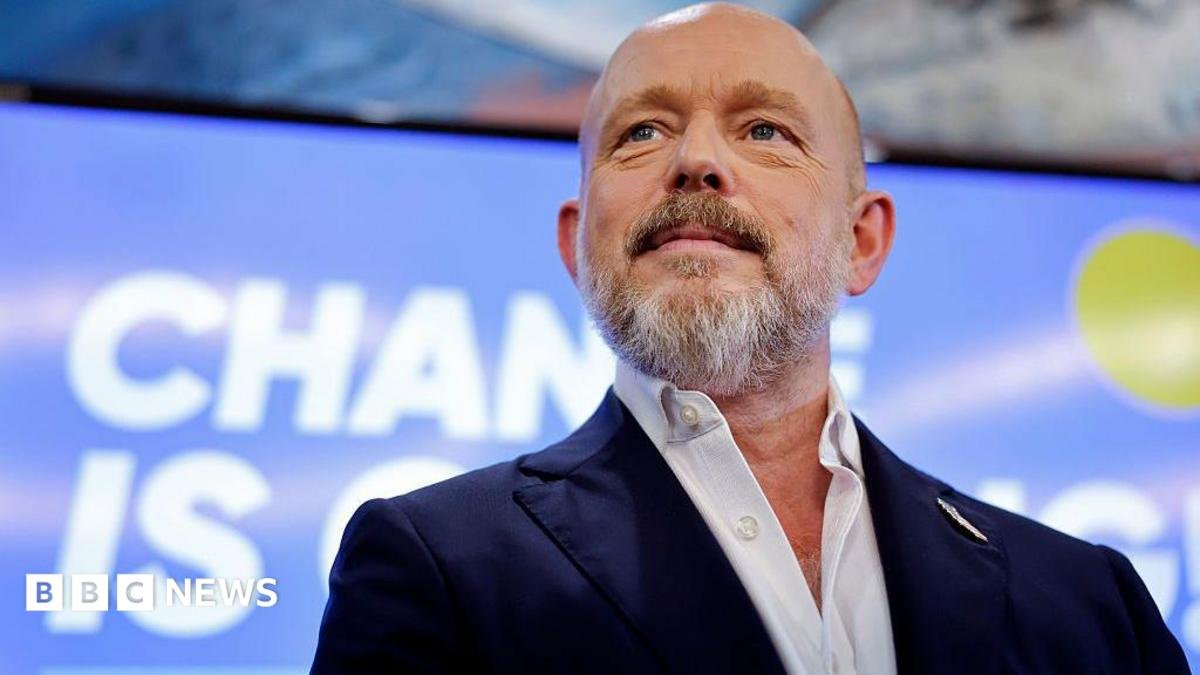
Hilton dismissed comparisons with left-wing figures such as New York City’s Mayor Zohran Mamdani, saying he paid little attention to that campaign.
One political challenge remains Hilton’s alignment with Trump, whose approval ratings are low in California.
The president has endorsed him, saying Hilton would work with his administration.
Asked whether that backing might be a liability, Hilton insisted it was an “asset for Californians”, arguing co-operation with Washington could help deliver policy changes – particularly on energy.
He pointed to fuel prices as an example, blaming environmental restrictions for forcing California to import much of its oil despite domestic reserves.
“I will work co-operatively to expand energy production,” he said, arguing this would bring down costs.
Immigration policy also featured prominently in the discussion. Hilton, the son of Hungarian immigrants, described himself as a candidate for the “legal immigrant community”.
But he said he opposed California’s “sanctuary state” policies, which limit co-operation with federal enforcement on immigration law.
As governor, he said he would not obstruct federal immigration authorities, instead favouring a return to what he characterised as a more co-operative approach seen during the Obama administration.
Pressed on civil liberties concerns – including cases where people without criminal records have been detained – Hilton argued such situations would be avoided through better co-ordination between state and federal authorities.
Meanwhile, his Democrat opponent Xavier Becerra, a former cabinet secretary under Trump’s predecessor Joe Biden, has framed himself as a candidate fighting for the California dream who answers to the state’s residents, not Washington.
Becerra has said that Hilton would hand the state over to US President Donald Trump and questioned whether Hilton could be trusted to safeguard the Golden State against claims of voter fraud by the Trump.
“Californians didn’t build the greatest state in the nation to hand it over to a Trump errand boy dead-set on throwing our progress into reverse,” Jonathan Underland, a spokesperson for the Becerra campaign, told the BBC.
“Voters know Steve Hilton means higher prices, rights stripped away, and an all-out attack on our values — and they don’t want anything to do with it.”
Hilton’s path to the final stage of the race has already surprised many observers.
He advanced through a crowded primary field in part because of a split Democratic vote, and he acknowledged the scale of the challenge ahead in a heavily Democratic state.
But he argued that polling showing a majority of Californians believe the state is “going in the wrong direction” has carved out an opening for a change candidate.
He also pointed to the size of the Republican vote in presidential elections – more than six million in California in 2024 – suggesting that mobilising those voters, combined with appealing to independents frustrated with the status quo, could be enough to secure victory.
A proposed ballot measure on voter ID, popular with Republican voters, could help drive turnout, he added. Hilton has said that he has not seen evidence of voter fraud in the state, but has called for electoral reform, including ending the practice of mailing ballots to California’s 23 million registered voters – a practise that largely causes the state’s slow ballot count.
The contest will test if that message can resonate beyond the Republican base in a state long dominated by Democrats – and whether a figure once associated with Westminster can successfully reinvent himself in US politics.
With additional reporting by Nardine Saad


