



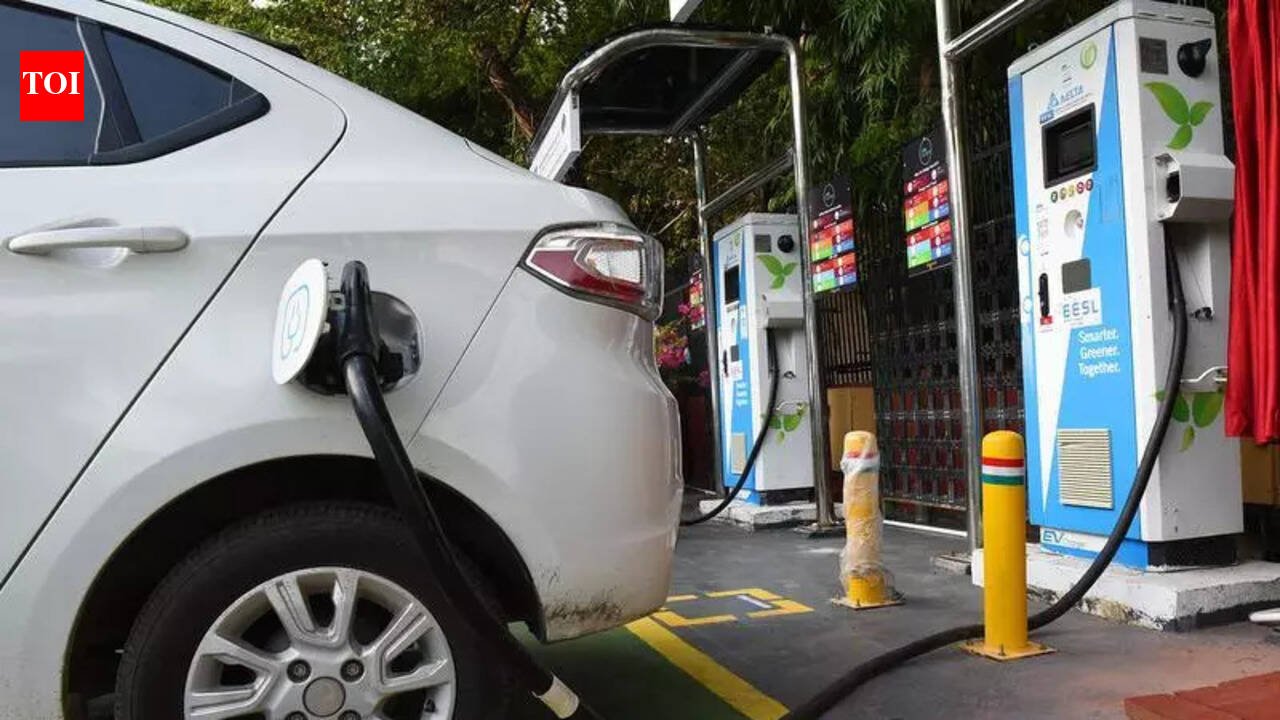
New Delhi: The dashboard flashed a warning: “Battery Low”. Seventy-two-year-old Purshottam Kalra was cruising along Mumbai Expressway when he spotted a charging station near Rajgarh. Three cars were already lined up, engines silent but hopeful. Only… the electricity was not working.Forty-five minutes crawled by under the scorching sun before the lights flickered back to life. Memories of a similar ordeal near Haridwar one-and-a-half years ago resurfaced—he added Rs 1,500 to an app, only to receive Rs 500 worth of charge. This time, it was a different company, a different app, but the same frustrating pattern: money deducted, charge incomplete and no network support. In fact, there was no network at the station; so, he had to drive a little further, where he somehow managed to download the app.“The biggest problem,” says Kalra, “is that different chargers use different apps, and there are too few stations. Charging takes a lot of time and planning a trip is stressful. I wish there were a single payment card for all EV chargers. With my CNG car, our driver just swipes a card and gets fuel. One card for all EV chargers should exist.” Kalra’s experience illustrates the gap between Delhi’s ambitious electric vehicle push and the reality of life on the road. In 2025, Delhi sold 70,875 pure electric vehicles—a significant leap, yet still a small fraction of the total market. EVs now account for 6.7% of new registrations, up sharply from 0.3% the previous year. Private electric car registrations grew from 3,848 to 9,905 between Jan and Sept, while electric two-wheeler sales barely budged, moving from 26,613 to 27,028. Petrol vehicles still dominate the roads. Delhi’s EV policy is widely regarded as India’s most progressive, aiming for one in four new vehicles sold to be electric. The upcoming EV Policy 2.0 even proposed a Rs 50,000 incentive for converting petrol or diesel cars to EVs—the first initiative of its kind in India.Yet, real-world performance often falls short. Cars claiming a 330km range frequently deliver only 250-300km in actual driving conditions. For many drivers, city trips are manageable. Amit Soni, who uses his EV as his only car for daily commutes, enjoys the lower running costs and smooth rides. “It’s cheaper than petrol for short trips,” he says. But the moment he considers a longer journey, the comfort fades. Finding a station, juggling multiple apps and worrying about money stuck in wallets make planning stressful. “Until the infrastructure improves, most households will still keep a petrol car as a backup,” he admits.Anil Chikkara, former transport commissioner, explains the way forward: “Many EV chargers serve only one or two cars at a time. To accelerate adoption, we need more stations, especially outside city limits. Standardising connectors and introducing a single payment system could simplify charging. Govt-regularised apps can work well. Above all, electrifying public transport should take priority before focusing solely on private EVs. While EVs are environmentally friendly, an increase in the number of cars on the road is never a good outcome for any city or country, as it only adds to congestion.”Another expert said, “While we were able to minimise diesel, petrol is still there and the EV push needs to be strengthened. This heavy reliance on personal petrol vehicles also suggests that while overall sales are rising, Delhi’s congestion and pollution challenges are likely to worsen rather than improve.” Even those who benefited from subsidies and enjoy city rides remain cautious. Tarun Dalima, one of the first 1,000 EV buyers under Delhi’s incentive scheme, says his city journeys are seamless. “Driving within Delhi is fantastic. Charging at home is easy. But I won’t take it on inter-city trips yet. Sparse stations, unpredictable infrastructure and breakdowns that normal mechanics can’t repair make long trips stressful. A hybrid option would make it much less worrying.” The challenge is clear: as of April 2025, India had 5,200 EV stations covering a 146,200km highway network. Long-distance trips require meticulous planning—checking station locations, topping up wallets, timing charges—and even then, drivers face delays and network issues. Multiple operators force owners to download five to 10 apps just to access the chargers they need. Despite their benefits, Kalra, Soni and Dalima all show one thing clearly: EVs are not yet the first choice for most—still struggling with apps, charging or infrastructure, they often sit alongside a petrol car rather than replacing it.


