



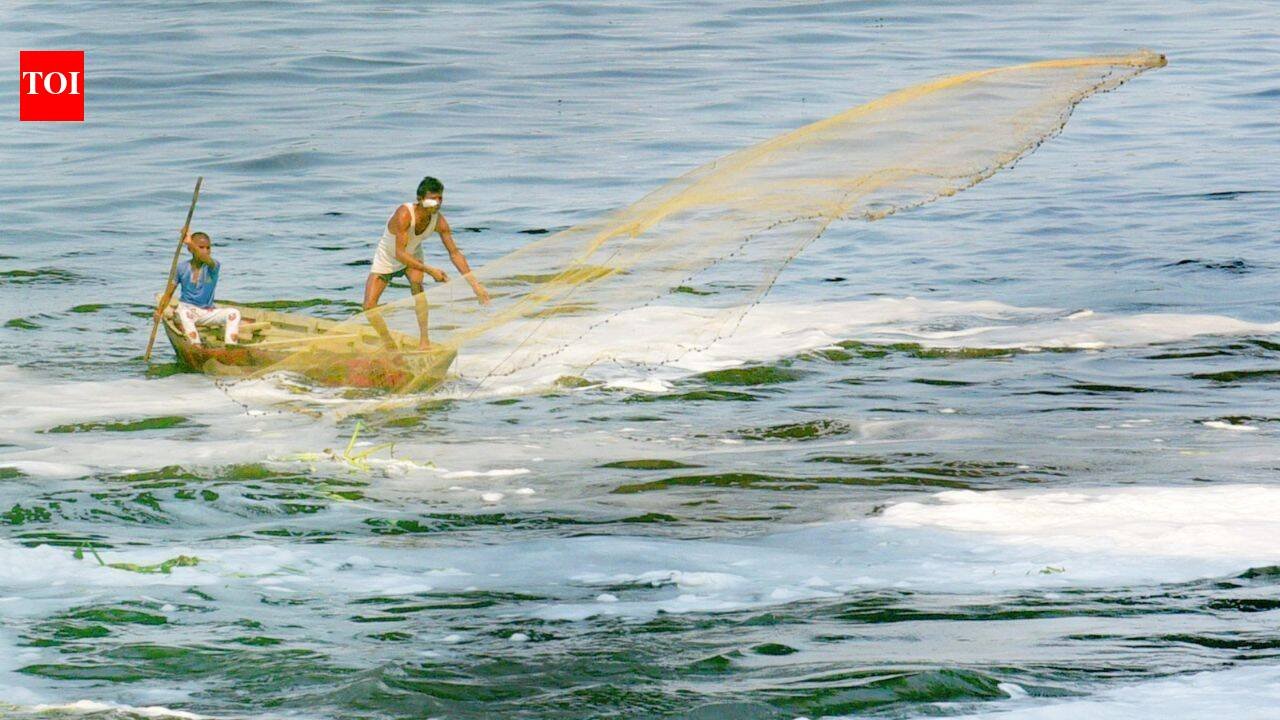
NEW DELHI: For years, the Yamuna has come to symbolise sewage, industrial waste and toxic foam, but now scientists have discovered yet another invisible threat lurking beneath the surface.A new study by researchers at the University of Delhi found microplastics in every species of freshwater fish sampled from the river, with fish collected from Delhi’s stretch carrying much higher contamination than those from upstream Haryana.The findings add to a growing body of evidence that plastic pollution is not only in rivers and oceans, but is working its way into aquatic food chains and could eventually reach people via the fish they consume.
How plastic ends up on your dinner plate
Researchers studied 220 freshwater fish of 12 species collected from Yamuna Nagar and Karnal in Haryana and Sur Ghat and Sonia Vihar in Delhi. They counted a total of 1,678 microplastic particles inside the fish, evidence that contamination is widespread through the river ecosystem.However, the Delhi stretch was the most polluted with Sonia Vihar and Sur Ghat recording the highest concentrations.The study says rapid urbanisation, untreated sewage, textile effluents and the heavy load of suspended particulates flowing through Delhi have created ideal conditions for microplastics to build up in the river and ultimately in fish.Also read: Study on microplastics found in all 12 fish species sampled from Yamuna
Plastic pollution is no longer just in the river — it’s inside fish tissues
The study’s findings are troubling because the contamination was not confined to the digestive system. Scientists found 751 microplastic particles in the gastrointestinal tract, 605 in the gills and another 322 in muscle tissues.The digestive tract shows what fish have been eating recently—but microplastics in muscle tissue indicate that these particles can travel to other organs.Because it is the muscle that people eat, this raises new concerns about human exposure, especially in communities that rely on freshwater fish as a regular source of protein, researchers say.
Where were the microplastics found and why this matters
Amongst all the species studied, omnivorous Nile tilapia (Oreochromis niloticus) caught in Sonia Vihar had the highest contamination with 436 microplastic particles recovered.At the other end of the spectrum, carnivorous freshwater needlefish (Xenentodon cancila) collected from Karnal had the lowest burden of only 37 particles.The researchers say feeding behaviour, habitat preference and proximity to polluted urban stretches influence the amount of plastic accumulated inside different fish species.Almost 45 per cent of all particles found were polyethylene and polypropylene, the two plastics used most often in carry bags, food packaging and disposable household products.
The researchers say feeding behaviour, habitat preference and proximity to polluted urban stretches influence the amount of plastic accumulated inside different fish species.
Delhi mirrors a far bigger national and global plastic crisis
The Yamuna findings are symptomatic of a much larger environmental problem. The UN Environment Programme says that the world produces more than 430 million tonnes of plastic every year, of which almost two-thirds become waste after a short period of use.Eventually millions of tonnes end up in rivers, lakes and oceans where sunlight, waves and physical abrasion slowly grind larger plastic items into microscopic particles less than five millimetres in size.India generates millions of tonnes of plastic waste every year and despite restrictions on several categories of single-use plastics brought in over the past few years, it continues to struggle for collection, recycling and disposal.
Every fish tested in Yamuna had microplastics
Studies in other Indian rivers like Ganga, Brahmaputra, Mithi and Cooum have also reported presence of microplastics in water, sediments and aquatic organisms.These particles have been increasingly detected by researchers in shellfish, freshwater fish, drinking water, table salt and even agricultural soils irrigated with polluted water.International studies have taken it one step further, reporting microplastics in human blood, lungs, placentas and reproductive tissues, although scientists are still working to determine the long-term health impacts of such exposure.Thus the Yamuna study backs up fears that plastic pollution is slowly making its way through ecosystems and into the food chain.
The Yamuna findings are symptomatic of a much larger environmental problem.
Cleaning rivers now means tackling invisible pollutants too
River cleaning alone won’t cut it, say experts, and much more needs to be done to reduce microplastic pollution.Much of this material comes from raw sewage, synthetic fibers from washing clothing, wear from vehicle tires, degraded plastic packaging and industrial waste water.Better management of sewage, stricter norms for industrial discharge, better management of solid waste and reductions in unnecessary plastic consumption will all be needed to curb the flow of microplastics into rivers.While Delhi pours more money into cleaning the Yamuna, the latest research highlights that success cannot be measured only by clearer water or less foam.Hidden pollutants that build up inside fish and can end up in human consumers may be an even worse environmental problem than the plastic debris floating on the surface.


