



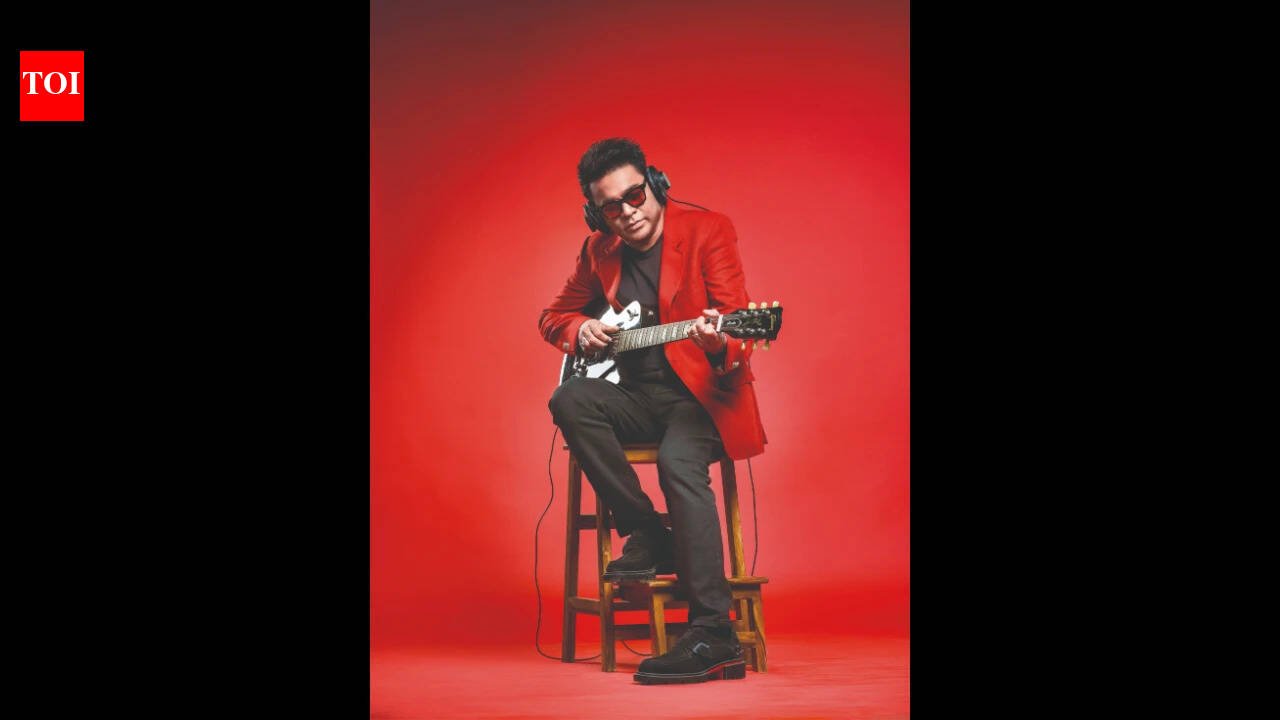
Ahead of the first concert of his Wonderment Tour, at KTPO Grounds in Bengaluru, today, A R Rahman talks about the idea of wonder, surrendering to music, the evolution of technology, discovering new talent, the unpredictability of live shows and why music is ultimately about moving people. Excerpts from a conversation:Why is this tour called ‘Wonderment’? What does wonder mean to you?We have a little clip at the beginning which says, ‘Every breath is a wonder, every blessing is a wonder’. Everything we do is actually a wonder when you look at it that way. We don’t complain; we see what we want to see. The way people have embraced my music, the different things I do, the joy of travelling and composing, and people turning up for the music and the causes we support — I feel we need to celebrate the wonder and the good things in life. Is celebrating the good things becoming harder for people today? Is it something we have to consciously look for?I think every good thing is inspiring. If I’m travelling and I see something — parenthood, relationships or another musician — it can inspire me. There are, of course, some people who are pessimistic and see the glass as half empty, and there are those who say, ‘Oh my God, it’s half full’. What more do you need?Music, in a way, is such a blessing for me. I feel like every day is a revelation. You never feel like you know it all. There are always surprises and more things to discover.That is life, right? You constantly refine and evolve. In that process, you have to drop some of the old things. Sometimes you have to hold on to certain values, but you also have to move on. What was cool 10 years ago may not be cool anymore — whether it is music, style or behaviour. You have to keep evolving.Your music has made people feel emotions they often cannot articulate. When you design a live show, how much of that emotional journey can actually be planned?I personally think that if the performers are happy and they feel high, the viewers and listeners will also be happy. If we are bored and feel like we are doing the same thing, then there is a problem. So, for every show, we try to see what is cool, what is more engaging and what is more satisfying — whether it is a change in the singer, the arrangement or the way we construct the show.Your compositions have become part of people’s lives. When you listen to songs that you have composed earlier, today, do you hear them the way we do — through memories of childhood and adulthood — or do you hear them differently as their creator?Certain things have evolved. In those days, the amount of time taken to create every soundtrack was huge. I hadn’t learnt many things; I was trying to figure them out and somehow get there through the struggle. Whether it was a classical arrangement, production, mastering or mixing, everything involved trying things out multiple times. You might try something 10 times and discover that the ninth attempt worked. There was a lot of time spent discovering.It was like trying to turn a huge ship 180 degrees — it takes time. Now, we are also proud that we explored and preserved some of that old work digitally. We have all the backups because I’ve always felt that the work and the teamwork should be valued and respected. It isn’t just one person’s work; it is the hard work of many people, and a blessing. We’re also taking some of the old work and remixing it in Atmos and other formats.You have embraced technology throughout your career. Has this abundance of technology today made music-making easier or more difficult?Complex things that would take ages can now be constructed easily. Ideas that would have taken weeks can probably take hours now. The speed is incredible. Especially for creative people like directors and producers — earlier, they would say, ‘I’ll do the score and show it to you. Come after a week’. Now they say, ‘Come after an hour’. Ultimately, what music moves you and what complements the picture and the storytelling — that is the most important thing. With AI-generated music becoming increasingly sophisticated, is it becoming difficult to distinguish originality from AI?On the contrary, we can now tell in a second what is AI and what is original. Recently, I discovered this singer called Raghav Kaushik. He has a beautiful voice. We called him and he sang some things for the upcoming film Ramayana. He sang the Kannada and Telugu versions of Jai Jai Ram. He is an incredible artiste. You suddenly come across somebody like that and think, ‘That’s a surprise’.Is it rare to find such unique voices today?No, I wouldn’t say it is rare. It is about how deeply people lean into what they do. Something opens up. Everybody has it inside; sometimes they arrive at it sooner than later. I’ve seen instrumental players who were horrible and out of tune suddenly become amazing a couple of years later. I’ve also seen people who have been playing for 30 years remain at the same level. It’s about how a person evolves and constantly tries to evolve.Does spirituality have a lot to do with that, especially for you?For me, yes. Every day, whatever is easy or hard, I feel it is a blessing. Sometimes the difficult things are a blessing; sometimes the easy things are a blessing. Nothing is taken for granted.You have spoken about surrendering to music. On stage, with thousands of people watching and so much happening backstage, is there an effort to bring that stillness and surrender into the performance?Over the years, yes. Initially, going on stage was like thinking, ‘Oh my God! Things are not going the way you want it to’. It was like death. Because putting together an ambitious show is very, very difficult. You can have so many things planned and suddenly, at the last minute, something goes wrong. For instance, we had a big show in one of the European countries and, just an hour before the show, they told us the LED screen wasn’t working. And we had so many things planned around it. You are on the fly in your mind then. At that point, we can either get upset about it or say, ‘Nobody knows that we’re using an LED screen. This is the way it should be. So let’s go. Let’s do it’. You have to be ready to throw everything away and go. Ultimately, people are waiting. They bought tickets. We have to cheat our brain or adapt to what is happening. Maybe that is a good thing, you know.After composing and performing, when you want to switch off from work, what music do you turn to? Who do you listen to?I listen to my kids, their music.That’s quite an abundance of talent at home.Yes. I keep asking them, ‘When is the next song coming? What are you doing next?’ And sometimes they run away from me because everybody is pushing them. When somebody is paying me, they push me — ‘When are you delivering?’ While it is not about payments here, I still keep pushing them too, because they have gifted voices and I feel they should keep at it.Will they be performing with you on this tour?Ameen is performing.You have created so many musical memories for people. Is there a musical memory from your own journey that remains particularly vivid — something that changed or moved you?There are many. When you meet extraordinary musicians, those become turning points in your musicality. The first time I met Bismillah Khan, or the first time I met Kadri Gopalnath — those were turning points. When you work with extraordinary musicians, you get inspired even if you are down. You look at them and watch them play and feel, ‘Even all this practice I’ve done is not enough’. You have also brought musicians from different countries onto the same stage. When it comes to Indian music, do you think the future is more about preserving our traditions or about allowing different music and cultures to collide?Music is about expression. You express, and the question is: are you relating to whatever you are playing? Can somebody emote to it? Can they feel the calm? Can they feel the Brahman or the Dhrut? I think that is it. Formulas and rules come later. It is not about formulas and rules. It is about moving somebody with your music, your performance or your song. If that happens, people come to your concert. That has been my approach. I love classical music, but I didn’t go very deep into it. I learnt enough to make tunes for myself and enough to appreciate great performances.You have also consistently given younger musicians space on your stage and in your music — not merely as supporting players, but often right at the forefront. Has mentoring the next generation become increasingly important to you?When you have younger talent, their enthusiasm is very infectious. If you don’t have enthusiasm, it affects everyone. If there is a boring musician who is just playing without enthusiasm, you also get affected. But when you have people with enthusiasm, saying ‘What is next? Oh, I love this. Can I extend more? Can I sing more?’ — I love that. When that happens, you also get charged.That is something I look forward to: people constantly being there, giving ideas and improving the whole thing. Every drop makes the ocean. Every bit matters. That is one of the reasons why, whether they are young or old or new musicians, they are always there in the concert — to spike us up.You have chosen Bengaluru to kick off this concert series. What does the city, and particularly its audience, mean to you?changing. I first came to Bengaluru in 1988 or 1989, and even then I found many advanced bands here. Then I came after the film Rangeela had released, and I was hearing Rangeela everywhere — in every car and every shop. So my memories about this city keep changing. The audiences are very mixed. I would say it is a pan-Indian audience — young people, music lovers, artistes, dancers. Many people have dance schools here. It is a very cultural place. The museum of music is here too. I always feel good when I come here because the city is a beautiful culmination of many things.
