



Morning opening: Focus on Ukraine
Jakub Krupa
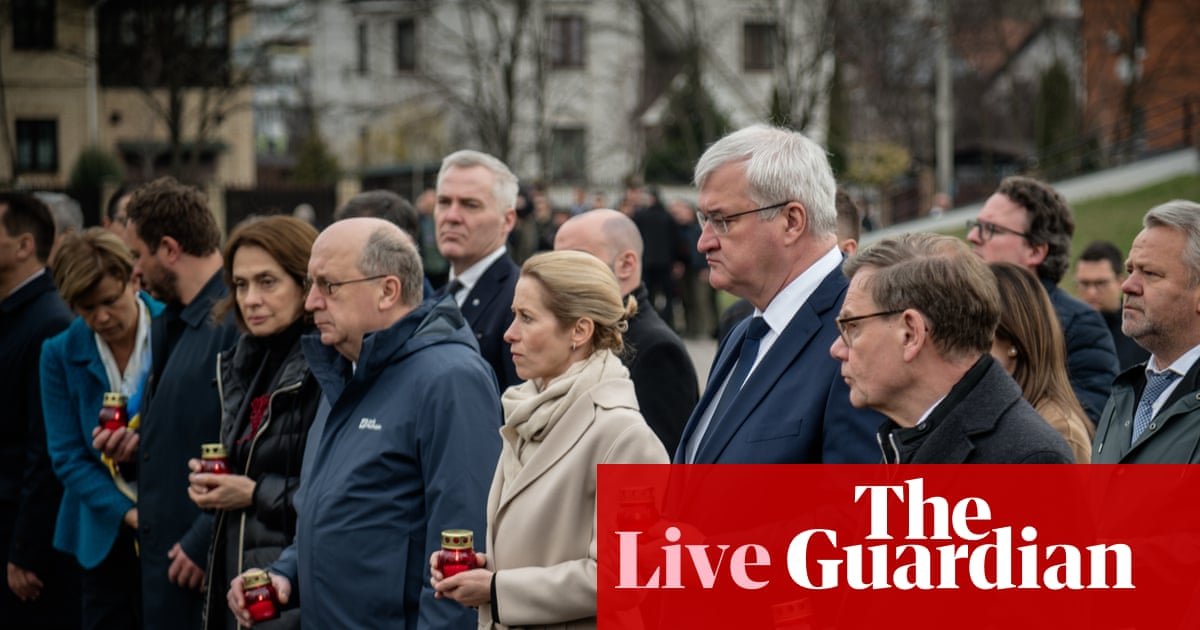
Several EU ministers are expected in Bucha, Ukraine, today to mark the fourth anniversary of the town’s liberation and the massacre that became one of the early symbols of the Russian aggression against Ukraine.
The anniversary marks a rare moment in recent weeks when the EU’s attention focuses back on Ukraine amid growing concerns about fallout from the Iran war. The EU’s top diplomat, Kaja Kallas, leads the delegation.
The ministers will discuss what needs to be done to ensure accountability for war crimes committed during the war through a special tribunal, which still needs more political backing and funding to come into existence.
Ukraine’s foreign minister, Andrii Sybiha, said in a post on social media:
“The scale of Russian atrocities in the course of its aggression is unseen on European soil since WWII. The crime of aggression is the root cause of them all. There must be accountability and there will be no amnesty for Russian criminals, including the highest political and military leadership of the Russian Federation.”
He drew a comparison with the Nuremberg trials against leaders of defeated Nazi Germany, saying the new tribunal was needed to “prevent such horrible crimes from repeating again in the future.”
But no progress is expected to be made on thorny issues of the EU’s €90bn loan to Hungary and the 20th package of sanctions against Russia, both of which continue to be blocked by Hungary.
Let’s see what the day brings.
Separately, EU energy ministers are holding a call later today to discuss the impact of the crisis in the Middle East on energy prices as some countries push with unilateral measures that they argue are needed to limit the impact on their economies.
I will also keep an eye on Denmark where the coalition talks continue after last week’s parliamentary election, which ended with a political deadlock.
It’s Tuesday, 31 March 2026, it’s Jakub Krupa here, and this is Europe Live.
Good morning.
Key events
More details emerge on Hungarian foreign minister’s alleged links with Russia
Speaking of the €90bn loan and EU sanctions against Russia, and Hungary’s role in all of this, more details have now emerged alleging close contact between Hungary’s foreign minister Péter Szijjártó and senior Russian ministers.
A joint investigation by The Insider and four regional media VSquare, DelfiEE, FrontStory and the Investigative Center of Ján Kuciak, published this morning, alleged that Szijjártó regularly discussed the EU’s confidential plans on sanctions with Russian officials, actively looking for ways to block or delay their adoption.
In a series of conversations reported by the outlets, the Hungarian foreign minister reportedly told Russia’s foreign minister Sergei Lavrov that he is “always at your disposal” and offered help with removing certain individuals from EU sanctions.
Former Lithuanian foreign minister Gabrielius Landsbergis confirmed the authenticity of one of the exchanges that Szijjártó reportedly relayed onwards to the Russians.
One of the authors of the article, Szabolcs Panyi, one of the country’s most prominent investigative journalists, was last week accused by the Hungarian government of spying for Ukraine, a move widely condemned by media rights watchdogs.
The five media outlets said Szijjártó did not reply to their request for comment.
He has responded on X this morning seeking to ridicule the reporting by saying “they proved that I say the same publicly as I do on the phone. Nice work!”
“For four years we have been saying that sanctions are a failure, causing more harm to the EU than to Russia. Hungary will never agree to sanction individuals or companies essential for our energy security, for achieving peace, or those with no reason to be on a sanctions list,” he said.
Szijjártó had previously dismissed earlier reporting on this as fake news, but confirmed he held some calls with third-country partners, saying this was part of routine diplomacy.
The report is likely to cause further frustration in Brussels and in EU capitals amid growing anger over Hungary’s close relations to Russia, with both prime minister Viktor Orbán and Szijjártó regularly visiting Moscow.
The latest relevations come less than two weeks before the critical parliamentary election in the country, which could see Orbán ousted after 16 years in power.
It’s safe to say we are very likely to see someone ask the Commission for their reaction at their midday briefing later today.
Bucha ‘symbolises cruelty of Russia’s war’ against Ukraine, EU’s Kallas says
EU top diplomat Kaja Kallas said the Bucha massacre “has come to symbolise the cruelty of Russia’s war” against Ukraine as she vowed to bring Russia into account for its actions during the conflict.
“Four years after these mass killings, we remember the victims. What happened here cannot be denied,” she stressed.
She added the EU was “committed to ensuring that these crimes do not go unpunished, including by supporting the Special Tribunal for the Crime of Aggression, alongside the Claims Commission.”
“Russia must be held accountable for what it has done to Ukraine,” she said.
She earlier said the bloc “will keep providing military, financial, energy, and humanitarian support” to Ukraine.
Morning opening: Focus on Ukraine
Jakub Krupa
Several EU ministers are expected in Bucha, Ukraine, today to mark the fourth anniversary of the town’s liberation and the massacre that became one of the early symbols of the Russian aggression against Ukraine.
The anniversary marks a rare moment in recent weeks when the EU’s attention focuses back on Ukraine amid growing concerns about fallout from the Iran war. The EU’s top diplomat, Kaja Kallas, leads the delegation.
The ministers will discuss what needs to be done to ensure accountability for war crimes committed during the war through a special tribunal, which still needs more political backing and funding to come into existence.
Ukraine’s foreign minister, Andrii Sybiha, said in a post on social media:
“The scale of Russian atrocities in the course of its aggression is unseen on European soil since WWII. The crime of aggression is the root cause of them all. There must be accountability and there will be no amnesty for Russian criminals, including the highest political and military leadership of the Russian Federation.”
He drew a comparison with the Nuremberg trials against leaders of defeated Nazi Germany, saying the new tribunal was needed to “prevent such horrible crimes from repeating again in the future.”
But no progress is expected to be made on thorny issues of the EU’s €90bn loan to Hungary and the 20th package of sanctions against Russia, both of which continue to be blocked by Hungary.
Let’s see what the day brings.
Separately, EU energy ministers are holding a call later today to discuss the impact of the crisis in the Middle East on energy prices as some countries push with unilateral measures that they argue are needed to limit the impact on their economies.
I will also keep an eye on Denmark where the coalition talks continue after last week’s parliamentary election, which ended with a political deadlock.
It’s Tuesday, 31 March 2026, it’s Jakub Krupa here, and this is Europe Live.
Good morning.


