



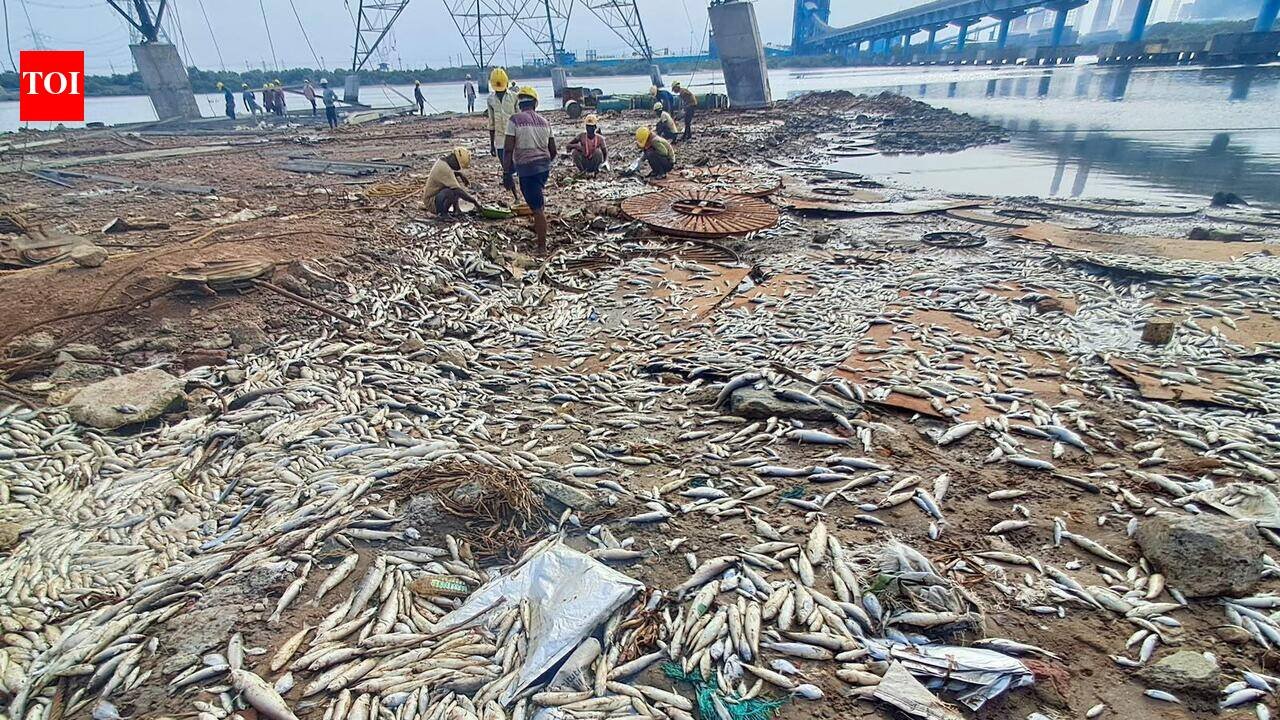
Chennai: Sewage contamination may have triggered the recent mass fish death in Ennore, the Tamil Nadu Pollution Control Board (TNPCB) suspects, after low levels of dissolved oxygen (DO) were recorded at two locations.TNPCB officials said DO levels were under 4mg/litre at two of the five locations where they lifted water samples for testing. Sewage can deplete dissolved oxygen because microorganisms consume oxygen while breaking down the organic matter in sewage.Authorities suspect untreated sewage intrusion into the Ennore Creek could be one of the causes, as several such incidents have been reported in the past.“Low levels of DO happen primarily due to three reasons — sewage contamination, hindered or reduced flow of water during high tides, or a sudden temperature difference caused by hot water discharge,” TNPCB chairperson Anurag Mishra said, adding that chemical contamination and an oil spill appeared unlikely. “But the pH, temperature and other parameters of the water we lifted for testing were all optimal. So, sewage contamination appears to be one of the causes for now.”He, however, added that the exact reason could only be ascertained after the tissue samples collected from the dead fish are tested by the fisheries department.More than two tonnes of fish, including prawns and catfish, were found floating dead in the Kosasthalaiyar on Sunday, triggering fears among local fishers that chemical contamination was responsible. More than 5,000 fishermen from eight villages in and around Ennore are staying away from the waters until the TNPCB ascertains the cause of the deaths.Fishermen said sewage pollution was a chronic problem in the area but questioned whether it could have caused deaths on such a scale.“Ennore creek, which is the confluence of the Kosasthalaiyar and Buckingham Canal, has always been polluted with sewage. No authority, including the TNPCB, has done anything to stop it. Sewage has killed crabs and prawns in the past, but not on this scale before,” said R L Srinivasan, a fishermen leader in the area.“Chemical contamination is the reason for the fish deaths. The government should investigate whether the industries around the area let out chemicals into the water intentionally,” he said.Environmentalists, too, questioned the TNPCB stand. “DO levels can also dip due to effluent contamination. Sewage intrusion is common in the area. More than 2.5 tonnes of fish don’t die because of sewage,” said G Sundarrajan, coordinator, Poovulagin Nanbargal.


