



By Anuradha P S
Learning is not bound to the classroom anymore to Generation Z. It updates in real time, scrolls and streams. Students across the Indian colleges and universities, without compromising on the required attendance are focusing on education not merely for securing degrees, but rather adding good number of credentials through various educational online platforms
This change is indicative of a paradigm shift in the access, assessment and application of knowledge. Gen Z was born and brought up in the age of affordable information and ubiquitous access to smart phones. Online learning platforms like YouTube and Instagram have created informal classrooms and more formal approaches like the Massive Open Online Courses (MOOCs) and government programs such as SWAYAM (Study Webs of Active Learning for Young Aspiring Minds) have pushed the limits of formal education itself.
MOOCs are provided by international organizations as well as Indian ones, and students can access the courses of the best universities. SWAYAM, specifically, is an effort to democratise higher education in India, offering free or low-cost online courses in disciplines, which are frequently in line with university programs. To a good number of students, particularly not within metropolitan centres, such platforms provide accessibility never imagined before. The diversity of languages, flexible timing and modular certifications has enabled learning to become more accommodating and flexible.
To a great extent, this is a great democratisation of education. The geographical, cost, and entrance barrier-based traditional gate keeping position of institutions is being challenged. A student in a tier-two town is now able to learn about data analytics, public policy, or literature through a plethora of sources that are way beyond his or her local academic setting. There is no scarcity of knowledge anymore; it is widespread, it can be searched, and is constantly updated.
However, this transformation also reveals the increasing lack of connection with the education system and the realities Gen Z lives in India. To a large extent formal education remains organised according to inflexible curricula, rote learning and test-based results. Although degrees are still valuable qualification indicators, they are no longer reliable in terms of employability. Employers are looking more and more towards the skills that can be shown, adaptability, and practical experience qualities that are not necessarily developed in traditional classroom settings.
This has led to a large number of the youngsters moving towards skill-based, modular learning. Online credentials such as MOOCs, SWAYAM certifications and others are progressively being utilized to supplement or indicate the existence of formal degrees. A student of commerce can get to know about graphic design in an online course; an engineering graduate can develop skills in digital marketing with a series of tutorials and certifications. It is moving away focus on mark sheets and towards portfolios, away from degrees on a sheet and on lifelong learning.
This change is also transforming the way of imagination of work. To others, learning is strongly associated with being involved in the gig economy, or the creator economy, where visibility and skill have become more important than qualifications. There is a growing blurriness of the lines between learning and earning. Education is no longer a stage which goes before work; it is a continuous process which is a part of it.
Nevertheless, we would be overstating this change as being totally liberating. The shift towards platform-based and online learning is associated with its share of threats. Information is not reliable as it is always abundant. The succinctness which renders digital content interesting can also deprive content of nuances and depth. Completion rates are also not even in even more structured formats, such as MOOCs, and self-paced learning requires some discipline, which not all learners are currently prepared to maintain. Algorithms, in their turn, tend to be more focused on engagement, rather than accuracy, influencing not only what learners observe, but also how they learn to cope with a complex issue.
In addition, there is an unequal access to online education. Although the rate of internet penetration has risen at an alarming rate in India, there are still connectivity, devices, and digital literacy gaps. Solutions such as SWAYAM attempt to fill some of these gaps, yet structural inequalities remain to determine who gains the most out of this novel ecosystem.
In the case of institutions, it is not merely the need to compete with digital platforms, but it is also the need to reconsider their role in an emerging educational environment. This can be through incorporation of MOOCs into the formal learning curricula, credit recognition of online certification and pedagogical emphasis on critical thinking, problem solving and interdisciplinary learning. The hybrid models, which incorporate the rigour and depth of traditional education with the flexibility and access of the digital platforms, might be a more sustainable way to go.
Gen Z engagement with education is a reconfiguration narrative. It heralds a shift in passive consumption towards active, self-determined learning, although in a complicated and uneven online world. The classroom does not remain the only location of knowledge production, as well as the unchallenged power it used to be.
The question now is whether the institutions are ready to acknowledge and react to the manner in which learning itself is being transformed.
DISCLAIMER: The views expressed are solely of the author and ETEDUCATION does not necessarily subscribe to it. ETEDUCATION will not be responsible for any damage caused to any person or organisation directly or indirectly.
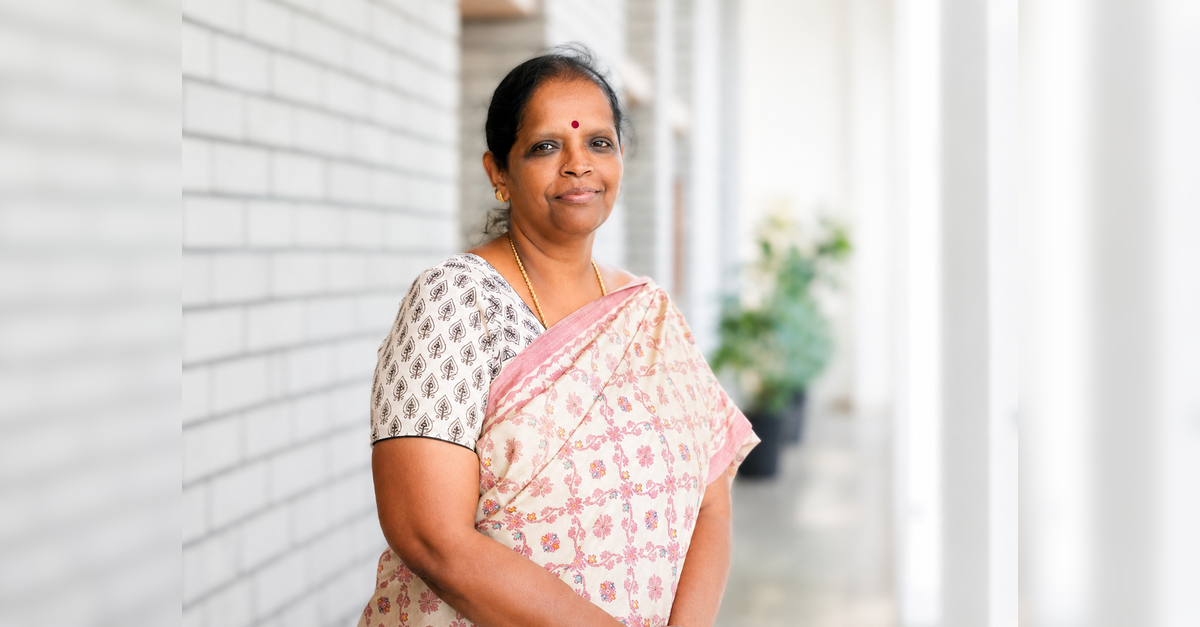
Anuradha P S is a Professor, CHRIST (Deemed to be University).


