


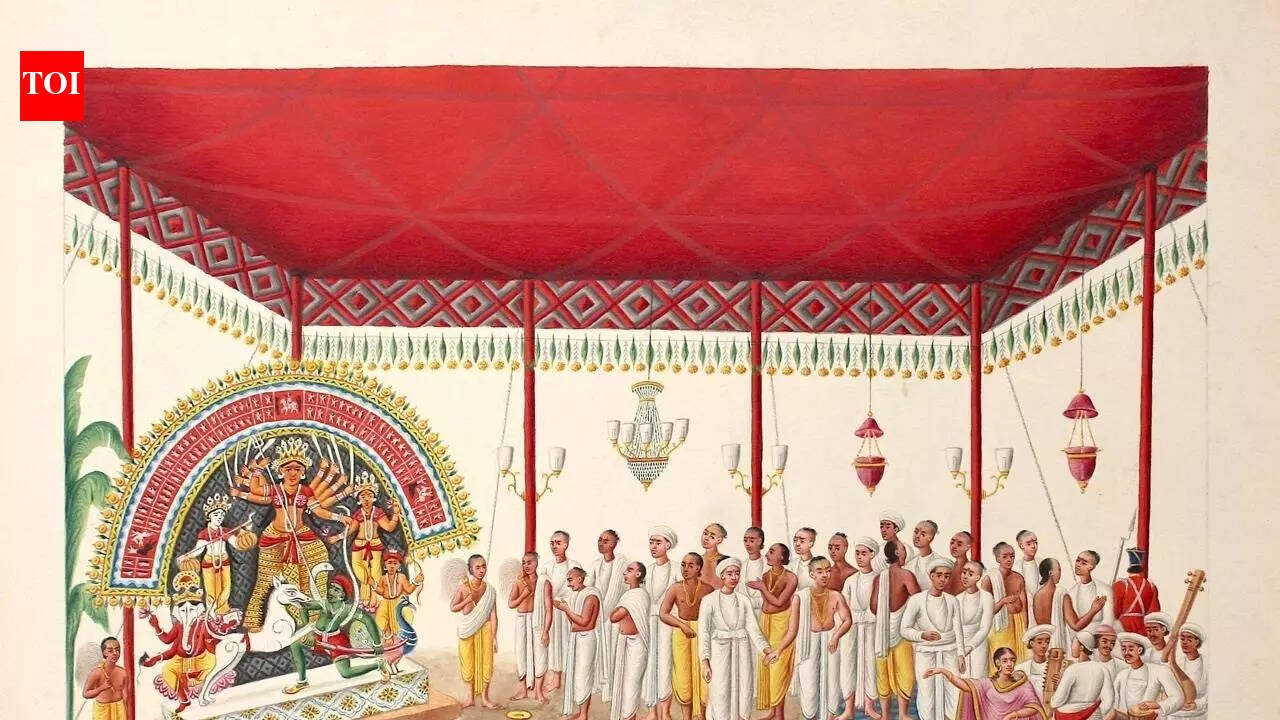
Patna: Often referred to as the “Instagram of the 19th Century”, Patna Kalam (also known as the “Company School of Painting”) was a celebrated art form that flourished in Bihar primarily between the 18th and early 20th centuries. It holds a unique place in Indian art history for focusing on the daily lives of common people, local practices and occupations, rather than the opulent courtly scenes typical of Mughal paintings.This art form witnessed a severe decline, particularly after the advent of photography, the departure of its primary British patrons and the death of its last known traditional artist, Ishwari Prasad Verma, in 1950. Today, there are very few takers for this dying art form. Even students of the College of Arts and Crafts under Patna University show little interest in studying it, despite it being included in their curriculum.However, some art lovers in the state have recently been making sincere efforts to revive the Patna Kalam, or Patna School of Painting, by organising workshops and exhibitions. Their aim is to create awareness among people, especially the youth, about the uniqueness of this once-popular art tradition.The origins of Patna Kalam remain somewhat obscure. However, historians and art connoisseurs maintain that the artists of this school initially belonged to a family of Kayasthas from the Partabgarh district of Udaipur in Rajputana. The family is believed to have migrated to the Mughal court around the 16th century.Padma Shri recipient Shyam Sharma, former principal of the College of Arts and Crafts, said declining patronage during the reign of Aurangzeb (1658-1707) was probably the reason the artists moved to Murshidabad. There, apart from painting for their Nawabi patrons, they also created portraits for the European gentry.Sharma added that after the Battle of Plassey in 1757, Mir Jaffar’s son, Miran alias Mohamed Sadiq Khan, compelled Hindu artists, among others, to migrate once again — this time to Patna. This group of migrants laid the foundation of what later came to be known as the Patna School of Painting (Patna Kalam).Sharma, who has also authored a book titled ‘Patna Kalam’, said, “The Britishers used to buy the paintings as souvenirs from Patna. These paintings would familiarise the foreigners with the lifestyle of people here. The masterpieces of this art form are outside the country, preserved in different museums of Britain.”In Patna, enthusiasts can view examples of this art at the Patna Museum, the College of Arts and Crafts, the Khuda Baksh Oriental Public Library and the Jalan Kila House. The speciality of this style lay in its simplicity. The day-to-day activities of ordinary people were depicted on canvas in a distinctive manner.To appeal to British patrons, the painters imbibed elements of the European style. The works were generally executed in miniature format on handmade paper, bamboo sheets, ivory and mica. The colours were extracted indigenously from flowers, leaves, metals and plant bark, said Ajay Kumar Pandey, former principal of the College of Arts and Crafts.Pandey said some of the prominent names associated with Patna Kalam during its heyday include Sewak Ram, Hulas Lal, Shiva Lal, Jairam Das, Shiva Dayal Lal and Jhumak Lal. The last painters of this tradition were Ishwari Prasad Verma and Radha Mohan Prasad, the founder of the College of Arts and Crafts.Explaining the reasons behind the virtual demise of the art form, Rakhee Kumari, present principal of the College of Arts and Crafts, said, “The demand for these paintings diminished with the weakening of the control of the British administration on India in the wake of freedom struggle and with the increasing departure of Britishers from the country. The invention of cameras has also contributed to the downfall of it. During old times, kings and rulers used to give the painters patronage, which is not possible now,” she added.


