



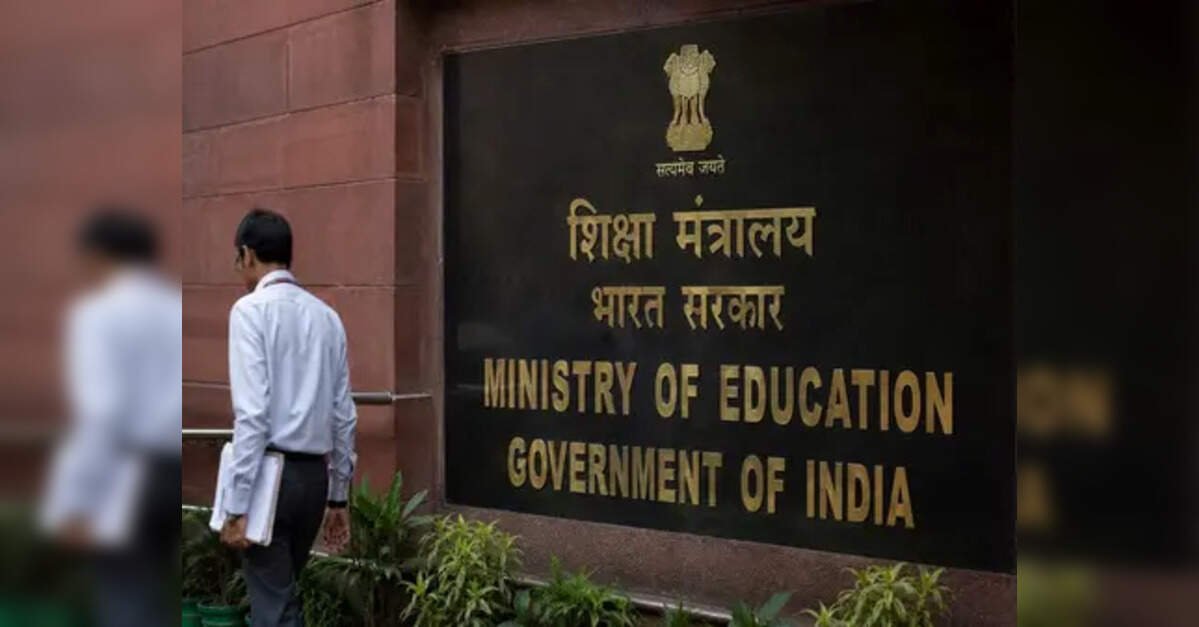
New Delhi, The Union Education Ministry on Thursday announced that its School Management Committee (SMC) Guidelines 2026 for constitution of parent-headed panels to govern the institutions will not be binding on private, and unaided schools.
The guidelines, described by Education Minister Dharmendra Pradhan as an initiative to hand over education and school management to society, were issued earlier this month.
The Ministry, in a statement issued on Thursday, said that in a communication addressed to all States and Union Territories it has clarified that the schools mentioned in Section 2(n)(iv) of the Right to Education (RTE) Act, 2009 would not be covered by these Guidelines provided they have not received any kind of aid or grants from the appropriate Government or local authority to meet their expenses.
Section 2(n)(iv) of the RTE Act defines private, unaided schools. It dictates that these institutions — despite receiving no government grants — are bound by the Act’s social mandates, specifically the requirement to reserve entry-level seats for children from disadvantaged and weaker sections.
While keeping private, unaided schools out of the ambit of the guidelines, the Ministry emphasised that such schools are, however, encouraged to constitute School Management Committees to promote greater transparency, accountability and participatory governance.
“Education is a shared responsibility of the Government, schools, parents and the community, and strengthening collaboration among all stakeholders remains essential for improving school functioning and ensuring better learning outcomes for children,” it said.
The guidelines, issued on May 6, suggested creation of SMCs headed by a parent with the school principal as its member secretary. The guidelines replaced the existing School Management Development Committees (SMDCs) and extended the framework to secondary and senior secondary schools.
A statement issued on Thursday said that the Education Ministry launched the School Management Committee (SMC) Guidelines 2026 with the objective of strengthening community participation in school education.
The Guidelines have been formulated to promote decentralised and participatory school governance and seek to improve the overall functioning of schools by creating a more supportive, inclusive and effective learning environment, keeping the best interests of children at the centre.
The intent is also to create community ownership of schools by bringing all stakeholders together on a concurrent platform, it said.
Sharing the reason for keeping private, unaided schools out of the ambit of the guidelines, the Ministry said that it received representations and concerns from certain sections of society regarding the applicability of the guidelines over differently managed schools in context of Section 21 of the RTE Act, 2009.


