



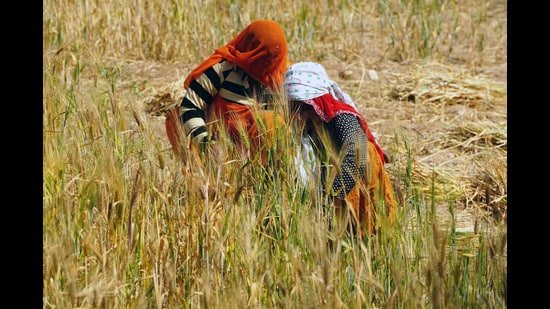
Punjab is witnessing unusually high temperatures for early March, with maximum temperatures soaring nearly 7.5 degrees Celsius above normal, raising concerns among wheat farmers about the potential impact on their standing crop.


The sharp rise in temperatures has prompted warnings from weather officials and agricultural experts, who fear that prolonged heat during the crucial grain formation stage could adversely affect wheat yields.
“There has been a rise in the average maximum temperature over the past 24 hours. It is markedly above normal by 7.5°C in the state. There will be a steady rise in the maximum temperature by about 2-3°C during the next four days, and no large change thereafter,” the IMD said in its bulletin.
Meteorological data revealed that all 23 districts of Punjab recorded maximum temperatures above 30°C on Friday, an unusually high level for this time of year. Weather officials pointed out that such conditions are typically observed towards the end of March or even early April, making the current spike particularly concerning.
Among the districts, Ferozepur recorded the highest temperature at 33°C, making it the hottest place in the state on Friday. Ludhiana also experienced intense heat, with the maximum temperature touching 32.8°C.
The sudden rise in temperatures has triggered anxiety among farmers, as the wheat crop is currently in the grain formation stage, a critical phase that determines final yield. Agricultural experts warn that prolonged exposure to higher-than-normal temperatures during this stage can accelerate crop maturity and reduce grain size, ultimately affecting productivity.
Vice chancellor of Punjab Agricultural University Satbir Singh Gosal said the university had anticipated the possibility of early heatwave-like conditions and had already issued advisories to farmers.
“We had anticipated the possibility of early heatwave-like conditions and therefore issued an advisory in advance. Now, we have started disseminating detailed guidance through the krishi vigyan kendras across the state. Wheat farmers should follow the advisory carefully to protect their crop from heat stress,” Gosal said.
He advised farmers to carry out light irrigation in their fields to help the crop withstand rising temperatures and minimise potential damage.
Agricultural experts say that if the heatwave-like conditions persist during the coming weeks, it could lead to reduced wheat yields in the state, which is one of India’s leading wheat-producing regions.
The IMD has urged farmers and authorities to remain alert and monitor weather updates closely as temperatures are expected to remain high in the coming days.


