






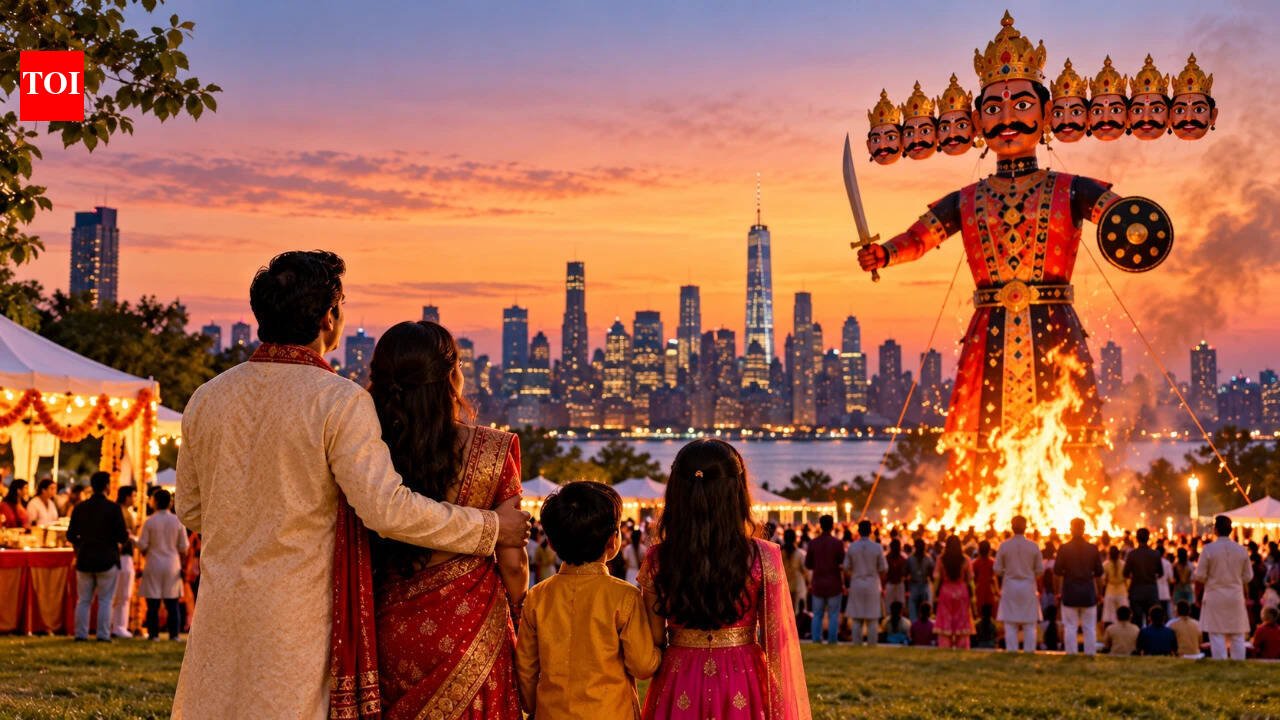
Back home, Dussehra arrives with its own soundtrack. Ramlila loudspeakers, firecrackers and the smell of jalebis frying at street corners. In New Jersey or Texas, the day may start with an alarm for a 9 AM office call. There’s no public holiday, no effigy burning in the neighbourhood park, and no cousins dropping by unannounced. Yet Indian families across the United States have found their own ways to keep the festival alive. Some look very different from India, and some are surprisingly close.
When Families Celebrate
In India, Vijayadashami falls on Tuesday, October 20, 2026. Dates in America can shift slightly because of the time difference, so many families check their local temple calendar before planning.The bigger issue is the weekday. Most people can’t take a Tuesday off for a festival. So community events usually move to the nearest weekend. Many temples and cultural associations hold their main celebrations on Saturday and Sunday. At the same time, families do a small puja at home on the actual day, often before work or after dinner.Calling relatives in India takes some planning. In late October, India is 9.5 hours ahead of the US East Coast and 12.5 hours ahead of the West Coast. A morning call from Delhi lands late at night in California. Many families record a short video of their home puja and send it ahead instead.
Ravan Dahan, American Style
Burning a tall effigy in an open field isn’t simple in the US. Fire safety rules, permits and insurance make large outdoor fires difficult in most towns.So communities get creative. Some organisations do secure permits and hold controlled Ravan Dahan events at fairgrounds or large temple grounds, with fire marshals on site. Others use smaller effigies, or even models that collapse with sound and light effects instead of real flames.Ramlila performances are popular too. Local drama groups, often with children playing monkeys in Hanuman’s army, stage the story in temple halls or school auditoriums. For kids growing up far from India, these plays often become their first real connection to the Ramayana.
Regional Traditions Travel Too
Indian families in the US don’t celebrate Dussehra in one way, because India doesn’t either.Bengali associations organise Durga Puja in rented halls, often with idols shipped from Kolkata. On Vijayadashami, married women take part in Sindoor Khela, smearing sindoor on the goddess and on each other. The evening ends with Bijoya greetings, sweets and hugs.Gujarati communities fill convention centres with garba and dandiya during the nine nights before Dussehra. Some of these events in New Jersey and Texas draw thousands of dancers.South Indian families often keep a Golu display at home, steps lined with dolls of gods, saints and village scenes. Kerala families may hold Vidyarambham, where young children write their first letters in rice under a teacher’s guidance.Ayudha Puja adapts easily to American life. Laptops, cars and kitchen tools get a tilak and a flower, honouring the things that keep work and home running.
Small Ways to Keep It Meaningful at Home
Not everyone lives near a temple. Many families mark the day with a simple home puja, a few diyas and a meal that includes something sweet. Telling children the Ramayana story at bedtime, chapter by chapter during Navratri, builds up to the victory on Dussehra.Indian grocery stores in larger cities stock puja items, but Shami and Apta leaves are hard to find. Some families use any green leaves as a symbolic substitute while explaining the tradition to their children.Inviting American friends and neighbours helps too. A plate of homemade sweets with a short note about the festival often sparks curiosity and conversation.


