



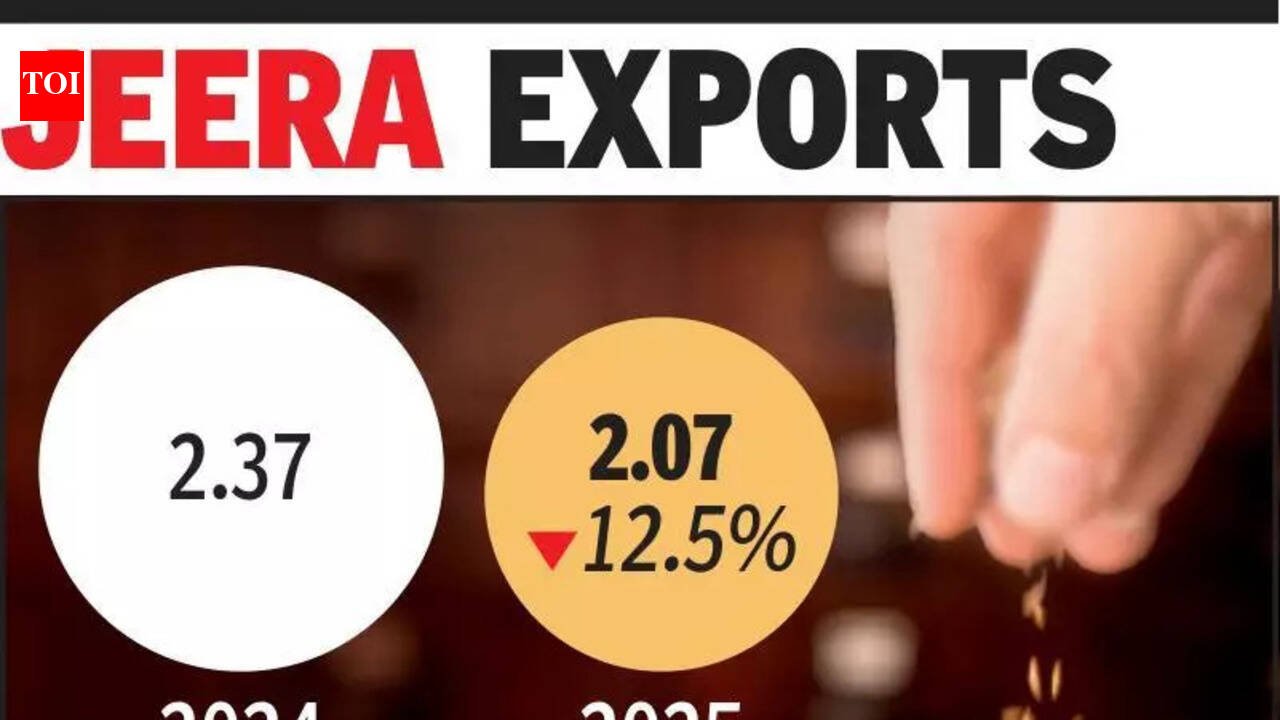
Ahmedabad: Amid weak demand from China and Bangladesh, the exports of cumin seed (jeera) have declined in 2025. According to the latest data shared by the Federation of Indian Spice Stakeholders (FISS), total exports in 2025 stood at 2.07 lakh metric tonne, down 12.5% from 2.37 lakh tonne in 2024.According to jeera traders in Unjha — India’s biggest spice trading hub of the country — the decline came despite intermittent monthly recoveries during the year, indicating a weak demand environment. While farmers and spice traders pinned hopes on the upcoming season, ongoing tensions in West Asia with bleak hope for a sooner resolution to the conflict, the demand momentum has failed to pick up since Feb.“Since the West Asia tensions escalated earlier this year, particularly in Feb and March, demand momentum has weakened significantly. In markets like Dubai, some shipments have even been called back too as soon as the war broke out,” said U Karthik, co-chairman, Federation of Indian Spice Stakeholders (FISS).In 2025, the sharpest fall was recorded in March and April, with shipments plunging 43.65% and 47.20% year-on-year respectively. This was a period that typically coincided with peak export activity. While some months such as Jan and Feb saw strong growth, the gains were insufficient to offset sustained weakness through the rest of the year.Trade sources attribute the downturn primarily to China’s strong domestic cumin harvest this year, which has significantly reduced its import requirement. “Chinese cumin arrivals remained buoyant this year and therefore, the demand for Indian produce was comparatively less. China is one of the biggest importers of cumin seed from Gujarat, apart from Bangladesh, West Asia and Europe,” said a spice trader in Unjha.Exports to Bangladesh, which is another key destination for Indian jeera, have also been impacted, with exporters adopting a cautious stance amid political instability and payment risks.The West Asia, traditionally a steady buyer, has only added another layer of uncertainty. “Certain shipping lines have imposed a war surcharge of about $4,000 per container, along with around additional per container charges towards loading and unloading. This has had a strong psychological impact on buyers. In such a situation, nobody wants to commit to fresh purchases. Ocean freight costs have surged, and even previously contracted orders are losing momentum,” Karthik added.


