






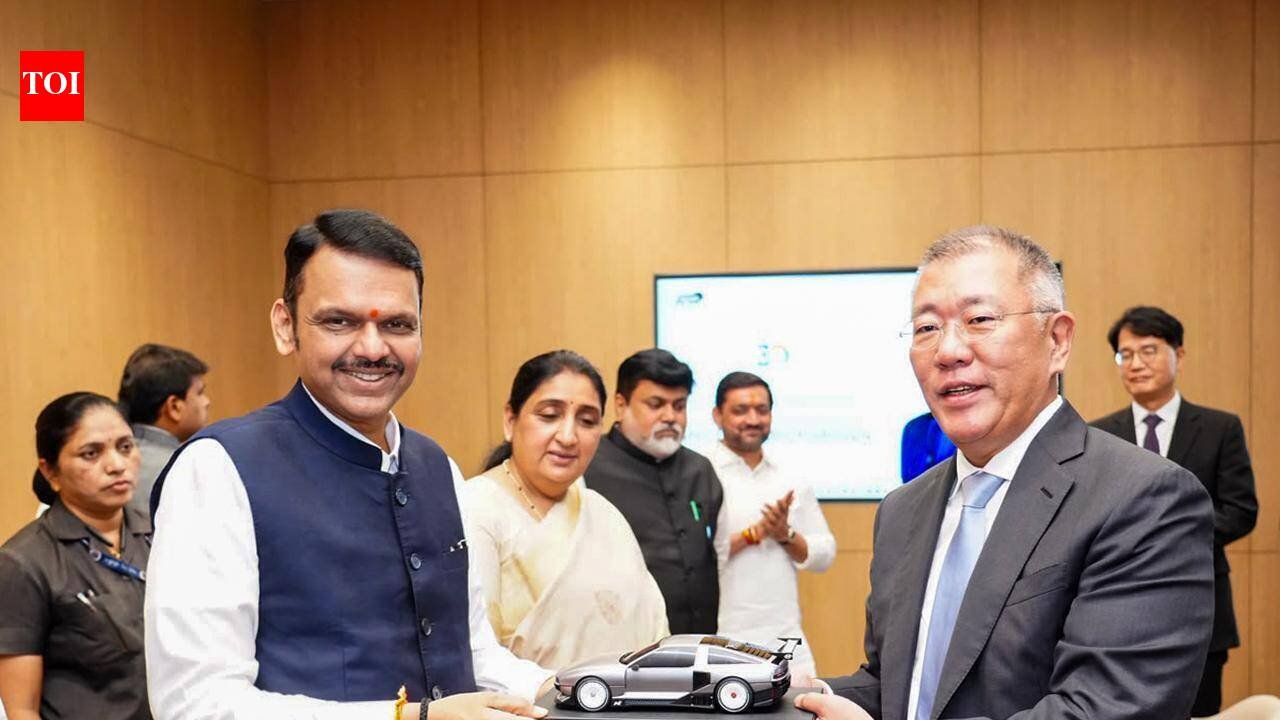
Pune: Maharashtra chief minister Devendra Fadnavis on Wednesday said that at a time when there are several qualified drivers in the country, driverless cars should be the last priority.“I think driverless car is very good in all the countries where the population is ageing and where there are no people and no youth to employ. But in a country like India we have a huge pool of drivers, so the driverless car should be last priority,” he said in Pune while speaking at the inauguration of Hyundai Motors India’s manufacturing facility. “But other than that, the entire automation is most welcome and that manufacturers are doing,” he added.Hyundai’s journey to set up a plant in Talegaon has been a turbulent one, Fadnavis said, highlighting the complicated acquisition from General Motors India and resolution of the long-pending labour dispute between GM India and its workforce. “But our govt and our officials stood strong with you and with your committed focus we could sort out all the problems,” he said.Tarun Garg, MD & CEO of Hyundai Motors India, said on the sidelines that the company will manufacture 3.2 lakh cars a year by 2030 from an initial production capacity of 1.7 lakh units. The high level of automation in the Pune plant will be able to support production of hybrid cars in the future, he added.Fadnavis also said that it is heartening to see that Hyundai is developing the ecosystem that supports local MSMEs by sourcing 50% of the components from within a 50-km radius. He also urged more South Korean companies to invest in the state as it has a strong industrial ecosystem and that the govt would facilitate investments through a seamless single-window system without requiring investors to approach multiple departments.Speaking at the inauguration of an electric vehicle charging station in Pune, Fadnavis said that if India replaces 50% of the fuel consumed in cars and transportation with electric vehicles, it could potentially bring down the dollar exchange rate by Rs 20, given the enormous potential for reducing fuel imports.


